

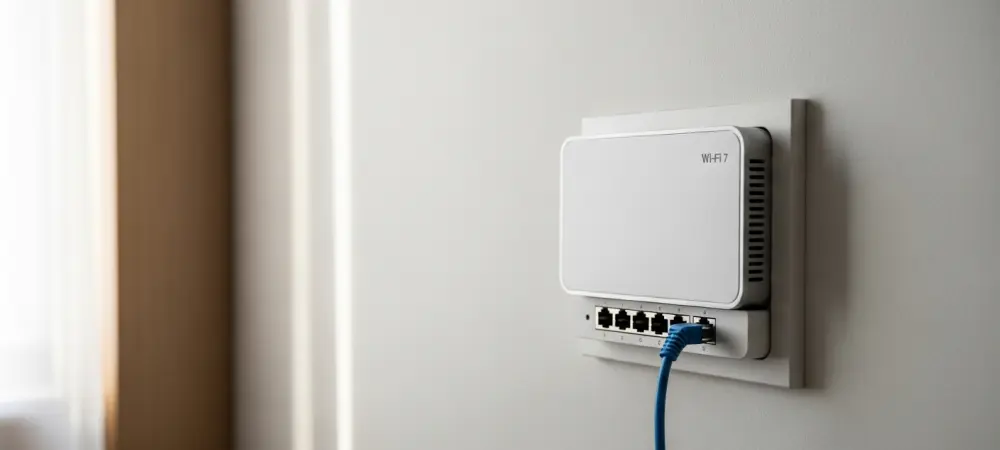
Modern hospitality and multi-dwelling environments are currently facing an unprecedented surge in bandwidth demand as guests and residents arrive with a growing array of high-definition streaming devices and latency-sensitive gaming consoles. This shift has placed immense pressure on existing wireless infrastructure, forcing network administrators to seek out solutions that can provide multi-gigabit speeds without requiring intrusive renovations or bulky hardware installations. The EnGenius ECW515 emerges as a specialized response to these challenges, designed specifically for in-room wall plate mounting to deliver Wi-Fi 7 performance within a discrete and rugged chassis. By targeting the unique constraints of hotels, student housing, and corporate offices, this access point promises to bridge the gap between high-capacity wireless standards and the aesthetic requirements of modern professional spaces. It represents a pivot toward localized, high-performance connectivity that prioritizes reliability over raw range and ensures that every room remains a high-speed hub for digital activity.
Physical Design: Integrated Wired Connectivity
The industrial engineering behind this device reflects a deep understanding of the physical stresses present in high-traffic commercial environments where hardware is often subject to constant use and limited airflow. Unlike traditional plastic-encased consumer routers, this unit utilizes a robust metal chassis that serves a dual purpose as both a protective shield and an efficient heat sink for the internal components. This thermal management is critical because the high-speed processing required for Wi-Fi 7 standards generates significant heat that could otherwise degrade performance or shorten the lifespan of the equipment. Furthermore, the unit features a 2.5GbE multi-Gigabit uplink port located on the rear panel, which ensures that the connection to the backbone network remains fast enough to support the wireless capabilities of the device. This specific design choice eliminates the common bottleneck found in older installations where a standard Gigabit port would restrict the true potential of modern radio.
Connectivity extension is a core component of the hardware’s utility, provided through an integrated four-port Gigabit Ethernet switch located at the base of the frame for easy accessibility by the end user. This configuration is particularly beneficial in hotel guest rooms where multiple wired devices, such as smart televisions, gaming platforms, or IP-based telephony, require a stable and secure connection without cluttering the room with extra cables. One of these local ports is specifically designated to provide Power over Ethernet passthrough, which allows the access point to deliver electrical power to a secondary device like a VoIP phone directly. This feature significantly simplifies the deployment process for technicians because it reduces the need for additional wall outlets or messy external power adapters. By consolidating wireless coverage and wired switching into a single wall-mounted unit, organizations can maintain a clean aesthetic while still providing a full suite of services to their clients.
Performance: Architectural Capabilities and Wireless Throughput
At the heart of the internal architecture lies the Qualcomm Networking Pro 1220 platform, which provides the enterprise-grade computational power necessary to manage complex traffic patterns in real time. This chipset is a central element of the BE3600-rated dual-band system, allowing the device to deliver substantial theoretical speeds across both the 2.4GHz and 5GHz frequency bands. While some higher-end models in the industry include a third 6GHz radio, the decision to omit it here is a strategic move to keep the device compact and cost-effective for large-scale multi-room rollouts. Despite the absence of the 6GHz band, the unit still achieves significant performance improvements over previous generations by utilizing the advanced modulation and efficiency features inherent to the Wi-Fi 7 standard. This makes it an ideal choice for environments where most client devices are still transitioning to the latest technology and where the existing spectrum remains the primary medium for wireless communication.
The sophisticated internal antenna array is paired with a quad-core processor to ensure that the access point can handle a high density of simultaneous client connections without experiencing stability issues. This processing overhead is vital for maintaining low latency during peak usage hours, such as when dozens of users in a dormitory are simultaneously streaming video or participating in online video calls. By focusing on the 2.4GHz and 5GHz bands, the engineering team has maximized the reach and penetration of the signal through standard interior walls, which is often a challenge for the higher-frequency 6GHz band. This approach ensures that users receive a consistent and high-quality connection throughout their living or working space, regardless of the physical layout of the building. The result is a balanced performance profile that addresses the practical needs of today’s mobile-first workforce while laying the groundwork for the more data-intensive applications expected in the coming years.
Management: Cloud Ecosystem and Enterprise Security Protocols
Management of the infrastructure is streamlined through a comprehensive cloud-based portal that allows administrators to oversee hundreds or even thousands of units from a single centralized dashboard. The system supports zero-touch deployment, enabling on-site staff to simply mount the hardware and scan a QR code using a mobile application to bring the device online and apply pre-configured settings. Once the units are active, the cloud platform provides deep visibility into the health of the network, offering detailed analytics on client distribution, application usage, and overall throughput. This granular data allows IT teams to identify potential interference issues or bandwidth hogs before they impact the user experience, ensuring a high level of service across the entire facility. The ability to push firmware updates and security patches remotely further reduces the operational overhead associated with maintaining a modern network in large-scale residential or commercial settings.
Security remains a paramount concern for any enterprise-level deployment, and this hardware includes several advanced features designed to protect both the network and its users from unauthorized access. One of the most notable capabilities is the “SSID on LAN” feature, which allows the same security policies and VLAN assignments applied to the wireless network to be extended to the physical Ethernet ports on the device. This ensures that a guest plugging a laptop into the wall unit is subject to the same authentication and isolation protocols as a user connecting via Wi-Fi, creating a unified and secure environment. Additionally, the software supports L2 isolation to prevent peer-to-peer communication between different clients, which is an essential requirement for public-facing networks in hotels or shared workspaces. While the basic management features are included for free, a professional license can be acquired to unlock even more robust tools, such as long-term log retention and automated alerts.
Efficiency: Empirical Performance and Market Comparison
Empirical performance testing of the unit reveals the tangible benefits of Wi-Fi 7 innovations, such as Multi-Link Operation, which allows compatible client devices to aggregate multiple bands for a more resilient connection. In real-world scenarios, this translates to higher effective speeds and a noticeable reduction in jitter, even when the surrounding wireless environment is congested with competing signals from neighboring rooms. The hardware maintains impressive throughput even when passing through standard drywall or furniture, though administrators should be aware that activating certain advanced software features may impact raw speed. For instance, enabling deep packet inspection for detailed application analysis requires additional CPU cycles, which can lead to a slight decrease in maximum wireless throughput during heavy load. Despite this minor trade-off, the overall performance remains vastly superior to older standards, providing a smooth and responsive experience for users who demand high-speed internet access.
When evaluated against the broader market of wall-mounted access points, the device occupies a unique position by prioritizing industrial-grade reliability and ease of management over purely theoretical peak speeds. While some competing models may offer tri-band connectivity at a similar price, they often come with larger physical dimensions that can be difficult to integrate into standard electrical boxes or existing room designs. The EnGenius model stands out with its exceptionally small footprint, making it one of the most discrete Wi-Fi 7 solutions currently available for enterprise use. The use of a proven Qualcomm-based architecture also provides a level of stability and compatibility that is often lacking in more experimental or lower-cost hardware options. For organizations that need to modernize their connectivity while maintaining a professional and unobtrusive environment, this access point offers a compelling combination of power, security, and aesthetic design that is hard to match.
Strategic Integration: Future Considerations for Infrastructure
The transition to Wi-Fi 7 through the deployment of these specialized wall plate units represented a significant milestone for organizations that prioritized high-density performance and aesthetic cohesion. Administrators who integrated this hardware into their facilities observed an immediate improvement in signal stability and user satisfaction, as the localized nature of the access points effectively mitigated the interference issues common in older, ceiling-centric designs. The implementation process proved to be straightforward, with the zero-touch cloud provisioning reducing the time required for full-scale rollouts across large campuses and hotel chains. By selecting a dual-band architecture that maximized existing spectrum efficiency, these organizations avoided the excessive costs and power requirements associated with more complex tri-band systems while still achieving multi-gigabit throughput for their clients within the typical physical constraints of guest rooms. Moving forward, decision-makers should focus on upgrading their backend switching infrastructure to 2.5GbE or higher to ensure that the increased wireless capacity of these units is fully utilized across the network. It is also advisable to conduct periodic audits of the cloud management data to refine VLAN configurations and security policies, especially as the diversity of connected devices continues to expand. Professionals who adopted this technology early on found that the “SSID on LAN” feature was particularly valuable for securing secondary hardware, and this approach should be maintained as a standard for all future wired expansions. Ultimately, the successful integration of such hardware depended on a holistic view of the network that balanced physical installation constraints with the ever-growing demand for seamless connectivity. Ensuring that the power delivery systems are optimized for PoE passthrough will also remain a critical step for those looking to maximize the utility of their wall units.