

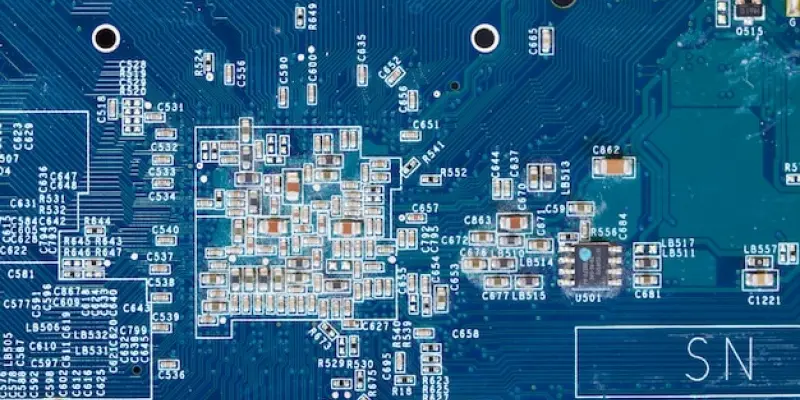
In the competitive realm of high-performance computing, where the quest for faster speeds never ceases, the ASUS ROG Crosshair X870E Hero motherboard emerges as a formidable contender, especially for those enthusiastic about overclocking. Tailored for extreme performance enthusiasts, this motherboard sits at the cutting edge of technology with features fine-tuned to enhance the capabilities of the latest AMD Ryzen X3D processors. Its reputation within the ROG Crosshair Hero series is well-established, known for setting the standard in terms of performance and reliability. The model’s refined power delivery and remarkable thermal management make it a prime choice for users aiming to maximize their system’s potential without compromise. This article dissects whether this model lives up to its reputation as the quintessential overclocking board.
Advanced Power and Thermal Management
The ASUS ROG Crosshair X870E Hero stands out with an overbuilt power delivery system, encapsulating an 18+2+2 power stage setup. This architecture ensures a rock-solid power supply vital for sustaining high-performance CPUs under heavy loads. Effective power management is a hallmark of any overclocking endeavor, facilitating a stable environment for pushing boundaries. Moreover, the model exhibits outstanding thermal regulation, blanketing the motherboard in heatsinks that facilitate sub-ambient cooling. Such systems are indispensable for overclockers looking to stretch their components to their limits without risking thermal throttling. This intricate balance of power and cooling illustrates the board’s sophisticated engineering designed to cater predominantly to extreme computing scenarios. The sheer robustness of this setup represents a significant selling point, especially for builds that need to navigate the intense temperature spikes associated with overclocking.
Connectivity: A Future-Proof Investment
When investing in a motherboard that will anchor an ultra-fast system, connectivity options can often seal the deal. The X870E Hero is no slouch in this department, featuring one of the most comprehensive connectivity suites found in motherboards available today. It supports DDR5 memory and PCIe 5.0, propelling data speeds to uncharted territories and ensuring that once installed, users are unlikely to feel bottlenecks or incompatibilities for years. Additionally, with Wi-Fi 7 and USB4 ports rounding out the options, this motherboard is built to support the highest connectivity standards. Its forward-looking design means it won’t just suffice for the present; it will endure through future technological shifts, resulting in a truly future-proof product. Investing in a motherboard like the X870E Hero is, therefore, not just about meeting current needs but also securing a platform that can adapt to and evolve with forthcoming advancements.
AI-Driven Overclocking and Usability
It’s not only the hardware specifications that make the X870E Hero shine but also its intelligent software-driven features. Among these, AI Matrix is particularly noteworthy, simplifying overclocking processes for those not well-versed in the intricacies of manual tuning. This feature analyzes system conditions and adjusts settings to attain optimized performance levels. Coupled with a user-friendly BIOS interface, this board democratizes the overclocking process, making it accessible even to beginners. Furthermore, practical inclusions like an onboard power button and a 7-segment error code display significantly enhance troubleshooting, offering users more control over their system’s stability. These thoughtful inclusions underscore ASUS’s commitment to marrying extreme performance capabilities with user-centric design, ensuring that even the most complex tasks are handled with efficiency and ease.
Competitive Pricing and Market Position
Despite its impressive features, the ASUS ROG Crosshair X870E Hero manages to remain competitively priced, with a notable discount providing additional incentives for performance seekers. From an MSRP of $699.99, the board is offered at a reduced rate of $633.05, underscoring its value proposition in a market often defined by exorbitant prices. This reduction not only makes it more accessible than ever but also a desirable alternative in comparison to even more premium options available, such as the MSI MEG X870E GODLIKE and the MSI MPG X870E Carbon WiFi. By maintaining a balance of affordability and high-end specifications, the X870E Hero carves out a niche for itself among budget-conscious consumers who are unwilling to sacrifice performance. Highlighting its role as a cost-effective powerhouse, this effective pricing strategy positions the model strategically within the marketplace.
Finding Value Beyond Specifications
The ASUS ROG Crosshair X870E Hero, while seemingly over-engineered for average users, lures tech enthusiasts striving for computing excellence. This motherboard is precisely designed to cater to those who want to push their systems to the limits, especially when paired with high-performance CPUs such as the Ryzen 9 9950X and 9950X3D. Offering powerful power delivery and smart overclocking features, it’s tailor-made for such potent processors. Its attraction goes beyond current performance, promising substantial longevity in a rapidly evolving tech environment. By providing a stable platform for several years, the X870E Hero connects today’s high demands with future aspirations, making it a valuable asset for enthusiasts considering long-term investments in top-tier computing technologies. Essentially, the ASUS ROG Crosshair X870E Hero is not just a performance powerhouse but embodies a gateway to unlock and maximize advanced technological potential. Its solid base is ideal for overclocking buffs seeking precision and reliability amidst rising demands for computing power, ensuring performance excellence over time.