

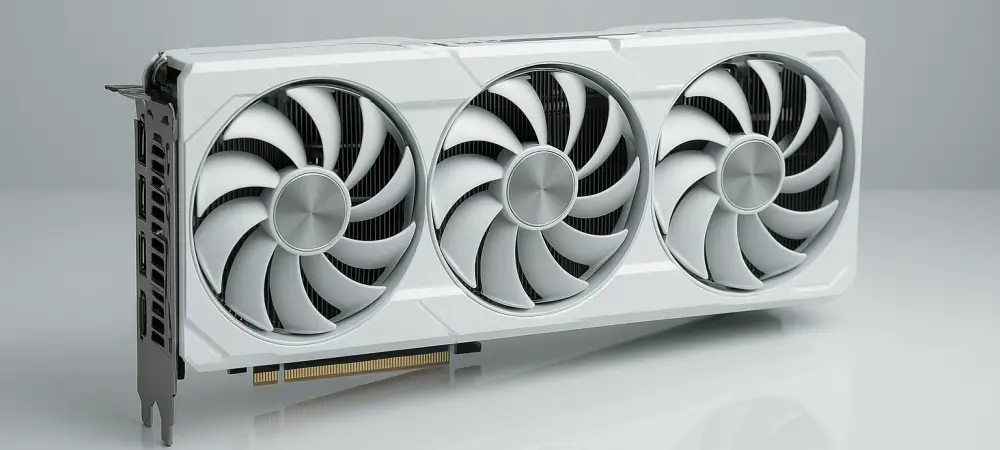
Maintaining a consistent game clock of 2480MHz requires advanced cooling solutions that prevent thermal throttling during intensive rendering tasks or long gaming sessions. In the high-stakes arena of modern PC gaming, enthusiasts often find themselves caught between the desire for extreme performance and the harsh reality of escalating component costs. The ASUS Prime Radeon RX 9070 XT 16GB White OC Edition arrives as a direct response to this dilemma, offering a sophisticated blend of raw graphical power and refined engineering. While the market has seen a surge in flagship models that carry astronomical price tags, this specific iteration focuses on providing a premium experience that remains accessible to those who demand efficiency. It is not merely about the frame rates achieved in synthetic benchmarks; it is about how the hardware sustains that performance over hours of gameplay. As software developers push the boundaries of visual fidelity, hardware must evolve to manage increasing thermal loads without any compromise.
Market Positioning and Performance Analysis
Performance Metrics: Comparing Rasterization and Ray Tracing
When analyzing the competitive landscape, the RX 9070 XT carves out a significant niche by prioritizing traditional rasterization performance, which remains the backbone of most gaming engines. While competitors often emphasize complex lighting simulations, a vast majority of titles still rely on efficient 3D rendering to deliver high-speed action. This card excels in these scenarios, frequently outperforming its direct rivals in native 1440p and 1600p resolutions. By focusing on the fundamental ways that environments are drawn, ASUS and AMD provide a solution for players who value fluid motion and high refresh rates over experimental lighting techniques. This approach ensures that even the most demanding open-world titles maintain a level of responsiveness that competitive gamers require. Furthermore, the reliance on raw power rather than heavy software intervention allows for a cleaner visual output, avoiding some of the artifacts sometimes associated with aggressive upscaling technologies.
Market Strategy: Pricing Trends and Economic Value
Addressing the inevitable discussion regarding ray tracing, the RX 9070 XT acknowledges the industry’s shift toward realistic light simulation while maintaining a balanced perspective on cost. Nvidia’s high-end offerings might hold a technical lead in specific ray-traced workloads, yet the price-to-performance ratio offered by the ASUS Prime variant makes it a compelling alternative for pragmatic buyers. Most users find that the slight difference in lighting accuracy does not justify a 30 to 40 percent increase in total system cost. Instead, this card reinvests its engineering efforts into sustained frame consistency and texture management. This strategic positioning allows it to challenge the RTX 5070 Ti directly, appealing to a demographic that monitors their hardware’s efficiency as closely as their budget. By bridging the gap between mid-range affordability and enthusiast-level output, the card proves that high-end gaming does not necessarily require a flagship investment to be enjoyable.
Creative Efficiency: Professional Use and Creative Workflows
Professional utility remains a core strength of this GPU, especially for those involved in content creation, video editing, or 3D design. The 16GB of VRAM provides a significant buffer for high-resolution video timelines and complex texture maps, ensuring that creative applications run smoothly without the bottlenecks typically found in cards with lower memory capacities. For architects and designers, the card offers enough overhead to handle real-time visualizations and large-scale rendering projects without requiring a shift to much more expensive workstation-grade hardware. This versatility makes the RX 9070 XT an ideal choice for a hybrid user who spends their day in production software and their evenings in immersive gaming environments. By balancing these two disparate needs, the card serves as a central hub for modern productivity, offering a level of flexibility that is hard to find at this price point. It represents a smart investment for anyone who relies on their PC for professional work.
Real-World Testing: Benchmarking Success in Modern Titles
The economic reality of the RX 9070 XT is perhaps its most compelling feature, as it consistently offers a better performance-per-dollar ratio than many of its competitors. Market trends have shown that while flagship prices continue to climb, savvy buyers are looking for cards that deliver 90 percent of the performance at 60 percent of the price. This card hits that sweet spot perfectly, often being available at prices that make it an undeniable bargain for those who monitor market fluctuations and retailer discounts. This pricing strategy allows gamers to reallocate their budget toward other critical components like faster NVMe storage or more system RAM, leading to a more balanced and capable overall build. It challenges the notion that a high-end gaming experience is reserved only for those with unlimited budgets, democratizing access to high-fidelity graphics and smooth gameplay. For the informed consumer, this card represents a rational choice that prioritizes tangible results and long-term value.
Technical Engineering and Future Standards
Advanced Cooling: Thermal Design and Airflow Innovation
Thermal management is where the ASUS Prime RX 9070 XT truly distinguishes itself from generic designs, utilizing a sophisticated triple-fan Axial-tech system. These fans are engineered with smaller hubs and longer blades, which are connected by a structural barrier ring to increase downward air pressure onto the massive heatsink array. This design ensures that heat is dissipated rapidly, preventing the core components from reaching temperatures that would trigger performance-limiting thermal throttling. The central fan rotates in the opposite direction of the outer fans to reduce turbulence and maximize airflow distribution across the entire surface area of the cooling fins. This meticulous attention to fluid dynamics results in a card that remains remarkably quiet even during heavy workloads, a quality highly prized by those who value a silent workspace or immersive gaming environment. By maintaining low operating temperatures, the cooling system also extends the overall lifespan of the electronic components.
Architecture: Memory Capacity and Texture Handling
The technical foundation of the RX 9070 XT is built upon its generous 16GB of GDDR6 VRAM, a feature that has become increasingly critical as high-resolution textures become the standard. In an era where modern gaming titles and professional creative suites consume vast amounts of video memory, having a robust buffer prevents the stuttering and performance drops associated with memory overflow. This capacity ensures that the card can handle the intensive demands of 4K assets and complex 3D modeling environments without forcing the user to lower their quality settings. Beyond just gaming, this memory overhead is a significant boon for content creators who work with high-bitrate video editing or large-scale architectural visualizations. The inclusion of 16GB provides a level of future-proofing that cards with smaller buffers simply cannot match, allowing the hardware to remain relevant and capable through 2027 and beyond. It represents a commitment to longevity that is often missing in more restrictive hardware setups.
Modern Standards: Connectivity and PCIe 5.0 Integration
In terms of longevity, the RX 9070 XT is built on the PCI Express 5.0 platform, offering massive bandwidth for future hardware updates and maintaining a clear path for system evolution. It also includes cutting-edge display outputs, featuring HDMI 2.1b and DisplayPort 2.1, which allow the card to drive the latest ultra-high-definition monitors, including 8K displays. These ports ensure that your setup remains compatible with next-generation screen technology for years to come, providing the high-speed data lanes necessary for deep color depth and high refresh rates without compression. The 2.5-slot form factor is a thoughtful design choice, ensuring it fits comfortably in standard mid-tower cases while leaving enough room for other PCIe expansion cards like sound cards or capture devices. This balance of physical size and technological capability makes the card a practical choice for a wide variety of users, from competitive gamers to professional engineers who require specific hardware configurations.
Future Implementation: Strategic Hardware Planning and Longevity
Strategic planning for a high-end PC build involved evaluating not just current needs but future demands, and the RX 9070 XT offered a blueprint for this balanced approach. For those who sought a versatile tool for both intense gaming and heavy creative workloads, the 16GB of VRAM proved to be a decisive factor in maintaining smooth operations. Builders who prioritized this card often found that they were better equipped for the shift toward larger textures and more complex simulations than those who opted for more expensive but memory-limited alternatives. Moving forward, the most effective strategy for enthusiasts involves focusing on these core hardware specifications that provide sustained utility across multiple software generations. The success of this model suggested that the market was ready for more focused, efficient designs that did not sacrifice build quality for lower price points. Investing in such hardware allowed for a more sustainable upgrade cycle, ensuring that the technology remained capable and relevant for many years.