

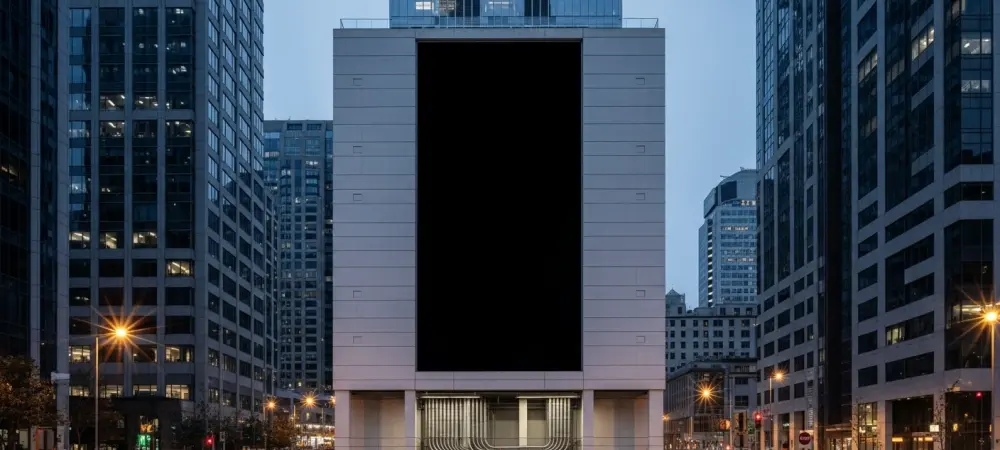
Beneath the gleaming glass towers that traditionally define a city’s skyline, a seismic shift is occurring, driven not by human occupants but by the silent, voracious hum of artificial intelligence. This transformation is compelling some of the most established names in real estate to rethink the very purpose of urban property. The question is no longer just about providing space for people to live and work, but about housing the digital brains that power modern society. This emerging reality signals a fundamental re-evaluation of what makes urban real estate valuable, suggesting a future where a building’s worth is measured as much in megawatts as in square footage.
When a Downtown Skyscraper Is No Longer About the View
A powerful illustration of this pivot is unfolding in Canada, where two major real estate developers, Allied Properties and Westbank, are placing a significant bet on the future of digital infrastructure. Instead of planning for luxury condos or prime office space, their focus has shifted to the massive, power-hungry buildings required to run artificial intelligence. This move away from traditional assets and toward the backbone of the digital economy represents a profound change in investment strategy. It signals that for some of the shrewdest players in the market, the most valuable commodity in a downtown core is no longer a panoramic view but raw computational power.
The Perfect Storm: Empty Offices and an Insatiable Digital Appetite
This strategic shift is fueled by a convergence of two powerful market forces. On one hand, the post-pandemic landscape has left a significant surplus of underutilized commercial office space in many urban centers. This has created a new inventory of valuable, centrally located properties searching for a modern purpose. Simultaneously, the explosive growth of the AI industry has created an exponential demand for data processing and storage. This insatiable digital appetite requires a new class of infrastructure that traditional real estate has not been designed to support. Vancouver is emerging as a microcosm of this global trend, transforming into a critical data center hub where the ghosts of empty offices are making way for the high-energy demands of server farms.
Bricks Mortar and Megawatts Two Blueprints for the Digital Age
In downtown Vancouver, Allied Properties and Westbank are executing an ambitious plan for a 10-story, purpose-built AI data center at 150 West Georgia. The success of this ground-up gamble hinges on a critical element: securing a massive 39MW power commitment from BC Hydro, with a clear path for expansion up to 100MW. This level of energy is a necessity for the intensive workloads of AI systems. Their business strategy involves developing and de-risking the project before selling a majority stake, showcasing an innovative model for real estate investment in the digital age. Less than two miles away, Westbank is pursuing a different but equally strategic initiative: an adaptive reuse project to convert a former 83,000-square-foot office building, once occupied by Hootsuite, into a state-of-the-art data center. This approach highlights the value of repurposing existing structures in prime urban locations. By leveraging an established building, this conversion offers a faster and potentially more sustainable pathway into the booming digital infrastructure market, proving that the future of technology can be built within the shell of the past.
A Strategic Pivot: Developers Follow the Data
The actions of these seasoned developers are not isolated events but rather clear signals of a significant market realignment. They represent a growing recognition that digital infrastructure is no longer a niche market but a resilient and highly profitable asset class, rivaling traditional real estate investments.
These Vancouver projects should be viewed as a deliberate response by industry leaders to fundamental shifts in how urban space is valued and utilized. The focus is moving from accommodating human capital to powering digital capital. Consequently, developers are following the data, recognizing that the infrastructure supporting our digital lives is becoming one of the most critical components of the urban fabric.
The Developer’s Playbook for the AI Era
These two projects in Vancouver effectively serve as distinct, actionable strategies for investors looking to capitalize on the AI boom. The first blueprint is the bespoke powerhouse, which involves identifying and securing sites with access to significant power resources for new, ground-up construction. This approach is tailored specifically for the unique cooling and energy needs of high-density AI workloads. The second strategy is the urban conversion. This playbook focuses on identifying and acquiring underperforming commercial assets, such as vacant office buildings, for cost-effective transformation into data centers. This method leverages existing structures and prime locations, offering a more agile way to meet the urgent demand for digital capacity. Both models demonstrated a clear path for real estate to adapt and thrive in an economy increasingly dominated by artificial intelligence.