

The landscape of artificial intelligence is currently undergoing a fundamental transformation that shifts the focus from simple conversational interfaces toward sophisticated, autonomous, and task-oriented systems. At the heart of this evolution is a technological layer known as the agent harness, a specialized software environment that enables Large Language Models to move beyond mere text generation. For several years, the industry was captivated by the novelty of chatbots, but the novelty has since faded, replaced by a demand for practical automation that can solve complex problems without constant human intervention. This development marks a departure from the transactional relationship where a user asks a question and receives a static answer. Instead, the harness acts as a wrapper around the model’s API, orchestrating multi-step workflows that allow the system to interact with external tools, browse the web, and manage local files. This structural change is not just a minor software update; it is a profound realignment that is reshaping model training, hardware requirements, and the underlying economic framework of the entire technology sector.
The Functional Mechanics of Agent Orchestration
Modern agent harnesses function as sophisticated managers for an AI’s API endpoint, transforming a single user prompt into a series of logical, interconnected operations. While traditional tools were designed to facilitate direct, one-to-one communication with a model, the harness introduces a layer of orchestration that breaks down complex tasks into manageable sub-goals. For instance, when a developer tasks an agent with building a new software application, the harness does not simply request the code. It manages the entire lifecycle of the project, beginning with architectural planning and extending through file system inspection, iterative code generation, and execution within a secure sandbox. This systematic approach ensures that the model remains grounded in the reality of the task at hand, providing a framework where every output is verified against the requirements of the environment. By providing this structure, the harness allows for a higher degree of reliability, as the model is no longer operating in a vacuum but is instead part of a feedback loop that constantly validates its progress. This iterative loop is the defining characteristic of truly autonomous systems, enabling the artificial intelligence to self-correct and refine its work without requiring a human to monitor every single step. In practice, if a model generates a piece of code that contains a syntax error, the harness detects the failure during the execution phase and feeds the error log back into the model for immediate correction. This cycle continues until the task is successfully completed or the system identifies a blocker that requires human judgment. Such a mechanism demonstrates that even smaller and more efficient models can accomplish high-level objectives that were previously reserved for the most massive parameter-heavy systems. The shift from a model that simply “says” things to a system that “does” things represents the primary value proposition of agentic workflows. By turning a digital assistant into a digital worker, the harness provides the necessary context management and tool-calling capabilities to transform raw intelligence into a practical and reliable labor force that can operate independently within a digital ecosystem.
Evolution in Model Training and Hardware Demands
The philosophy of model development has shifted away from the “bigger is better” mentality that dominated the industry for years, as the returns on increasing parameter counts have begun to level off significantly. Instead of pursuing brute-force data ingestion, engineers are now focusing on “reasoning” models that utilize test-time scaling and reinforcement learning to simulate internal thought processes. These models are specifically optimized to operate within the constraints of an agent harness, prioritizing reliable tool usage and long-context reasoning over the mere memorization of facts. In the current year, the most successful releases on platforms like Hugging Face are those that demonstrate an ability to maintain coherence over thousands of tokens while accurately calling external functions. This evolution suggests that the future of intelligence lies in the ability to process vast amounts of feedback from an environment, rather than just predicting the next word in a sentence based on historical training data.
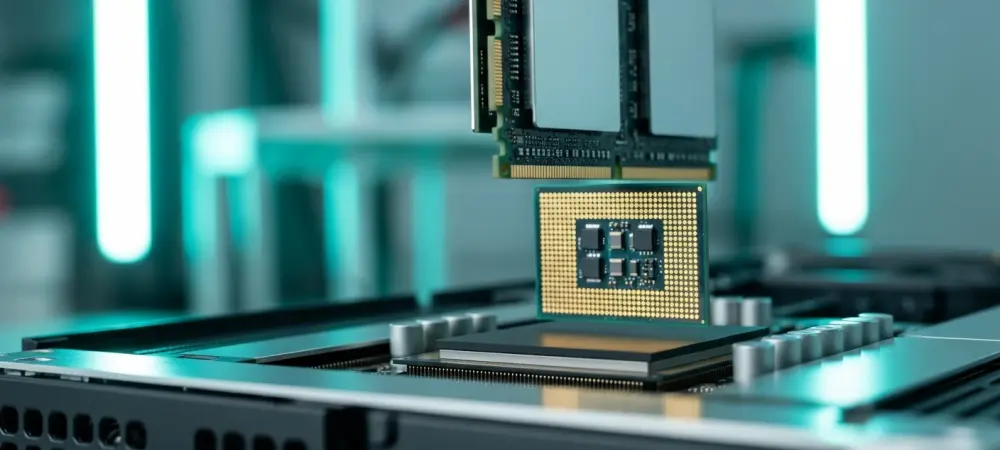
This strategic pivot has led to an unexpected resurgence in the importance of the Central Processing Unit in an industry that was previously obsessed with Graphics Processing Units. Because the agent harness—the orchestration code itself—is typically written in standard programming languages like Python or Go, it runs primarily on CPUs rather than AI accelerators. Consequently, demand for high-end server processors like Intel Xeon and Amazon’s Arm-based Graviton chips has surged as companies build out the infrastructure required to manage these complex agentic loops. Furthermore, the auto-regressive nature of agentic workloads, which involve frequent small requests and long-running processes, has exposed significant memory bottlenecks in traditional GPU architectures. This has driven a trend toward specialized hardware configurations, including the use of local workstations like the Mac Mini or custom-built rigs that prioritize high-bandwidth memory. Both enthusiasts and professionals are increasingly looking for hardware that can handle the unique telemetry and state-management needs of an autonomous agent.
Economic Impacts and Infrastructure Optimization
As agent-assisted programming and “vibe coding” become the standard for software development, the high cost of inference has emerged as a major economic hurdle for the industry. Unlike a single chat query, an agentic loop might involve dozens or even hundreds of calls to a model for a single task, which consumes massive amounts of computational resources. This financial pressure is forcing major AI providers to move away from flat-rate subscriptions and toward usage-based pricing or tiered models that reflect the actual cost of running autonomous workloads. The infrastructure that was originally designed for training massive models is now being forced into “double duty” for inference, but it is often poorly optimized for the high-frequency, low-latency demands of an active agent. This inefficiency has created a market gap for specialized architectures designed specifically to churn out tokens at speeds that far exceed human reading capabilities, focusing on the throughput required for machine-to-machine communication.
To address these efficiency concerns, new hardware architectures are emerging that prioritize the speed of token generation over raw floating-point performance. When the human is removed from the loop, the primary measure of success becomes the speed at which an agent can iterate through a problem, necessitating chips that can handle high-volume requests with minimal latency. We are seeing a move toward SRAM-heavy systems and specialized Language Processing Units that are designed to sustain the autonomous loop by providing the model with data as fast as it can process it. This shift in focus from “human-speed” to “machine-speed” is fundamentally changing how data centers are constructed and how power is allocated. By optimizing for the specific patterns of agentic behavior, providers can reduce the cost per task, making autonomous systems more accessible for routine business operations. This optimization is essential for the long-term viability of the technology, ensuring that the cost of automation does not exceed the value of the labor it replaces.
The Future of Distributed and Client-Side AI
To manage the overwhelming computational load of millions of autonomous agents, the industry is increasingly moving toward a “client-side” or hybrid offloading approach. This strategy involves running smaller, highly efficient models directly on a user’s local device or within a web browser to handle preliminary tasks like planning, drafting, and basic error checking. By disaggregating the workload, companies can reserve their massive, power-hungry cloud models for the most complex reasoning tasks that truly require high-tier intelligence. This distributed method helps to alleviate the strain on the global power grid and the massive data centers that currently underpin the AI ecosystem. It also offers significant privacy benefits, as sensitive local data can be processed by an agent without ever leaving the user’s hardware. This hybrid architecture represents a more sustainable path forward, balancing the need for high-performance intelligence with the practical limits of centralized infrastructure and energy consumption.
The ultimate success of autonomous AI depends on the seamless synergy between the underlying model and the harness that governs its actions. While massive data centers will continue to be the backbone of the industry for heavy-duty tasks, the ability to orchestrate these tasks efficiently at the edge is becoming the new standard for technological performance. Moving forward, the focus will likely remain on refining the systems that turn raw intelligence into reliable, independent action. Organizations should look toward modular agentic frameworks that can swap models based on the complexity of the task, ensuring that they are not overpaying for intelligence when a smaller, local model would suffice. By investing in robust orchestration layers and hardware that supports high-speed local inference, the technology sector can bridge the gap between conversational tools and truly autonomous workers. The transition to this agent-centric world was not built on a single breakthrough, but through the careful integration of software harnesses that finally allowed the intelligence we developed to interact meaningfully with the world.