

The rapid migration of artificial intelligence from digital screens into the physical world is fundamentally altering how industrial and service environments operate on a global scale. Unlike the stationary robotic arms that have defined automotive assembly lines for decades, current developments in “Physical AI” are introducing mobile, humanoid platforms capable of navigating and interacting with environments designed specifically for human occupants. This technological shift is not merely about replacing human labor but involves a complex synthesis of advanced machine learning software and versatile robotic hardware that can adapt to unpredictable real-world variables. As these machines become more adept at perceiving their surroundings and making autonomous decisions, companies are finding that the boundaries between traditional manufacturing and cutting-edge software development are beginning to dissolve completely. This evolution signals a move toward a more integrated, collaborative model of automation where technology works alongside humans in a shared space.
Industrial Symbiosis: The Rise of Strategic Alliances
A definitive example of this industrial transformation is the landmark partnership between the British technology firm Humanoid and the German industrial giant Schaeffler, which focuses on digitizing the factory floor. This collaboration involves a long-term commitment to deploy between 1,000 and 2,000 humanoid robots across Schaeffler’s international manufacturing network by 2032, beginning with immediate phases at German facilities. By integrating these robots into “brownfield” sites—existing factories that were not originally designed for automation—the project demonstrates that physical AI can be retrofitted into legacy infrastructure without requiring multi-billion dollar overhauls. These robots are currently tasked with handling logistics, managing material transport, and conducting factory-wide testing to ensure that mobile platforms can operate safely and efficiently within the tight constraints of a working industrial environment. This approach allows legacy companies to remain competitive while adopting modern AI capabilities.
Beyond the immediate deployment of robots, this alliance creates a sophisticated, closed-loop supply chain that benefits both the software developers and the hardware manufacturers. Schaeffler serves as the preferred supplier for high-precision joint actuators through 2031, which are the critical components that allow a robot to move its limbs with human-like precision and strength. This arrangement involves the production of over 1 million actuators, covering a significant portion of the hardware requirements for new wheeled and legged platforms. Such deep integration between robot manufacturers and component suppliers suggests a broader trend where the success of AI is tied directly to the resilience of industrial supply chains. By securing these vital components through long-term agreements, companies can stabilize their production pipelines and reduce the risks associated with the high costs of specialized hardware. This strategic alignment ensures that the physical capabilities of robots keep pace with their rapidly evolving software.
Data-Driven Finesse: Teaching Machines Human Dexterity
While the hardware provides the structure, the true intelligence of physical AI resides in its software layer, where startups like RLWRLD are focused on harvesting real-world motion data to solve the bottleneck of hand dexterity. Historically, programming a robot to perform nuanced physical tasks like folding a napkin or arranging a retail display required thousands of lines of rigid code, but current methods rely on “imitation learning.” Engineers are currently recording the intricate movements of human experts in various sectors using head-mounted and hand-mounted cameras, alongside motion-tracking gloves and VR headsets. In the hospitality industry, for instance, staff at high-end hotels are being tracked to capture the subtle mechanics of table setting and linen preparation. This data is then converted into machine-readable formats that allow robots to analyze joint angles, force application, and spatial orientation. By learning from human finesse, these machines can eventually replicate tasks that were once considered too delicate for automation.
The transition toward teaching robots through human observation is particularly vital for service industries where environments are far less predictable than a controlled factory floor. In the logistics sector, workers at major distribution centers are being monitored to understand the complex physics of lifting and handling oddly shaped warehouse goods, while retail employees are studied to refine the organization of food displays. This “software-first” approach to physical AI allows for a more flexible deployment of robots across different sectors, as the same hardware platform can be trained for various roles simply by updating its motion data library. As these imitation learning models become more sophisticated, the gap between human capability and machine performance continues to narrow. This method of data collection not only improves the efficiency of the robots but also provides a way for industries to preserve the institutional knowledge of their most skilled workers by digitizing their physical techniques into permanent, replicable AI models.
Global Adoption: Corporate Roadmaps and Future Scaling
The push for large-scale integration of physical AI is being led by global conglomerates that have established clear roadmaps for the late 2020s to ensure their facilities remain at the forefront of innovation. Hyundai Motor, for example, is leveraging its acquisition of Boston Dynamics to introduce humanoid robots into its global manufacturing sites, with significant operations planned for its electric vehicle plants starting in 2028. This move is mirrored by Samsung Electronics, which has articulated a vision to transform its entire manufacturing ecosystem into “AI-driven factories” by 2030. These industry giants are not just looking for incremental improvements but are aiming for a paradigm shift where humanoid robots and specialized automated systems manage the bulk of repetitive and physically taxing assembly tasks. This widespread corporate commitment signals that the integration of physical AI is a central pillar of future industrial strategy, intended to bolster productivity and mitigate the effects of aging workforces in developed economies.
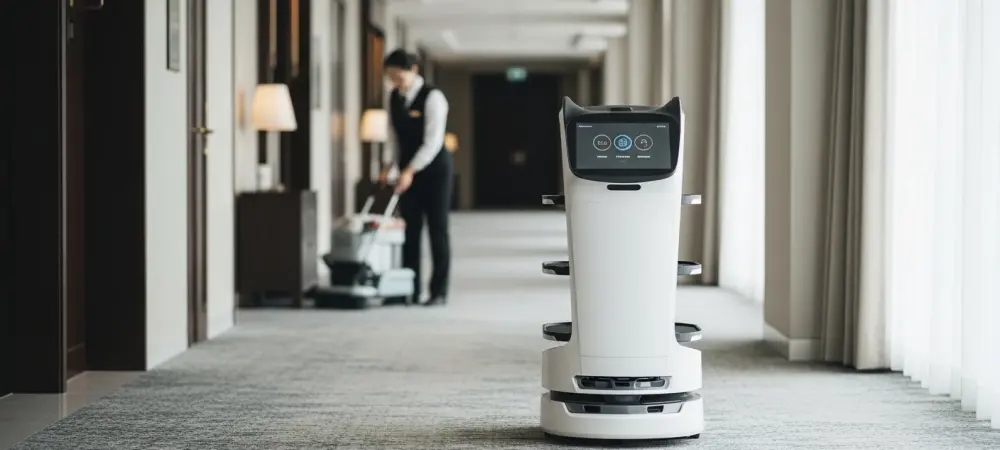
This momentum is not limited to heavy manufacturing; the service sector is also preparing for a significant influx of mobile AI platforms to handle back-of-house operations. Major hotel groups are already exploring robot rental services and expect humanoid units to be ready for comprehensive cleaning and support tasks by 2029. These service robots are designed to work during off-peak hours, handling the more labor-intensive aspects of property management so that human staff can focus on guest interaction and complex problem-solving. The adoption of physical AI in these settings is expected to scale rapidly as the cost of hardware decreases and the reliability of the software improves. By setting these ambitious deadlines, corporations are creating a competitive environment that accelerates technological development while forcing a rethink of traditional business models. The next several years will serve as a critical testing ground for these technologies as they transition from pilot programs to essential components of global service and industrial infrastructure.
Labor and Ethics: Navigating the Socio-Economic Shift
Despite the clear technological benefits, the rise of physical AI has introduced significant ethical challenges and concerns regarding the rights of the human workforce. Labor organizations, such as the Korean Confederation of Trade Unions, have expressed deep skepticism about how worker data is being utilized to train the very machines that might eventually replace them. There is a growing demand for transparency in how motion-capture data is collected and used, with unions arguing that the adoption of AI should involve direct engagement with the workforce to prevent the erosion of employment opportunities. Without clear guidelines and protections, the transition to an AI-driven workplace risks alienating the people who currently possess the skills these machines are trying to emulate. Ensuring that workers are partners in this technological evolution rather than just sources of training data is becoming a central point of negotiation in collective bargaining agreements across the manufacturing and hospitality sectors.
Another critical factor in the deployment of physical AI is the existing efficiency gap, as current-generation humanoid robots are still significantly slower than their human counterparts in most complex tasks. For instance, a job that a human can complete in under an hour might take a humanoid robot several hours due to the processing time required for navigation and object manipulation. This suggests that the immediate future of the workplace will not be a total replacement of people, but rather a hybrid model where machines handle the “dull, dirty, and dangerous” tasks while humans manage higher-level coordination. The successful integration of these technologies will require companies to balance the pursuit of efficiency with the practical realities of machine performance and social acceptance. As the industry moves forward, the focus must remain on creating a collaborative environment where physical AI enhances human capability rather than simply duplicating it at a slower and more expensive rate.
Future Considerations: Building a Collaborative Ecosystem
The transition toward physical AI in the modern workplace was characterized by a rapid fusion of industrial expertise and cutting-edge machine learning. As companies moved through the mid-2020s, they discovered that the most successful implementations were those that prioritized transparent communication with their labor force and invested in high-quality hardware partnerships. The industry learned that while data-driven imitation learning could replicate human dexterity, the human element remained essential for managing the complex social and ethical dimensions of the workspace. Moving forward, organizations should focus on developing robust internal policies for data privacy and worker retraining to ensure a smooth transition into an automated future. By treating physical AI as a collaborative tool rather than a standalone replacement, businesses successfully fostered environments where technology and human skill existed in a productive balance. This period established that the long-term viability of automation depended as much on social integration as it did on technological innovation.