

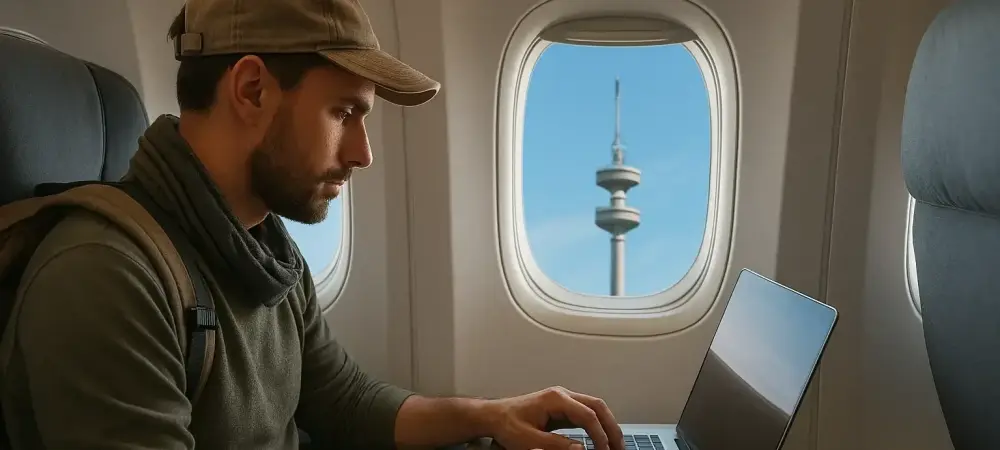
Low-Earth-orbit satellites positioned at an altitude of 550 kilometers allow Starlink to deliver data roughly sixty times faster than legacy geostationary systems. This technological leap has paved the way for South Korean carriers like Korean Air and Asiana Airlines to overhaul their in-flight connectivity, offering high-speed internet as a complimentary service rather than a premium luxury. Starting September 15, these full-service carriers began deploying Starlink across select aircraft, marking a significant milestone for East Asian aviation. Real-world testing aboard long-haul flights has revealed download speeds consistently hitting 84 Mbps, a rate that enables seamless video streaming and multitasking that was previously impossible at 40,000 feet. For passengers, the shift from sluggish, expensive connections to instantaneous, free access represents the most substantial change to the cabin experience in years. As more aircraft are retrofitted with these low-latency antennas, the industry is moving toward a standard where being “offline” during a flight becomes a deliberate choice rather than a technical necessity.
1. Activate Flight Mode
Switch your smartphone, tablet, or laptop to airplane mode as soon as the crew announces that electronic devices may be used. This foundational step is more than a safety requirement; it prepares the device to hand off its cellular hunting processes and focus entirely on the local Wi-Fi signal broadcast within the cabin. In the past, enabling flight mode meant entering a period of digital isolation, but the integration of Starlink has transformed this toggle into a gateway for high-speed productivity. Modern aircraft, such as the Airbus A350-900s being utilized by Asiana, are equipped with specialized phased-array antennas that track thousands of moving satellites simultaneously. These antennas maintain a stable link even as the aircraft cruises at nearly 600 miles per hour, ensuring that the transition from ground-based 5G to satellite-based Wi-Fi is nearly imperceptible to the user. Passengers should ensure their devices are updated to the latest software versions to maintain compatibility with the newest network security protocols used by these advanced satellite systems.
The underlying infrastructure supporting this connectivity is a massive constellation of roughly 8,000 satellites orbiting in a tight shell around the planet. Unlike older geostationary satellites that sit 35,000 kilometers away and suffer from significant signal lag, the proximity of Starlink’s hardware reduces the round-trip time of data packets to mere milliseconds. This technical advantage translates to a user experience that mirrors high-speed residential fiber more closely than traditional satellite internet. By activating flight mode, travelers allow their hardware to sync more efficiently with these low-latency beams. This efficiency is critical during the initial handshake between the device and the aircraft’s router, as it prevents the battery drain associated with a phone searching for distant ground towers. As the aviation industry moves toward 2027, the presence of these high-performance networks is expected to become a baseline expectation for long-haul travel, fundamentally altering the way passengers manage their time while traversing international time zones.
2. Establish a Network Connection
Open your Wi-Fi settings and select the network labeled “wifi.flyasiana.com” to bring up the login portal. This specific Service Set Identifier (SSID) acts as the bridge between the passenger’s device and the Starlink terminal mounted on the fuselage. Once selected, the device is redirected to a captive portal that serves as the command center for the flight’s internet session. This interface is designed to be lightweight and responsive, even when hundreds of passengers attempt to connect simultaneously during the initial climb. The reliability of this connection is bolstered by the carrier’s investment in multi-access point architecture within the cabin, ensuring that every seat from the front of business class to the back of economy receives a strong, consistent signal. Establishing this link is the first active step in joining a global movement where airlines compete not just on meal quality or seat pitch, but on the robustness of their digital “pipes” above the clouds.
This competitive landscape is intensifying as global carriers race to equip their fleets with similar capabilities. United Airlines in the United States has already outfitted more than 300 regional aircraft and intends to surpass 800 by the end of the year, while Japan’s ZIPAIR has already achieved a fully equipped fleet of Boeing 787-8s. Within the Hanjin Group, the rollout is even more ambitious, with plans to extend Starlink access across all five associated brands, including low-cost subsidiaries like Jin Air and Air Busan. This broad adoption suggests that the technology is scalable across different business models, from premium full-service carriers to budget-friendly operators. For the passenger, this means the process of establishing a connection will become increasingly standardized. Whether flying on a flagship A350 or a regional B737-8, the presence of a dedicated satellite portal is becoming a ubiquitous feature of the modern sky, effectively shrinking the gap between the terrestrial and aerial digital experiences.
3. Accept the Terms of Service
Review the usage guidelines, which include rules such as keeping devices on silent and prohibiting video calls, then agree to the conditions to proceed. This stage is crucial for maintaining cabin etiquette and ensuring that the high-speed bandwidth remains functional for everyone on board. While Starlink provides enough capacity for video conferencing, airlines have implemented strict policies against voice and video calls to preserve a quiet environment for other travelers. The terms of service also typically restrict access to certain high-bandwidth activities that could potentially saturate the local router, such as large file transfers or unauthorized live streaming. By agreeing to these terms, passengers acknowledge the shared nature of the resource and the need for a respectful digital environment. These guidelines are a necessary evolution in airline policy, balancing the desire for total connectivity with the traditional need for a peaceful, undisturbed cabin space during long-distance journeys.
Beyond etiquette, the terms of service also detail the geographic limitations that still affect satellite internet in 2026. While Starlink operates over international waters and most sovereign territories, certain countries such as China, India, and Pakistan have not yet authorized the service within their borders. Consequently, the internet connection may temporarily drop or become restricted when the flight path enters these specific airspaces. This regulatory hurdle is a reminder that while the technology is global, the legal frameworks governing data transmission are still tied to national boundaries. Carriers are working closely with international telecommunications bodies to expand these “green zones,” but for now, the terms of service serve as a practical guide for when a user can expect uninterrupted browsing. Understanding these caveats helps passengers plan their work or entertainment sessions, ensuring that critical tasks are completed while the aircraft is over the Pacific or within participating regulatory jurisdictions.
4. View Promotional Content
Watch two short video advertisements in their entirety (typically lasting around 30 to 40 seconds each) to unlock your internet session. This ad-supported model is the primary reason carriers like Asiana and Korean Air can offer the service without charging the high fees that were standard just a few years ago. Previously, passengers might have paid upwards of $21.95 for an unlimited flight pass, a cost that often deterred casual users. Now, the monetization shift toward sponsorships—such as the partnership with Hyundai Card—allows the airline to subsidize the high operational costs of satellite data. The advertisements are usually high-definition and optimized to load instantly, serving as a brief “toll” for access to a service that remains active for the duration of the flight. This approach reflects a broader trend in digital services where the consumer trades a small amount of attention for high-value utility, democratizing access to premium technology for every passenger regardless of their ticket class.
The economic implications of this shift are profound for the aviation industry. By removing the paywall, airlines are seeing a dramatic increase in connection rates, which in turn provides more data and engagement for their corporate partners. This creates a sustainable cycle where the cost of the Starlink hardware and the monthly data subscriptions are offset by advertising revenue rather than passenger credit cards. For the traveler, the convenience of not having to enter payment details or register for a membership cannot be overstated. The friction of the “paid Wi-Fi” era is being replaced by a streamlined, user-friendly process that recognizes the internet as a basic utility. As this model matures, it is likely that more carriers will adopt similar sponsorship strategies, perhaps offering even longer sessions or tiered access based on the type of promotional content viewed. The result is a more inclusive cabin where the ability to stay connected is no longer a perk reserved for those with corporate expense accounts.
5. Begin Browsing
Once the advertisements conclude, your device will be connected automatically. You can now stream high-definition video or perform work tasks without needing to register for a membership or provide payment details. The immediate availability of the connection allows for ground-based behaviors to extend seamlessly into the air. Whether it is scrolling through social media, catching up on Slack messages, or streaming high-resolution movies from a favorite platform, the lag-free nature of the Starlink connection makes the aircraft feel like a mobile office or living room. On long routes, such as the trek from New York to Incheon, this level of connectivity fundamentally changes the perception of travel time. Instead of being a period of forced downtime, the flight becomes a productive extension of the day, where real-time coordination with colleagues or family is as simple as it would be in a terrestrial café. The implementation of Starlink across major carriers represented a definitive turning point for the aviation sector in the mid-2020s. By transitioning from geostationary systems to low-Earth-orbit constellations, airlines successfully eliminated the technical bottlenecks that had plagued in-flight internet for decades. This shift encouraged a new standard of passenger expectations, where free, high-speed access was viewed as an essential service rather than a luxury. For travelers moving forward, the primary consideration should be the proactive management of their digital habits; the ability to remain connected throughout a fifteen-hour flight necessitates a conscious balance between productivity and the need for rest. As the global fleet continues to adopt this technology, the industry moved toward a future where the physical distance of flight no longer dictated a digital separation from the world below. Passengers were advised to check their specific carrier’s equipment schedule, as the rollout of these advanced satellite terminals became a deciding factor in airline loyalty and ticket sales.