

The thunderous roar of a Starship ignition often masks the persistent hum of massive server banks that are quietly redefining the boundaries of the global digital economy. While the public remains transfixed by the visual spectacle of rocket boosters returning to Earth, a financial shift has occurred that redefines the core mission of the world’s most prominent aerospace firm. The recent acquisition of a staggering $920 million monthly compute contract with Google signals that the company has transitioned into a primary architect of digital reality.
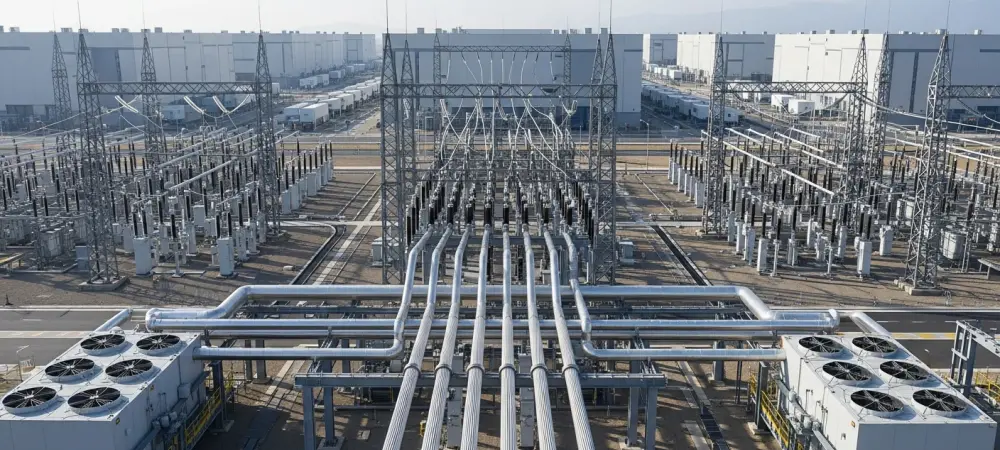
This agreement facilitates a massive technological presence in Memphis, where a dedicated campus housing over 110,000 GPUs operates as a nerve center for high-intensity processing. This development suggests that the physical layer of intelligence is no longer controlled solely by traditional cloud providers or silicon manufacturers. Instead, a new paradigm has emerged where the landlord of the stars is also becoming the landlord of the ground-based machinery that powers modern large language models.
The $920 Million Monthly Receipt: Why SpaceX Is No Longer Just a Rocket Company
The scale of the $920 million monthly agreement between SpaceX and Google represents a departure from the typical revenue streams associated with satellite launches or government transport contracts. This partnership effectively integrates the aerospace firm into the bedrock of the AI industry, providing the specialized environment required to run tens of thousands of power-hungry processors. By securing such a massive compute contract, the organization has proven that its true value lies in the “physicality” of its assets rather than just the height of its rockets.
This transition reflects a strategic realization that the digital frontier requires terrestrial anchors of immense scale. The Memphis campus is not merely a data center; it is a symbol of a broader transformation into an infrastructure powerhouse. As AI models require increasingly large clusters of hardware to evolve, the ability to provide the land, power, and high-speed networking for these clusters has become a lucrative business model that rivals the profitability of space flight itself.
The Shift from Algorithms to Atoms: Why Physical Infrastructure Is the New AI Bottleneck
The competitive landscape of artificial intelligence is currently undergoing a fundamental pivot from the abstract world of software to the uncompromising reality of atoms. As the performance gap between major software models begins to narrow, the true differentiator has shifted toward the ownership of hardware, cooling systems, and reliable energy sources. Maintaining dominance in the current market requires more than just clever code; it demands the heavy machinery necessary to sustain it.
Furthermore, as intelligence moves from browser-based queries into real-world applications like maritime logistics and defense, the ability to deploy compute at scale depends on owning the underlying machinery. SpaceX is uniquely positioned to address these trends by offering a vertically integrated platform that bridges the gap between digital models and physical deployment. This shift ensures that those who control the atoms—the hardware and the energy—will ultimately dictate the speed at which the algorithms can progress.
Power, Bandwidth, and 110,000 GPUs: Analyzing the Vertical Integration of SpaceX
SpaceX maintains a unique competitive edge through a vertically integrated “bundle” that merges disparate technologies into a single engine of growth. By combining unmatched rocket launch capacity with the Starlink satellite network and the intelligence layer of xAI, the firm has created a comprehensive platform. This integration allows AI to operate in remote environments, such as aviation and maritime sectors, where traditional fiber-optic connectivity is impossible or prohibitively expensive to install.
By controlling the launch vehicles, the orbital network, and the terrestrial compute campuses, the company has created an inescapable loop of infrastructure that few competitors can replicate. This ecosystem enables a seamless flow of data from space to ground, providing real-time processing capabilities that are essential for the next generation of autonomous systems. This vertical strategy ensures that every link in the AI value chain, from the satellite in orbit to the GPU in the warehouse, is part of a single, unified network.
Market Consensus on the $1.75 Trillion Valuation and the Risks of Orbital Computing
Financial analysts are currently re-pricing SpaceX as a landlord of the next technological cycle, leading to a staggering $1.75 trillion valuation. However, critics argue that such a high price relies heavily on the “optionality” of future ventures, specifically the long-term viability of orbital data centers. Significant governance concerns remain regarding the concentrated control held by Elon Musk, particularly given his overlapping leadership roles across multiple tech entities.
Moreover, unresolved technical hurdles such as radiation management and efficient cooling in the vacuum of space present substantial risks to the vision of orbital computing. International competition also looms large, specifically through China’s “Spacesail” project, which represents a direct challenge to the company’s aspirations for global dominance. These geopolitical and technical factors suggest that the path to becoming the permanent landlord of AI infrastructure is fraught with both administrative and scientific obstacles.
Practical Frameworks for Navigating an AI Market Built on Physical Resources
Organizations realized that a hardware-first strategy was the only way to thrive in a landscape dictated by physical resource scarcity. Tech leaders shifted their focus toward securing diverse infrastructure partnerships to avoid being locked into a single provider’s proprietary ecosystem. This proactive approach helped firms maintain operational flexibility while ensuring they had the necessary power and connectivity to deploy advanced models in challenging environments.
By recognizing that physical machinery was just as vital as the AI models themselves, companies successfully navigated the transition toward an infrastructure-heavy market. Strategic diversification and investment in specialized hardware became the standard for any firm wishing to remain competitive in an era where atoms were the ultimate bottleneck.