

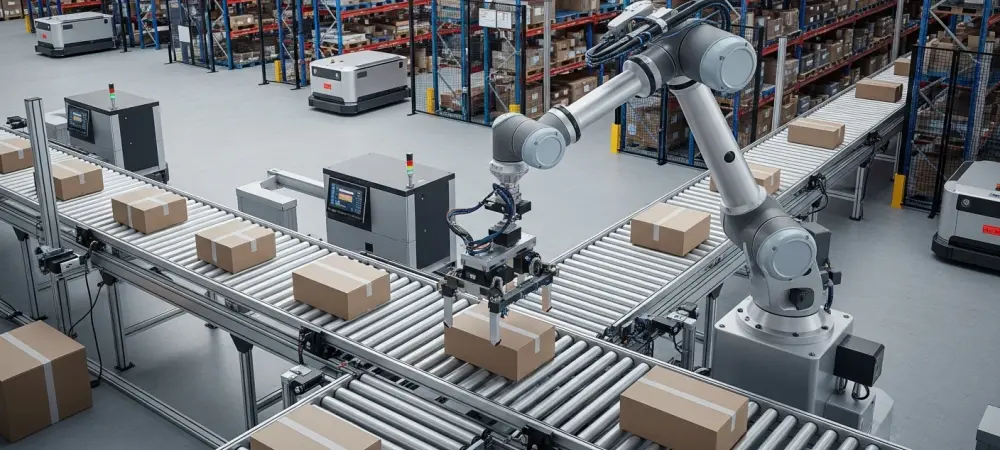
The arrival of a shipping container at a distribution center once signaled the beginning of a grueling, manual race against the clock that left workers exhausted and logistics managers frustrated by constant delays. For decades, the loading dock remained a stubborn island of manual labor in an otherwise automated sea of high-tech conveyors and sorting systems. Today, however, that narrative is shifting as advanced robotics finally penetrate the most chaotic zone of the warehouse. As supply chains move toward total optimization, robotic unloading is emerging as the critical link that transforms the dock from a traditional bottleneck into a streamlined, data-driven gateway. This exploration examines how technological breakthroughs and a new economic reality are making full-scale dock automation an immediate strategic priority for global logistics leaders.
The Evolution of the Autonomous Dock
Historically, robotic unloading was viewed as the “last piece of the puzzle” because of the sheer unpredictability inherent in inbound freight. Unlike the controlled environment of a storage rack or a conveyor belt, the inside of a shipping container is a variable space filled with shifting loads, different box sizes, and unpredictable orientations. In the past, industry leaders focused on lower-hanging fruit, such as automated storage and retrieval systems, which operated in predictable, grid-based environments. This created a digital divide where the middle of the warehouse was high-tech, but the entry and exit points remained almost entirely reliant on manual labor and heavy lifting.
Understanding this history is vital because it explains why the current pivot toward dock automation is so significant for the industry. It represents the sector finally tackling its most difficult physical challenge: the transition from unstructured environments to structured data flows. Previous attempts at this technology often failed due to limited computer vision or clumsy mechanical grippers. However, the convergence of sophisticated artificial intelligence and agile hardware has bridged that gap, allowing machines to perceive and react to the “chaos” of a packed trailer with a level of precision that was previously impossible.
Driving Efficiency: The Economic and Human Factor
The Financial Case: Reaching the Tipping Point
The financial argument for robotic unloading has reached a definitive tipping point as labor costs rise and technology prices stabilize. Current market analysis shows that the return on investment (ROI) for these systems is now reaching parity with traditional manual labor, particularly in high-volume operations where machines can run across multiple shifts. When robots are utilized at high capacities, the cost per box dropped becomes highly competitive against human wages. Beyond simple hourly pay, businesses are evaluating the total cost of “lumper” services—third-party laborers often hired for manual unloading—which can be inconsistent in quality and availability. By moving to a fixed-cost robotic solution, companies stabilize their operational budgets and achieve a more predictable throughput.
Workplace Safety: Reducing Risk on the Front Lines
Beyond the balance sheet, the shift toward robotics serves as a strategic response to significant human-centric risks. Unloading trailers is physically demanding work that frequently leads to chronic injuries, high turnover, and fatigue-related errors. By deploying robots to handle the most repetitive and strenuous tasks, companies significantly reduce the risk of strain-related insurance claims and improve overall site safety. This transition does not necessarily eliminate jobs but rather elevates them. Human workers are increasingly moving into more analytical or supervisory roles, managing fleets of robots rather than performing back-breaking labor. This professionalization of the warehouse environment helps companies attract talent in a competitive market while maintaining a safer workplace.
Implementation Realities: Navigating Change Management
While the potential for efficiency is vast, the implementation of robotic unloading is not a simple “plug-and-play” scenario for most facilities. Success requires a nuanced approach to change management and a willingness to rethink existing workflows. For instance, high-speed robots capable of moving 800 cases per hour require more than just power; they require standardized inbound flows to maximize their uptime. Current systems can still encounter difficulties with “ugly” freight—irregular loads or damaged boxes that don’t fit standard suction or gripping profiles. To solve this, companies are focusing on pressure-testing their equipment and working closely with suppliers to ensure that inbound trailers are packed in a way that facilitates robotic handling, blending physical innovation with rigorous process discipline.
The Future: Integrated Data and Material Flow
The next evolution of robotic unloading lies not just in better hardware, but in superior data integration across the entire supply chain. While improvements in battery life and lift capacity are certainly expected, the real game-changer is the synthesis of information across the warehouse ecosystem. Future supply chains will feature robots that communicate in real-time; for example, if an unloading robot detects a specific delay or a damaged shipment, it can feed that data back to the management system to automatically reroute resources. We are moving toward a reality where predictive modeling allows warehouses to adjust instantly to inbound disruptions. The dock of the future will be a data-rich environment where robotic labor is just one part of a sophisticated, self-optimizing flow of goods.
Strategic Implementation for Modern Logistics
For businesses looking to stay competitive, the primary takeaway is that dock automation has moved from a luxury to a strategic necessity. Logistics professionals should begin with “change management” before investing in heavy hardware. Standardizing how cargo is stacked and ensuring seamless data connectivity between the dock and the warehouse management system are essential first steps. Companies should prioritize high-volume sites where utilization rates are high enough to justify the initial capital expenditure. By focusing on facilities with consistent box dimensions and high throughput, businesses can create a successful blueprint for automation that can be scaled across their entire network, ensuring they are prepared for a future where speed and reliability are the ultimate metrics of success.
Building Resilient Infrastructure
Robotic unloading successfully transitioned from a futuristic concept to a cornerstone of the modern, resilient supply chain. By addressing the economic, safety, and operational challenges of the loading dock, these systems provided a level of consistency that manual labor could not match. As technology bridged the gap between physical labor and digital intelligence, the integration of robotic systems became the primary driver of warehouse efficiency. To move forward, organizations should audit their current inbound processes to identify where mechanical variability currently hinders automation. Establishing stricter packaging standards with vendors and investing in sensor-rich dock environments will be the necessary next steps to fully realize the benefits of an autonomous gateway. Ultimately, the companies that navigated this transition built a more agile infrastructure capable of weathering the complexities of global trade.