

Deep within the iron-rich dust of the Pilbara, a silent digital revolution has replaced the traditional roar of human-operated machinery with the calculated hum of autonomous systems. The Australian industrial landscape has moved past the era of tentative experimentation. Connectivity, once viewed as a secondary utility, has emerged as the central nervous system of modern production. In the current climate of 2026, the discussion has pivoted from whether these technologies work to how they can be deployed at scale to ensure absolute operational continuity. This transition marks a fundamental change in how heavy industry perceives its digital assets, moving away from temporary solutions toward permanent, hardened infrastructure that can withstand the most rigorous environmental demands.
As these organizations integrate more sophisticated robotics and sensor arrays, the reliance on a stable connection has become the defining factor for site safety and efficiency. The shift is not merely about staying current with global trends; it is a defensive maneuver against the increasing complexity of remote operations. By building localized, high-performance networks, Australian firms are creating a protective bubble around their data and machinery, ensuring that the physical isolation of the Outback does not translate into digital isolation. This strategic maturation is turning connectivity from a logistical hurdle into a competitive advantage that defines the modern era of industrial excellence.
Beyond the Hype: Australia’s Shift Toward Mission-Critical Connectivity
The “proof of concept” phase for private 5G has officially concluded across the most vital economic sectors of the nation. In the vast, unforgiving environments of Western Australia or the remote energy corridors of Queensland, connectivity is now a non-negotiable requirement rather than a boardroom curiosity. Mining and rail operators no longer accept the inconsistencies of generic networks; they demand the same “five nines” reliability—99.999% uptime—that traditionally governs emergency services. As autonomous haulage and real-time data analytics become the baseline for profitability, the fragility of legacy Wi-Fi and public mobile networks has been exposed, necessitating a shift toward private, dedicated infrastructure.
This shift reflects a deepening maturity in the industrial market, where the focus has moved toward long-term digital transformation strategies. The “technology agenda” in these sectors now frequently outpaces the capabilities of standard commercial rollouts, creating a vacuum that only custom-engineered solutions can fill. Private 5G is no longer merely about achieving higher speeds; it is about establishing absolute control over a dedicated environment where the cost of a single minute of communication failure can reach hundreds of thousands of dollars. By internalizing these networks, companies are effectively insulating their most critical operations from the congestion and unpredictability of the outside world.
The Evolution of Industrial Connectivity in the Remote Outback
The unique geographical and technical hurdles of the Australian Outback present obstacles that public cellular networks were never designed to surmount. Standard public 5G rollouts prioritize high-density urban areas, often leaving remote mines and offshore rigs in a total connectivity vacuum. For an industrial site spanning hundreds of square kilometers, the reliance on a distant tower is a risk that modern operations can no longer afford. The “zero tolerance” policy for communication lapses during catastrophic weather events, such as bushfires or cyclones, has fundamentally redefined the role of the digital backbone in industrial safety and logistics.
Moreover, the technical requirements of industrial hardware differ significantly from consumer mobile devices. Heavy machinery requires consistent low-latency connections to prevent the “jitter” that could cause an autonomous vehicle to halt unexpectedly. The evolution of these networks has therefore focused on creating low-latency pipes that can handle massive, bi-directional data loads. This necessity has driven the adoption of private spectrum, allowing companies to tailor their signal propagation and bandwidth allocation to the specific topography of their sites. The result is a network that functions less like a public utility and more like a bespoke piece of high-performance industrial equipment.
Strategic Pillars of Private 5G Implementation in Heavy Industry
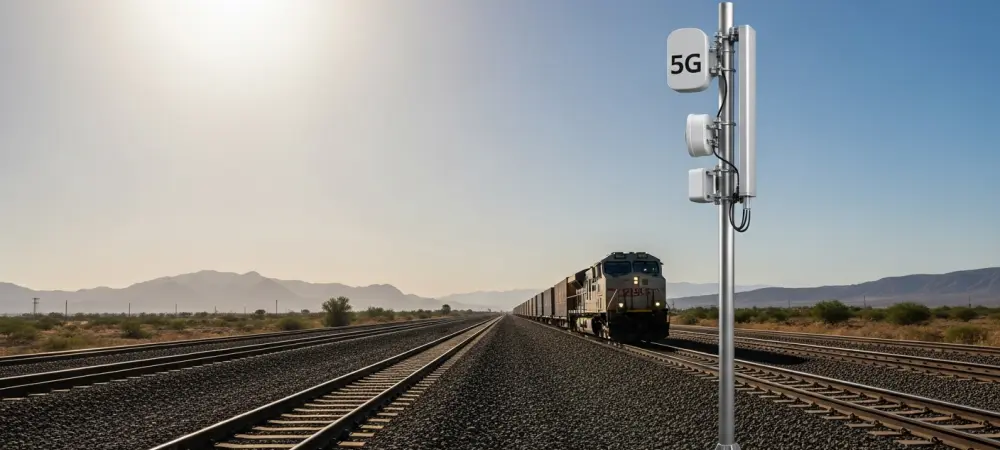
The transition to private 5G is currently being spearheaded by three core sectors: mining, rail, and energy. In the mining industry, the push for fully autonomous haulage systems requires a network that can sustain continuous high-definition video feeds and sensor telemetry without interruption. For the rail industry, maintaining real-time data across thousands of miles of track is essential for safety and predictive maintenance, ensuring that potential failures are identified before they lead to costly derailments. Meanwhile, the energy sector increasingly relies on remote monitoring of hazardous sites, where high-speed connectivity allows technicians to perform complex diagnostics from the safety of a central operations hub.
These diverse use cases are unified by a common reliance on “edge” engineering, where the network is designed from the ground up to support specific hardware and environmental conditions. This approach involves a move away from the one-size-fits-all commercial rollout toward a model that considers the unique physical characteristics of each location. Whether it is overcoming the signal interference caused by heavy mineral deposits or ensuring coverage deep within an underground shaft, the engineering focus has shifted toward site-specific optimization. This level of customization ensures that the network remains a reliable asset rather than a liability in challenging operational theaters.
Lessons from Public Safety: Applying Emergency Standards to Commercial Assets
Drawing from the expertise of massive infrastructure projects, such as the New South Wales Public Safety Network, the industrial sector is adopting a “mission-critical” mindset. Experts suggest that the discipline required to maintain a network across 540,000 square kilometers for emergency responders provides the perfect blueprint for modern industrial sites. The synergy between government-grade resilience and commercial operations has led to a new standard of network design. By adopting the operational rigor of a government agency, private companies can ensure their connectivity remains robust even under extreme environmental pressure, treating their operational data with the same urgency as a life-saving communication.
This crossover of expertise has introduced the concept of sovereign industrial networks that are entirely self-contained and resilient to external disruptions. Leveraging high-stakes engineering standards means that the private 5G core is often built with redundant power systems and hardened physical sites. The philosophy here is that an industrial network should never be the weakest link in the supply chain. By implementing these rigorous public safety standards, companies are not only improving their daily efficiency but are also building a foundation that can survive the most catastrophic failures of regional infrastructure.
A Roadmap for Transitioning to Managed Private Networks
Navigating the transition to a private 5G environment requires a sophisticated strategy to manage regulatory and financial hurdles. The initial challenge often involves the complexity of spectrum acquisition; dealing with the Australian Communications and Media Authority (ACMA) can be a significant administrative burden. Organizations are increasingly turning to spectrum facilitators to streamline this process, significantly reducing project lead times. This allows industrial players to bypass the legal minefields of frequency allocation and focus on their core operational goals, ensuring that the network is ready for deployment much faster than traditional methods would allow. There is also a notable shift toward “Network as a Service” (NaaS) models, which allow companies to transition from heavy upfront capital expenditure to a managed operational model. This framework transfers the technical risk and maintenance burden to external experts who specialize in network performance. Key strategies in this roadmap include pre-configuring hardware at specialized staging facilities to avoid the logistical delays associated with remote site work. Furthermore, establishing 24/7 remote monitoring through a dedicated Network Operations Center ensures that the system can scale alongside the business, providing a future-proof solution that evolves with the technological landscape.
The industry finalized its departure from traditional connectivity models as the sheer scale of automation demanded more resilient digital foundations. Decision-makers recognized that the integration of artificial intelligence and robotics required a level of network sovereignty that only private 5G could provide. These organizations successfully implemented managed service frameworks that allowed them to prioritize operational outcomes over the complexities of hardware maintenance. The transition proved that treating connectivity as a mission-critical asset significantly reduced the risk of downtime in the most remote regions of the continent. Stakeholders identified that the shift from ownership to performance-based models was the most effective way to manage the rapid pace of technological change. Ultimately, the adoption of these specialized networks established a new benchmark for industrial efficiency and safety that stood the test of time.