

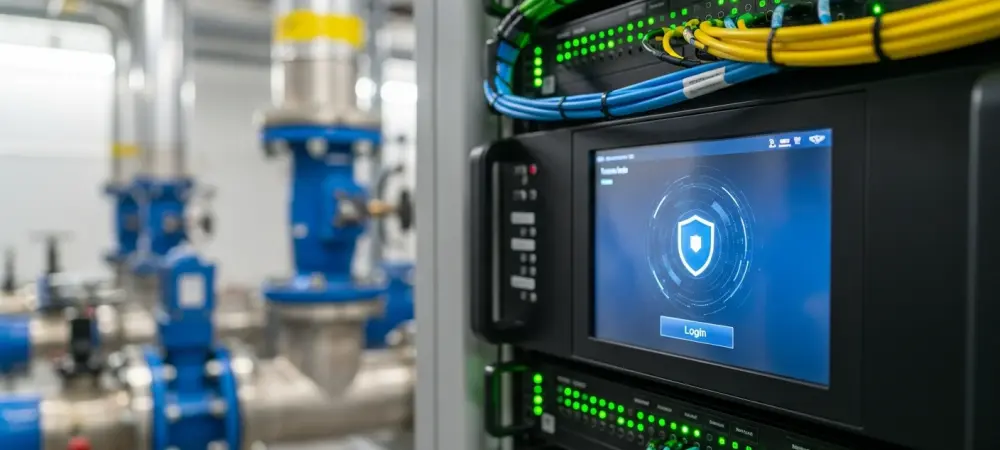
The rhythmic, mechanical humming of a municipal water treatment facility often masks the unsettling reality that these vital installations have become the primary frontline of a high-stakes digital battlefield where the lines between physical safety and virtual code have blurred entirely. Across the globe, the systems responsible for delivering clean drinking water and managing wastewater are no longer just utilitarian backgrounds of modern life; they are now strategic assets in a shadow war. As cyber operations become more sophisticated, the vulnerability of these networks has transitioned from a theoretical risk discussed in high-level intelligence briefings to a tangible threat that can be felt at the kitchen tap of any average citizen. The urgency of this situation cannot be overstated, as the very foundation of public health and societal stability rests on the reliable flow of water. While power grids and financial systems have long been hardened against intrusion, the water sector remains a patchwork of aging technology and limited resources. This disparity has created a massive target for international rivals who recognize that disrupting water supplies can cause more immediate and widespread panic than almost any other type of infrastructure failure. Protecting these systems is no longer just an IT concern but a fundamental component of sovereign defense in an increasingly volatile digital landscape.
The Silent Vulnerability Flowing Through Our Cities
In early 2024, a municipal water tank in Muleshoe, Texas, began to overflow uncontrollably, not because of a mechanical failure or an act of nature, but because of a remote breach. This incident served as a chilling wake-up call for local governments that had long operated under the “it can’t happen here” mentality. The attackers gained access through a remote interface, demonstrating that even a small, rural utility could be reached by adversaries located halfway around the world. It was a clear signal that no community is too small to be overlooked when the goal is to test the resilience of national infrastructure.
Moving beyond this traditional complacency has become the primary challenge for municipal leadership. For decades, the water sector operated in relative obscurity, relying on “security by obscurity” to keep threats at bay. However, as international rivals seek strategic leverage, civilian infrastructure has been reclassified as a high-value target. These systems are being used as pawns in larger geopolitical games, where the ability to manipulate a city’s water supply provides a powerful psychological tool that can be used to influence policy or project power without ever firing a single shot.
Geopolitical Tensions and the Shift in Strategic Cyber Doctrine
The nature of digital aggression has undergone a fundamental transformation, shifting from opportunistic nuisance hacking toward a deliberate, state-level competition. This doctrine treats civilian networks as extended battlefields where the disruption of services can weaken the internal resolve of a country. By targeting the water supply, adversaries aim to demonstrate that the state cannot provide the most basic level of protection for its residents.
Furthermore, these intrusions are frequently used to signal capability and test the thresholds of national emergency response. A state actor might not choose to poison a water supply today, but by proving they can access the dosing systems, they create a persistent threat that hangs over future diplomatic negotiations. This “pre-positioning” allows rivals to hold critical infrastructure hostage, creating a constant state of low-level anxiety. It is a calculated method of testing how quickly a government can detect a breach and how effectively it can communicate with a frightened public during a crisis.
Mapping the Global Threat Landscape: Actors and Their Objectives
Identifying the specific actors involved reveals a diverse range of motivations and methodologies. The Iranian-affiliated group known as CyberAv3ngers has gained notoriety for its focused attacks on specific industrial hardware, such as the Unitronics Vision Series. Their tactics are often straightforward, exploiting default factory credentials and internet-exposed ports to gain control. This group often accompanies its technical disruptions with political messaging, turning a functional utility breach into a platform for international propaganda and geopolitical signaling. In contrast, Russian-linked groups like Sandworm have demonstrated a more aggressive posture, moving toward high-consequence physical disruptions. Their activities suggest a willingness to manipulate environmental controls, such as opening dam floodgates or seizing control of hydraulic systems to cause physical damage. Meanwhile, China’s Volt Typhoon represents a different kind of danger characterized by long-term persistence. Rather than immediate disruption, they focus on “burrowing” into networks and using native administrative tools to stay hidden for years, ensuring they are ready to strike only when it serves a specific strategic objective in a future conflict.
The Fragility of Industrial Control Systems: Analysis of Recent Incidents
Technical findings from 2025 highlighted the severe risks associated with aging industrial control systems. In Poland, breaches at multiple treatment plants allowed attackers to access chemical dosing parameters, a move that could have fundamentally altered the safety of the water supply. Similarly, a dam in Norway experienced a breach that allowed unauthorized water releases for several hours. These incidents were not the result of ultra-sophisticated malware but rather the exploitation of fundamental flaws in how these systems were connected to the wider world. The high cost of technical debt continues to haunt the roughly 170,000 small-scale utilities that struggle with limited budgets and outdated equipment. Many of these facilities rely on Programmable Logic Controllers (PLCs) that were never designed to be connected to the internet. When these devices are placed behind weak firewalls or left with public-facing IP addresses, they become easy targets for automated scanning tools. The lack of network segmentation remains a common failure point, allowing an intruder who gains access to a simple office computer to jump horizontally into the sensitive controls of the water treatment process.
Strengthening the Flow: Essential Defensive Strategies for Modern Utilities
To combat these threats, utilities must take immediate steps to eliminate public internet exposure for all industrial control hardware. This requires a shift away from convenience and toward a “security-first” architecture where critical controls are isolated from any outside network. Implementing strict authentication protocols, including mandatory multi-factor authentication for every remote access point, is no longer optional. These basic hygiene measures could have prevented a majority of the breaches seen in the last several years, closing the most obvious doors that attackers have used to enter.
Building a collaborative defense also requires active and ongoing communication with federal agencies such as the FBI and CISA. The realization that water security was synonymous with national security finally drove a paradigm shift in how local municipalities viewed their digital borders. State and federal agencies moved toward a model of mandatory oversight, replacing the outdated voluntary standards that once left thousands of communities exposed to international interference. This shift recognized that the defense of water systems could not be left to the whims of local budgets alone; instead, it required a unified front to protect the public.
This collective approach ensured that even the smallest towns possessed the tools to repel sophisticated state actors. It was understood that the vulnerability of one utility was a vulnerability for the entire network of national infrastructure. By standardizing response protocols and investing in modernized, segmented networks, the sector began to bridge the gap between physical engineering and digital safety. These historical efforts effectively closed the technical gaps that had previously allowed global rivals to weaponize the very water that sustained the population, creating a more resilient foundation for the years ahead.