

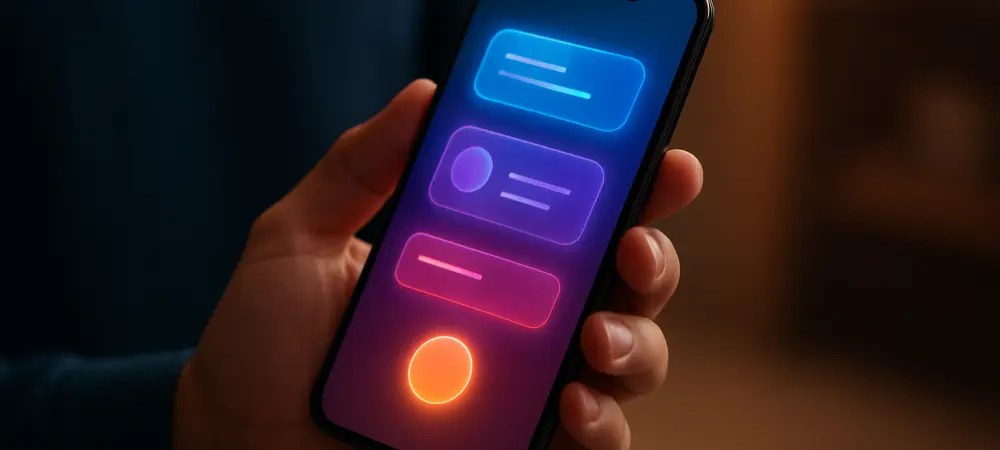
Digital interfaces have transitioned from being simple utilitarian grids into sophisticated, living canvases that respond to the nuances of human touch and environmental lighting. Software design has historically lived in the shadow of hardware, but the arrival of OriginOS 7 signals a fundamental shift where the digital experience feels as premium as the glass and metal housing it. Instead of merely being a tool for launching applications, the new design philosophy treats the screen as a living material. By moving away from flat, uninspired icons toward a “Liquid Glass” concept, the ecosystem is betting that users want a phone that does not just work better, but feels more tangible and high-fashion in every interaction.
This evolution is not merely a cosmetic update; it represents the maturation of the Android ecosystem into a space where software and hardware are inextricably linked through “Light and Shadow Aesthetics.” The importance of this transition lies in how it redefines the value proposition of a flagship device. As performance gaps between brands narrow, the tactile quality of the interface becomes the primary differentiator. OriginOS 7 aims to prove that a heavily customized skin can be both visually opulent and technically lean, establishing a new benchmark for how users perceive quality in a digital-first world.
The End of the Static Interface: How Vivo Is Challenging Software Norms
The era of the static home screen is effectively over as the industry moves toward environments that mirror physical reality. OriginOS 7 treats the display as a three-dimensional space where depth and light determine the user’s focus. This approach challenges the traditional norm that mobile software should be flat and minimalist, suggesting instead that a sense of volume and presence creates a more intuitive connection between the device and its owner.
Furthermore, the integration of these aesthetics serves a functional purpose by reducing cognitive load through familiar physical cues. When a digital folder behaves like a real object—responding to gravity or showing translucency—it becomes more predictable to the human eye. This focus on “tangible software” marks a departure from the abstract designs of the early 2020s, favoring a design language that feels grounded in the physical world while maintaining the flexibility of a digital medium.
The Glass-Morphism Trend and the Push for Digital Craftsmanship
As smartphone hardware reaches a plateau in 2026, the next frontier of competition lies in the “digital craft” of the operating system. Consumers increasingly associate depth and organic movement with high-end technology, a trend popularized by premium desktop designs and now successfully migrating to mobile. The push for glass-morphism is about more than just transparency; it is about creating a sense of luxury that justifies the investment in a premium handheld.
OriginOS 7 addresses the growing demand for software that reflects a personal style while solving traditional performance hurdles like lag and battery drain. Historically, heavy visual effects were the enemy of efficiency. However, new engineering techniques allow these complex blurs and light-engine shadows to run without taxing the processor. This creates a scenario where aesthetics and performance no longer exist in opposition, allowing for a high-gloss finish that remains exceptionally fluid.
Dissecting the Pillars of the OriginOS 7 Overhaul
The core of the personalization engine lies in the physics-based interactions of the “Wiggle” feature and “Glowing Flowers” wallpapers. These elements do not just loop an animation; they respond to touch and gravity in real-time, allowing specific parts of an image to bend or react based on the user’s gesture. This level of granular interaction turns the lock screen into a playground of light and liquid movement, making the device feel responsive to the physical environment.
Control is further refined through a modular Control Center that breaks away from rigid grids. Users can now resize and reposition tiles, creating a bespoke layout that prioritizes their most-used shortcuts. This flexibility is supported by three distinct visual textures—Realistic, Natural, and Soft—which allow for a choice between high-gloss glass effects or matte, simplified blurs. This variety ensures that the “Liquid Glass” aesthetic can be adapted to suit those who prefer vibrant depth or those who lean toward a more understated, frosted look.
Utility has also seen a significant evolution with the redesign of the OriginPlayer and the Super Pocket system. The media player now supports a wider array of third-party applications with a full-screen interface that matches the overall aesthetic of the OS. Meanwhile, the Super Pocket utilizes a stacked card system to manage content, replacing the cluttered scrolling methods of the past with a more organized, tactile way to handle saved data and frequent tasks.
Performance Metrics and the Atomic Workbench Transition
Beneath the artistic layers, the software delivers a 14% increase in rendering speeds and a 19% improvement in page switching fluidity. These benchmarks indicate that the visual overhaul is supported by a highly optimized backend, specifically built on the Android 17 framework. Despite the inclusion of complex lighting engines, power consumption for animations has dropped by 20%, marking a significant milestone in software engineering for the current year.
A major game-changer for mobile productivity is the migration of the “Atomic Workbench” from foldable devices to standard smartphones. This tool allows for desktop-class multitasking on a handheld screen, enabling users to swap between active applications and move data across a sidebar with ease. By bringing these sophisticated tools to a broader range of devices, the ecosystem is bridging the gap between casual use and professional-grade mobile computing.
Strategies for Mastering the New OriginOS Ecosystem
To fully leverage the new ecosystem, users should explore sensor-based interactions like the “Glint” and “Flip Cards” features. These tools turn standard photo albums into interactive galleries that respond to the device’s gyroscope, creating shifting light patterns as the phone is tilted. Utilizing these features transforms static memories into dynamic displays that showcase the technical capabilities of the “Liquid Glass” engine.
Optimization of the multitasking workflow is best achieved by mastering the edge-mounted Atomic Workbench. Users can move between high-intensity tasks and simple communication apps without losing their place, making the most of the increased rendering speeds. Additionally, the new AI-driven subject isolation tools allow for the creation of custom home screen stickers from personal photos, further enhancing the bespoke nature of the interface.
Balancing aesthetics with power needs remains a simple task through the “Premium Texture” settings. Selecting the “Natural” or “Soft” profiles can provide a cleaner look while maintaining the core visual improvements of the system. For those who want the full flagship experience, the “Realistic” setting offers the most advanced lighting effects, providing a truly immersive experience that defines the current standard of premium Android design.
The rollout of OriginOS 7 successfully redefined the relationship between the user and the digital interface. Developers prioritized a fusion of artistic glass-morphism and technical fluidity, which resulted in a system that felt significantly more responsive than its predecessors. Early adopters moved toward a more modular way of managing their digital lives, utilizing the Atomic Workbench to streamline complex workflows. The community recognized the value of “pixel-level adjustments” that kept text legible against vibrant backgrounds, ensuring that the visual richness never hindered the core utility of the device. By the end of the deployment phase, the platform established a new benchmark for how a mobile operating system represented luxury and efficiency in a single package.