

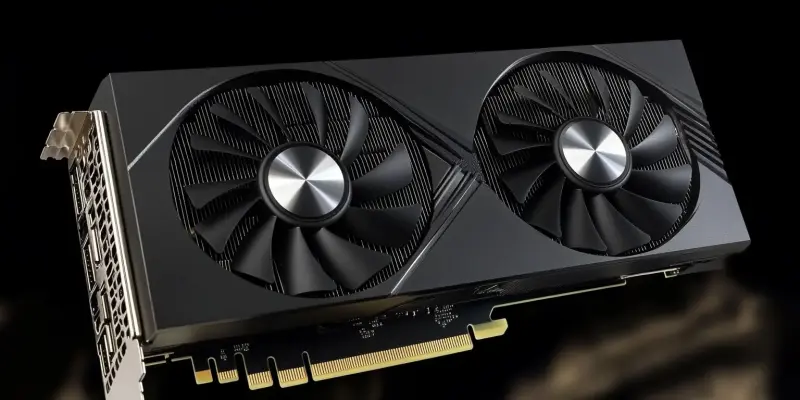
Amidst growing anticipation and excitement within the gaming community, Nvidia’s recent decision to cut the supply of RTX 4060 chips signals the tech giant’s imminent introduction of its next-gen RTX 5060 series. The news of this substantial supply reduction—up to 60% in the Asian market—has sparked discussions on whether this trend will soon extend to a global scale. This move is seen as a clear indication that Nvidia is gearing up for the launch of its RTX 5060, rumored to debut in March. However, despite the drastic supply cuts, there have been no significant price drops on RTX 4060 models as of yet. Industry analysts suggest that such price cuts may soon follow as the new models hit the market.
The RTX 4060 series, popular among gamers for its impressive performance and robust capabilities, continues to hold strong positions in Steam surveys, reflecting its widespread acclaim. However, with the forthcoming release of the RTX 5060, gamers and tech enthusiasts are eagerly anticipating the updates and enhancements that the new series will offer. The expected price points for the new models are $329 for the RTX 5060 and $419 for the RTX 5060 Ti, both of which will utilize the standard 8-pin connectors instead of the newer 16-pin ones. Additionally, these cards will require a 650W power supply, which aligns with the power demands of current high-performance graphics cards.
When it comes to memory configurations, the RTX 5060 will continue to offer 8GB, while the RTX 5060 Ti will come in 16GB and 8GB variants, though upgraded to GDDR7. This enhancement underscores Nvidia’s commitment to advancing technology even amidst critiques claiming that the RTX 5000 series has been underwhelming to many in the gaming community. The notable upgrades in power efficiency and memory bandwidth highlight Nvidia’s ongoing efforts to meet the evolving demands of gamers and tech professionals alike. The impending launch of the RTX 5070, expected later this month, further demonstrates Nvidia’s steady progression within its Blackwell lineup. This launch will undoubtedly provide more insight into the capabilities and innovations Nvidia plans to bring to the graphics card market throughout the year.
As Nvidia prepares for the official introduction of the RTX 5060 series, the industry keenly observes these shifts, anticipating how they will shape both market dynamics and user experience. The strategic supply cuts of the RTX 4060 chips could be seen as a tactical approach to phase in the new series while maintaining a degree of exclusivity and urgency among potential buyers. Gamers and tech enthusiasts are poised for another leap in performance and capability, eagerly awaiting tangible benchmarks and real-world performance data as soon as the 5060 series is unveiled.