

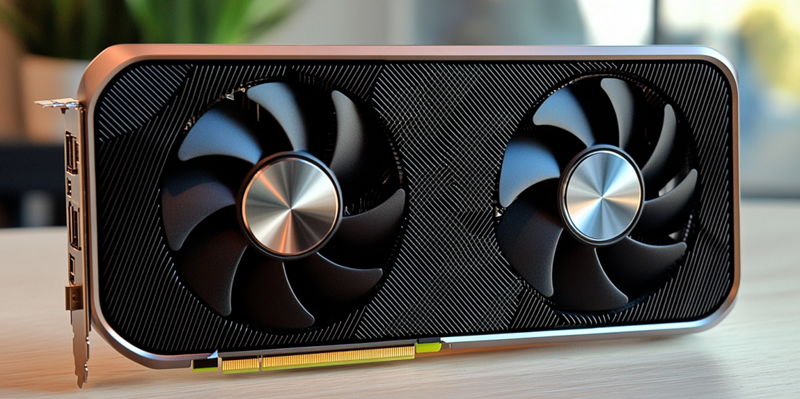
Recent rumors have been circulating about Nvidia’s decision to potentially wind down production of its mid-to-higher-end RTX 4000 series GPUs. The tech industry is abuzz with speculation as Nvidia seems poised to make way for the next-generation RTX 5000 models. This move includes the RTX 4080 Super, RTX 4070, and their Super and Ti variants, with production possibly halting soon and existing stock potentially selling out by the end of January 2025.
Reasons Behind the Potential Phase-Out
Inventory Clearance and Strategic Planning
The Board Channels forums in China, as reported by a Japanese tech blog Gazlog and noticed by VideoCardz, have been the primary source of these rumors. This speculation aligns with earlier reports suggesting that Nvidia has been slowing down the assembly lines for the Lovelace series since August 2024. Recent information suggests that Nvidia aims to clear out its RTX 4000 inventory, except for the RTX 4060, which remains available likely due to the absence of an imminent RTX 5060 release. This phased approach underscores Nvidia’s strategic planning to ensure a smooth transition between GPU generations while maintaining operational efficiency.
The consensus among these rumors is that Nvidia is systematically phasing out its current generation of GPUs to ease the introduction of the RTX 5000 series, presumably slated for launch in early January 2025. This transition indicates that Nvidia is gearing up to release the RTX 5090, 5080, and 5070 models, with these launches likely extending into early or late 2025. By strategically managing inventory and production, Nvidia aims to mitigate supply chain disruptions and avoid the pitfalls of overstocked warehouses.
Industry and Consumer Impact
Retailers might respond to Nvidia’s rumored production halt by offering substantial discounts on existing RTX 4000 inventory, especially during the Black Friday sales season. Such discounts could be advantageous for consumers who are looking to purchase high-performance GPUs at lower prices before the next-generation models flood the market. This scenario signals to potential buyers that waiting for upcoming releases might yield better value, either through acquiring the latest technological advancements or benefiting from reduced prices on current models.
From an industry perspective, Nvidia’s maneuvering illustrates a calculated move to stay ahead in the highly competitive GPU market. This potential shift builds on updates indicating superfast clock speeds and enhanced features expected in the RTX 5000 series, raising anticipation among tech enthusiasts. By staying agile and responsive to market demands, Nvidia aims to maintain its leadership position and cater to the evolving needs of gamers, creators, and professionals who rely on cutting-edge GPU performance.
Anticipation and Expectations for the RTX 5000 Series
Performance Enhancements and Technological Advancements
The forthcoming RTX 5000 series is expected to feature significant performance enhancements and technological advancements, further solidifying Nvidia’s reputation for innovation. Updates suggest that the new GPUs will boast superfast clock speeds and advanced features, making them highly anticipated among tech enthusiasts. These improvements are likely to deliver substantial gains in graphics rendering, real-time ray tracing, and AI-driven tasks, setting a new benchmark for GPU performance.
As Nvidia prepares to introduce its next-generation GPUs, industry analysts and consumers alike are speculating on the potential capabilities and price points of the RTX 5090, 5080, and 5070 models. With enhancements anticipated in processing power, energy efficiency, and thermal management, the RTX 5000 series could redefine the gaming and professional graphics landscape. This launch promises to deliver unparalleled performance for users engaging in resource-intensive applications, from gaming to 3D modeling and beyond.
Retail Strategies and Consumer Opportunities
There have been recent rumors about Nvidia’s possible decision to wind down the production of its mid-to-higher-end RTX 4000 series GPUs, leading to a buzz within the tech community. It’s speculated that Nvidia is ready to shift focus to the next-generation RTX 5000 models. The transition includes the RTX 4080 Super, RTX 4070, and their various Super and Ti variants. If these rumors hold true, production may be halting soon, with existing stock likely to be sold out by the end of January 2025.
The tech world is excitedly anticipating how the new RTX 5000 series will compare to the current RTX 4000 series in terms of performance, efficiency, and price. Enthusiasts and professionals alike are keeping a close eye on these developments, as they could significantly impact gaming, graphics rendering, and other GPU-heavy applications. Nvidia’s strategy seems aimed at staying ahead of the curve in an increasingly competitive market, where innovation and timely product releases are critical for maintaining leadership.