

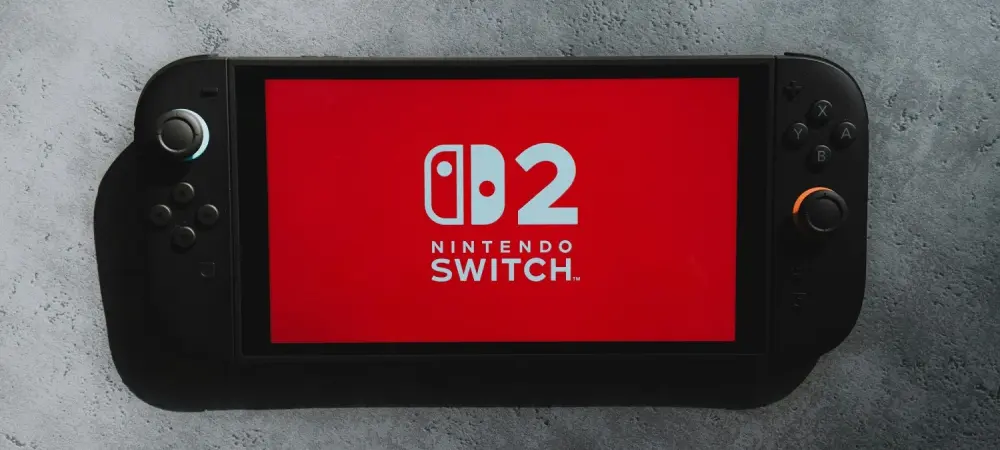
Nintendo’s latest release, the Switch 2, has emerged as a notable contender in the handheld gaming market, challenging the established norms with its impressive features and technical prowess. The announcement of its ability to handle graphically intense games such as Cyberpunk 2077 and Hogwarts Legacy marks a significant evolution in handheld gaming technology. Armed with cutting-edge components, including Nvidia’s custom processor and proprietary DLSS technology, the Switch 2 offers gamers an exceptional visual experience previously constrained to larger, stationary consoles. The enhanced computational capabilities allow games to run seamlessly, delivering performance comparable to the Xbox Series S. Despite being positioned as an entry-level option in the Xbox lineup, even this benchmark indicates a considerable leap forward from prior handheld options. This progress points to an era where portable consoles no longer play second fiddle to their more powerful home-based counterparts.
Advanced Technology Driving the Change
The Switch 2’s introduction spotlights its Nvidia GPU, which features dedicated Ray Tracing and Tensor Cores, heralding a major advancement in handheld graphics. Ray tracing, which significantly improves the fidelity of lighting and shadow effects, traditionally burdens consoles due to its complexity. However, Nintendo’s inclusion of this functionality in a handheld device underscores a significant shift in gaming expectations. The integration of these advanced technologies is consistent with Nvidia’s bold predictions for the Switch 2, promising vastly improved graphical performance compared to its predecessor. Apart from the hardware enhancements, the seamless integration of DLSS technology enables games to render at lower resolutions while upscaling them to higher visual fidelities without compromising performance. This efficiency not only conserves the device’s resources but also enhances its battery life, an essential feature for portable gaming.
Preparing for Future Titles
Looking ahead, the Nintendo Switch 2 is poised to expand its library with modern and resource-demanding titles, exemplified by the anticipated release of Wild Hearts S this July. This upcoming port serves as a litmus test for the console’s capabilities in handling contemporary games, reassuring developers and players alike of its potential to support future gaming landscapes. As the device continues to support an increasing number of demanding titles, it sets a new standard for what players can expect from handheld consoles. The successful embrace of sophisticated technology in this generation of the Switch significantly boosts Nintendo’s presence in both handheld and hybrid gaming markets, encouraging the industry to further innovate and explore the limits of portable gaming. The impact of the Switch 2 extends beyond the immediate, as its advanced features invite developers to consider new possibilities for mobile gaming experiences, ultimately reshaping the horizon for consoles that can blend mobility with power.