

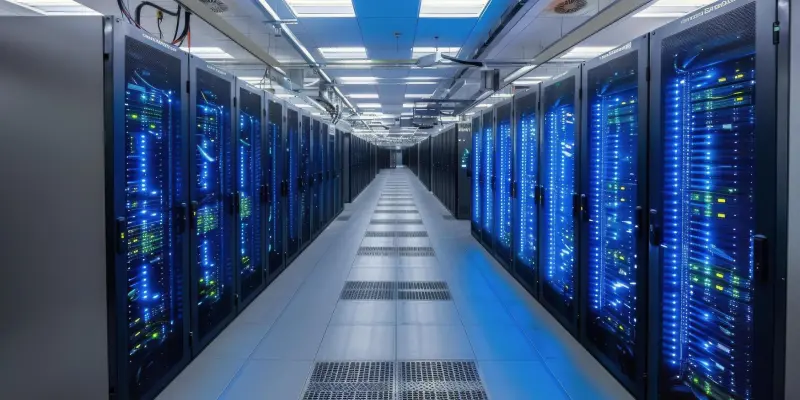
The arrival of a new modular data center on East Wellington Road in Nanaimo marks a significant development for the city, promising substantial commercial and technological advancements. With a multi-phase construction plan that will eventually span 194,000 square feet of computing system space across a 2.3-hectare site, the project is poised to elevate Nanaimo’s profile in the high-tech sector. The initial proposal, which received approval from the city’s design advisory panel on April 10, stands as a key milestone, moving the project closer to fruition and putting the city on an ambitious path toward becoming a tech hub.
Project Features and Phasing
The data center, planned by Townsite Planning Inc. for owner 2779022 Ontario Ltd., aims to erect a complex featuring ten blocks, each measuring approximately 9,700 square feet. Phase one will start with the construction of Block 1 near East Wellington Road. The site, adjacent to the Cavallotti Lodge, had already been rezoned for high-tech industrial use in 2022, signifying the region’s growing emphasis on technological infrastructure. The phased approach not only allows for manageable growth but also ensures the project can adapt to evolving technologies and market demands.
Integral to the development plan is the commitment to preserve 20 percent of the existing tree cover in the northern part of the lot, which houses a small natural wetland. This decision is part of the rezoning conditions and underscores the balance between development and environmental stewardship. The design of the facility will minimally employ glazing and adopt a modular form. However, Block 1 will be an exception, featuring additional glazing, wood-grain cladding, linear LED lighting, and an entry canopy, creating a distinctive primary entrance for the center.
Infrastructure and Design Challenges
As part of the project, an existing house on the property will function as an accessory dwelling until the completion of the later phases. The city is also evaluating a variance to permit the structure to extend up to 15 meters in height, surpassing the current 14-meter limit set for the I3 zone, to accommodate crucial mechanical equipment. To address potential concerns about visibility and noise, measures such as parapet walls and rooftop equipment screening are proposed, ensuring that the data center integrates seamlessly with its surroundings.
Enhancing the visual appeal and complementing the neighborhood’s aesthetic, especially along East Wellington Road, has been a priority. The advisory panel has recommended incorporating additional elements to boost visual interest, making the structure more compatible with its environment. The landscape plan is noteworthy, featuring 250 evergreen deciduous trees, two stormwater retention ponds, and a wildflower meadow. These components will not only elevate the site’s ecological value but also contribute to its aesthetic charm. Security concerns will be addressed with the installation of a chain-link fence topped with barbed wire, ensuring the facility remains protected.
Path to Urban Technological Advancement
The introduction of a new modular data center on East Wellington Road in Nanaimo signifies a pivotal moment for the city, heralding considerable commercial and technological growth. This ambitious project, with a multi-phase construction plan, is set to cover 194,000 square feet of computing system space on a 2.3-hectare site. The development is expected to significantly enhance Nanaimo’s standing in the high-tech industry. The project’s initial proposal, approved by the city’s design advisory panel on April 10, represents a crucial milestone, bringing the initiative closer to reality and setting the city on an ambitious trajectory toward becoming a prominent tech hub. This development will not only provide state-of-the-art technological infrastructure but also attract businesses and skilled professionals to the area. The growth spurred by the data center is expected to stimulate the local economy, create job opportunities, and position Nanaimo as a forward-thinking, innovative locale in the information technology arena.