

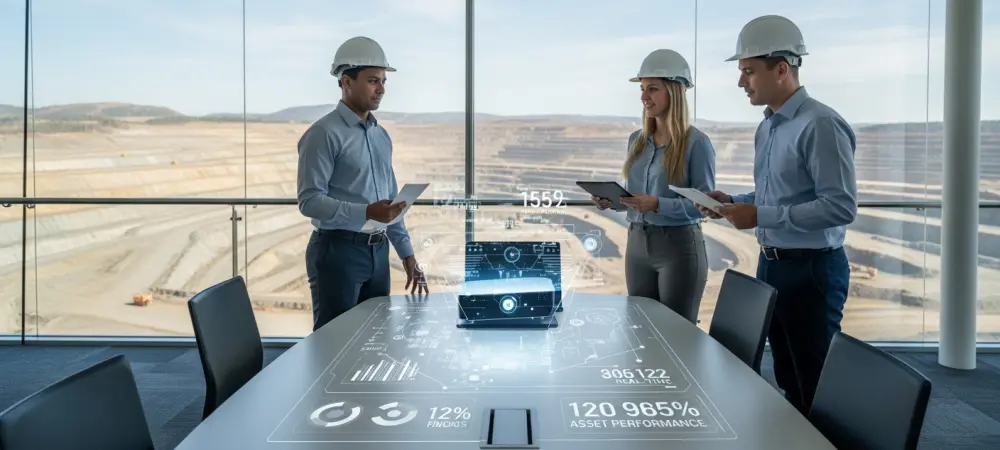
The global mining sector currently operates within a volatile landscape where the relentless demand for raw materials intersects with the reality of deteriorating legacy machinery and stringent environmental mandates. Historically, many extraction sites functioned under a production-at-all-costs philosophy that prioritized short-term yields over the health of the underlying mechanical systems. This approach frequently resulted in catastrophic equipment failures and expensive emergency repairs that disrupted the entire supply chain. In the current environment, however, Enterprise Asset Management (EAM) has transformed from a back-office administrative function into a central pillar of operational strategy. By leveraging sophisticated digital frameworks, mining companies can now synchronize their maintenance schedules with real-time production needs, ensuring that every piece of equipment contributes to the bottom line without risking structural integrity or safety protocols.
Transitioning Toward Predictive Maintenance Models
Transitioning away from reactive maintenance requires a fundamental shift in how site managers perceive the health of their fleet. Modern EAM systems utilize the Internet of Things (IoT) to embed intelligence into everything from massive draglines to intricate processing conveyor belts. These sensors continuously collect high-fidelity data on vibration patterns, thermal fluctuations, and acoustic signatures that signal the onset of mechanical wear long before a failure occurs. By processing this information through advanced analytics platforms, operators can move toward a condition-based maintenance model that eliminates the guesswork associated with traditional calendar-based servicing. This shift not only prevents unplanned downtime but also optimizes the utilization of skilled labor, as technicians are deployed specifically where and when they are needed most. The result is a more resilient operation that can maintain high output levels even when working with aging infrastructure. The integration of real-time data streams into the EAM framework allows for a more nuanced understanding of asset performance under varying environmental conditions. For instance, a haul truck operating in a high-altitude copper mine faces different stressors than one in a tropical iron ore facility, necessitating localized maintenance strategies. Advanced software can now simulate various operational scenarios, helping managers understand how pushing a machine beyond its standard parameters might impact its long-term reliability and total cost of ownership. This predictive capability extends to inventory management as well, ensuring that critical spare parts are ordered and staged in anticipation of scheduled repairs rather than being sourced during an emergency. By refining these logistical elements, mining firms reduce the “dead time” associated with maintenance cycles and significantly enhance the overall productivity of the site. Such precision is essential for staying competitive in a global market where margins are thin.
Strategic Financial Management Through Asset Longevity
Replacing an entire fleet of heavy mining machinery represents a staggering financial burden that many organizations are hesitant to undertake in the current economic climate. Instead of committing to massive capital expenditures for new hardware, savvy operators are focusing on maximizing the value of their existing investments through extended asset lifecycles. Modern EAM platforms provide the granular visibility required to track the performance of an asset from its initial commissioning through its ultimate decommissioning. This longitudinal data allows companies to identify the precise moment when a machine transitions from a productive asset into a financial liability. By “sweating the assets” intelligently, firms can squeeze additional years of high-performance service out of legacy equipment without compromising on safety or environmental compliance. This strategy relies on rigorous monitoring and precise intervention, ensuring that every maintenance dollar spent contributes to the extended viability of the machine. Shifting the financial focus from heavy capital expenditure (CAPEX) to manageable operational expenditure (OPEX) has become a preferred method for maintaining technological relevance. Rather than purchasing a brand-new autonomous hauler, for example, a mining company might choose to retrofit an existing truck with advanced telemetry and automation kits. This phased approach allows the organization to modernize its operations incrementally, spreading the costs over several years while still benefiting from the latest technological advancements. EAM systems facilitate this transition by providing the financial modeling tools necessary to compare the costs of continuous maintenance against the benefits of strategic upgrades. This level of fiscal transparency ensures that capital is allocated where it will have the greatest impact on productivity and safety. Furthermore, by maintaining a fleet of modernized legacy assets, mining operations can avoid the long lead times often associated with ordering new equipment.
Integrating Siloed Data into a Unified Operational Ecosystem
The true potential of Enterprise Asset Management is realized only when the system is fully integrated into the broader operational technology (OT) landscape of the mine. In the past, maintenance data often existed in a silo, disconnected from energy management systems or real-time production monitors. Breaking down these barriers allows for a holistic view of the entire value chain, where the impact of a single mechanical adjustment can be tracked through to the final output of the processing plant. This unified ecosystem is particularly valuable for meeting modern sustainability targets, as it enables managers to balance energy consumption against production speed and equipment wear. For example, if an EAM system identifies that a primary crusher is consuming more power than usual due to a slight misalignment, the issue can be corrected immediately to restore energy efficiency. This level of interconnectivity ensures that the organization remains agile, capable of responding to both internal mechanical issues and external market fluctuations with speed.
Establishing a robust EAM framework was a decisive step for many mining leaders who sought to move beyond the limitations of traditional maintenance practices. The successful implementation of these systems began with a comprehensive audit of all physical assets to determine their current health and their role within the larger production ecosystem. From there, organizations prioritized the deployment of sensors and analytics tools on the most critical bottlenecks, ensuring that the initial digital transition provided immediate value. Operators also invested in specialized training for their workforce, bridging the gap between mechanical expertise and digital literacy to ensure that the data generated by the EAM system was utilized effectively. Looking ahead, the focus shifted toward incorporating artificial intelligence to automate the decision-making process even further. By refining these strategies, the industry successfully navigated the challenges of aging infrastructure while setting a new standard for excellence. These actions secured a path toward long-term profitability and sustainable resource extraction.