

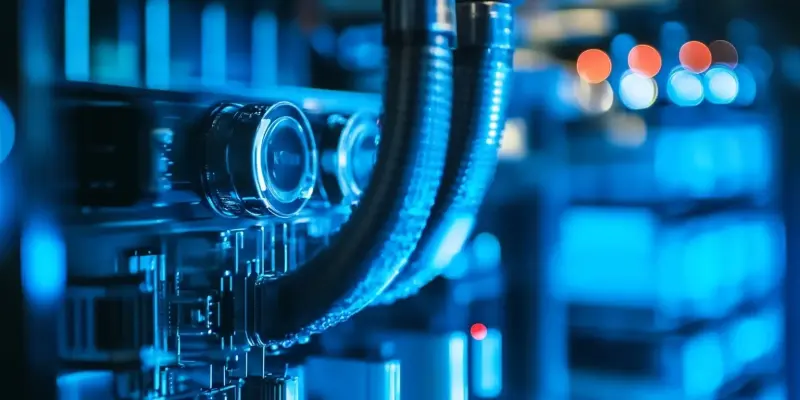
The rapid advancements in artificial intelligence (AI) and high-performance computing (HPC) are transforming the landscape of data centers. With AI technologies such as ChatGPT becoming mainstream, the computational demands placed on data centers have surged to unprecedented levels. Traditional air-cooled systems are increasingly proving inadequate to meet these growing requirements, prompting a significant shift towards more efficient and capable cooling solutions. Among these, liquid immersion cooling technologies have emerged as a frontrunner, offering superior efficiency and support for higher densities. As the tech world braces for the future, the importance of adopting such advanced cooling systems cannot be overstated.
The Rise of AI and Its Impact on Data Centers
The mainstream adoption of AI technologies has catalyzed a paradigm shift in data center design. As AI workloads continue to grow exponentially, there’s an urgent need to revisit and update data center configurations to accommodate these burgeoning demands. Over an eight-year period, data from the AFCOM State of the Data Center report reveals a dramatic increase in rack density—from an average of 6.1 kilowatts per rack to 12 kilowatts per rack as of the 2024 report. Despite these adjustments, traditional data center setups still fall short of meeting the demands imposed by AI workloads. AI’s growing power consumption is projected to drive a staggering 160% increase in data center power demand by 2030. In fact, AI systems are expected to consume 8% of US power compared to just 3% in 2022. This surge in power consumption underscores the pressing need for more efficient cooling solutions. As traditional air-cooled systems struggle to keep up with the heat generated by advanced AI hardware, the data center industry is compelled to explore alternatives that promise greater efficiency and efficacy in managing these intensive workloads.
The Emergence of Liquid Cooling Solutions
Liquid cooling technologies, particularly liquid immersion cooling, have emerged as crucial solutions in the face of rising computational demands. This shift is not just a trend but an undeniable necessity driven by the limitations of air cooling and the relentless rise in computational power demands. Immersion cooling stands out for its ability to drastically reduce cooling operational expenses (OPEX) by over 90% and building capital expenditures (CAPEX) by more than 50%. Furthermore, it cuts cooling power consumption by 95%, and server power consumption may be reduced by 10-20%, leading to substantial cost savings and operational efficiencies.
Such significant reductions in both costs and power consumption have spurred data center companies to invest in new liquid immersion cooling solutions. The benefits of liquid cooling are manifold, making it an essential component of modern data center infrastructure. As these solutions become more widespread, data centers can better meet the growing demands of cutting-edge AI and HPC applications, ensuring efficient and reliable operation even under high computational loads. Liquid cooling not only addresses current needs but also future-proofs data centers for further technological advancements.
Advancements in Liquid Cooling Technologies
The latest advancements in liquid cooling manageability, ease of service, and innovative applications have propelled these technologies to the forefront of data center design. Significant strides in efficiency, as denoted by Power Usage Effectiveness (PUE) trends, indicate smarter resource utilization in data centers. Liquid immersion cooling is increasingly positioned as a staple mechanism to support high-density AI use cases and HPC applications, making it a critical component in modernizing data center infrastructure.
One of the key narrative points is the adaptability of liquid cooling technologies to current and foreseeable technological enhancements. Existing support structures for immersion cooling in GPUs highlight designs that enhance the cooling of AI and HPC workloads. This progression is pivotal for ensuring that data center infrastructure keeps pace with rapid hardware advancements. As this compatibility improves, the adoption of liquid cooling solutions becomes more seamless, thereby supporting future technological growth and innovation in the industry.
Sustainability and Efficiency in Data Center Operations
Data center companies are under growing pressure to minimize maintenance and power requirements, promoting the adoption of immersion cooling technologies that offer ease of service and simple maintenance cycles. This focus towards more sustainable and efficient operational models is essential to meeting modern data center demands. Advanced technologies like machine learning, artificial intelligence, and blockchain significantly drive growth in the liquid cooling market, placing immense demands on data center infrastructure.
Faced with rapid surges in power usage within racks that are challenging to manage with traditional air methods, the industry must evolve. The adoption of powerful new AI hardware necessitates the overhaul of cooling systems to maintain both system performance and stability. Liquid cooling technologies offer the means to achieve this balance, providing effective thermal management while supporting high computational densities. These attributes make them indispensable for the next generation of data centers.
The Future of Data Center Design
The rapid advancements in artificial intelligence (AI) and high-performance computing (HPC) are revolutionizing data centers. As AI technologies like ChatGPT become mainstream, data centers face unprecedented computational demands. Traditional air-cooled systems are increasingly proving inadequate for these growing requirements, leading to a significant shift toward more efficient cooling solutions. Liquid immersion cooling technologies have emerged as a leading contender, offering superior efficiency and support for higher densities. By submerging components in specialized liquids, this method dramatically improves heat dissipation, extending the life of hardware and reducing energy consumption. As we look to the future, the adoption of these advanced cooling systems is critical for meeting the escalating performance needs of modern data centers. The importance of embracing such innovative solutions cannot be overstated, as they not only enhance operational efficiency but also support the sustainability and scalability of the tech industry.