

The staggering velocity at which generative artificial intelligence has integrated into every facet of the global economy is currently forcing a radical re-evaluation of the physical infrastructure that houses these digital minds. While the software side of AI receives the bulk of public attention, a silent crisis is brewing within the server racks where the actual computation occurs, as traditional air-based thermal management reaches its breaking point. Modern AI models require specialized hardware that generates heat at intensities previously unseen in the enterprise data center space, rendering standard cooling fans and chilled aisles increasingly obsolete. The industry is witnessing a transition where liquid cooling is evolving from a niche solution for supercomputing into the primary architectural requirement for any facility intending to remain competitive in the current landscape. As density levels climb toward a point where air can no longer physically move enough thermal energy to prevent equipment failure, the adoption of liquid-based systems becomes a matter of operational survival rather than mere preference.
This shift is fundamentally catalyzed by the sheer energy intensity of an AI query, which can consume ten times the power required for a standard internet search. This disparity is creating a massive ripple effect throughout the global power grid, with data center energy consumption currently expanding at a rate four times faster than all other industrial sectors combined. As these facilities draw more power, the resulting heat must be expelled with surgical precision to protect the delicate silicon within high-performance Graphics Processing Units (GPUs) and Tensor Processing Units (TPUs). Legacy data centers were designed to manage power densities that are now laughably insufficient; where a standard rack might have historically demanded 5 kW to 10 kW, modern AI-ready configurations are already pushing past 100 kW. With future projections suggesting that single racks will eventually hit the 1 MW threshold, the physics of air cooling simply cannot bridge the gap, making liquid the only viable medium capable of sustaining this rapid technological growth.
Technical Superiority and Operational Efficiency
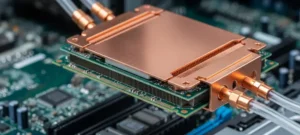
The physical properties of liquid give it an insurmountable advantage over air when it comes to the rapid removal of thermal energy from high-density environments. Direct-to-chip cooling, which involves circulating fluid through cold plates directly attached to the processors, has proven to be up to 3,000 times more effective at heat transfer than traditional forced-air methods. This efficiency is not just a laboratory statistic; it translates into immediate real-world benefits by allowing chips to operate at their maximum clock speeds without the interference of thermal throttling. When processors get too hot, they automatically slow down to protect themselves, which represents a massive waste of capital for organizations that have invested millions in high-end silicon. By using liquid to maintain a stable and cool environment, data centers ensure that every cycle of computation purchased is actually delivered, maximizing the return on investment for the most expensive components in the hardware stack.
Furthermore, the operational improvements gained from liquid cooling extend far beyond the server rack and into the broader mechanical infrastructure of the facility. Traditional data centers rely heavily on massive, power-hungry mechanical chillers and a complex network of fans to push cold air through the room, a process that is inherently inefficient due to the low heat capacity of air. In contrast, liquid cooling systems can often operate using warm water loops, which allows for heat rejection to the outdoor environment without the need for energy-intensive refrigeration cycles. This transition can lead to overall energy savings between 30% and 60% for the cooling subsystem alone. Moreover, because many liquid systems utilize closed-loop architectures, they significantly reduce or even eliminate the need for water evaporation, a stark contrast to adiabatic air-cooling systems that can consume millions of gallons of water daily. This makes the facility more resilient to local water shortages and lowers the overall cost of operations.
Sustainability and Environmental Impact
The adoption of liquid cooling serves as a primary lever for organizations striving to meet aggressive Environmental, Social, and Governance (ESG) targets while scaling their AI capabilities. The most prominent metric in this space, Power Usage Effectiveness (PUE), is drastically improved when liquid systems are employed because they strip away the overhead of massive fan arrays and high-pressure air handlers. Lowering the PUE score means that a higher percentage of the electricity entering the building is actually used for computation rather than for keeping the equipment from melting. This efficiency is particularly critical in regions where the energy grid is still heavily reliant on fossil fuels, as every kilowatt saved represents a direct reduction in the carbon footprint of the AI models being trained. By optimizing the thermal path, data center operators can prove to regulators and stakeholders that they are being responsible stewards of the energy resources they consume during this period of unprecedented growth.
Beyond the immediate concerns of energy and carbon, the industry must also grapple with the long-term stewardship of the chemicals and materials used in advanced cooling systems. While water is a common medium, many high-performance systems utilize specialized dielectric fluids or engineered coolants that require rigorous management protocols. To ensure that the “green” promise of liquid cooling is fully realized, operators must implement comprehensive leak detection systems and responsible disposal strategies to prevent environmental contamination. This holistic view of sustainability recognizes that true environmental leadership involves more than just lowering a power bill; it requires a commitment to non-toxic chemistry and circular economy principles. As government scrutiny of data center resource use intensifies across the globe, those who have proactively adopted efficient and environmentally sound liquid cooling will find themselves in a much stronger position to navigate the evolving regulatory landscape.
Strategic Implementation and Future-Proofing
Successfully integrating liquid cooling into a data center requires a fundamental departure from the traditional “siloed” approach to infrastructure management. Historically, IT teams purchased the servers while facilities teams managed the power and cooling, often with very little technical coordination between the two groups. In the AI era, this disconnect is a recipe for disaster, as the specific thermal requirements of modern hardware must be baked into the room’s design from the very beginning. Integrated planning ensures that the infrastructure can support the precise flow rates and pressure requirements of the latest GPUs, preventing the phenomenon of “stranded capacity” where high-end hardware sits idle because the cooling system cannot handle the load. This collaborative model forces a deeper level of communication between hardware vendors and site operators, resulting in a more resilient and adaptable digital foundation.
To mitigate the risks and costs of a total overhaul, many forward-thinking operators are implementing hybrid scalability models that bridge the gap between old and new technologies. These facilities maintain traditional air cooling for legacy storage and general-purpose compute racks while dedicating specific zones to high-density liquid-cooled clusters. This modular approach allows for a staggered investment strategy, where liquid capacity can be expanded incrementally as the demand for AI workloads grows over the coming years. Furthermore, the use of standardized reference designs—blueprints developed in partnership with hardware leaders—reduces the complexity of deployment and ensures that the cooling systems are perfectly tuned to the chips they protect. By building flexibility into the physical layer today, data center operators can ensure that their facilities remain relevant and functional throughout the decade, regardless of how much further rack densities may climb. The transition from air to liquid cooling marks a definitive turning point in the history of digital infrastructure, signaling the end of the “one-size-fits-all” approach to data center design. Organizations must now prioritize the deployment of direct-to-chip or immersion systems as a foundational requirement for any facility hosting high-performance AI workloads. This shift demands immediate investment in specialized plumbing and heat exchange technologies, along with a commitment to retraining facilities personnel to manage fluid-based environments. By moving away from the physical limitations of air, the industry can unlock the full potential of the next generation of silicon, ensuring that the computational power required for the AI revolution is both available and sustainable. The next logical step for operators is to engage in early-stage pilot programs with liquid cooling vendors to identify the specific architecture that best aligns with their long-term growth and environmental objectives. Over the coming years, those who successfully master this transition will define the standards for efficiency and reliability in the modern era.