

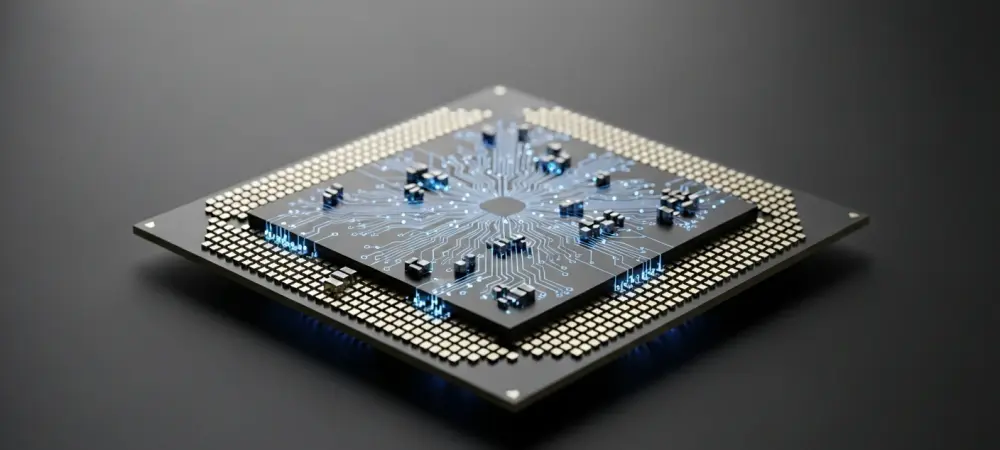
In the relentless pursuit of computational supremacy, the professional workstation market is witnessing what could be the next monumental shift in processing power, as recent leaks have pulled back the curtain on Intel’s forthcoming flagship, the Xeon 698X. This new processor, expected to lead the Granite Rapids-WS family, is not merely an incremental upgrade; it represents a fundamental re-imagining of what a high-end desktop (HEDT) CPU can achieve. With specifications that point toward a massive increase in core density and cache size, this chip appears poised to redefine performance expectations for the most demanding creative and scientific workloads. The leaked details suggest a processor engineered to tackle complex simulations, high-resolution rendering, and intensive data analysis with unprecedented efficiency. As professionals eagerly await its official debut, the preliminary information offers a tantalizing glimpse into a new era of workstation performance, one where core counts and architectural efficiency converge to challenge the limits of modern computing.
A Generational Leap in Core Architecture
At the heart of the Xeon 698X’s formidable potential lies its core configuration, a dense arrangement featuring 86 cores and 172 threads built upon the advanced Redwood Cove P-Core architecture. This represents a significant departure from previous designs, pushing core density to new heights for a single-socket workstation platform. Such a high core count is specifically engineered to excel in massively parallel tasks, where workloads can be distributed across numerous threads simultaneously. Complementing this core-heavy design is an equally impressive cache hierarchy. The processor is reported to feature a staggering 336 MB of L3 cache and an additional 172 MB of L2 cache, culminating in a combined total of 508 MB. This enormous pool of high-speed memory is critical for feeding the 86 cores with data, minimizing latency, and preventing bottlenecks that can cripple performance in data-intensive applications. For professionals working with large datasets in fields like VFX, scientific research, and AI model training, this vast cache could translate into dramatically reduced processing times and a more fluid, responsive workflow.
Beyond its raw core and cache specifications, the Xeon 698X demonstrates a sophisticated balance of speed and power efficiency that could set a new industry standard. The chip is slated to operate with a base clock of approximately 2.0 GHz and a maximum boost clock of up to 4.60 GHz, offering a wide dynamic range to handle both sustained multi-threaded loads and bursty single-threaded tasks. Perhaps the most remarkable figure is its Thermal Design Power (TDP) of 350W. Achieving such a monumental increase in core count and cache size while maintaining a TDP lower than its predecessor is a testament to the architectural refinements of the Granite Rapids platform. This focus on performance-per-watt is crucial in professional environments where system stability, thermal management, and energy consumption are just as important as raw processing power. It suggests an architecture that is not only more powerful but also smarter and more sustainable, allowing for deployment in a wider range of workstation chassis without requiring exotic cooling solutions, a practical advantage for system builders and IT departments.
Performance Metrics and Market Context
When placed side-by-side with its direct predecessor, the Sapphire Rapids-WS flagship Xeon W9-3595X, the scale of the Xeon 698X’s advancement becomes strikingly clear. The new chip offers a 43.3% increase in both cores and threads, moving from 60 cores and 120 threads to 86 cores and 172 threads. This jump alone promises a substantial uplift in heavily multi-threaded applications. However, the most dramatic improvement is in the cache subsystem, where the Xeon 698X delivers more than double the total available cache—a 2.18x increase from the previous generation. This enhancement is crucial for ensuring that the additional cores are not starved for data. Interestingly, this leap forward in density and cache is accomplished with a 35W reduction in base TDP, from 385W down to 350W. The only apparent trade-off in the leaked specifications is a 200 MHz lower boost clock compared to the W9-3595X’s 4.8 GHz peak, though this may be a necessary compromise to manage thermal output across so many active cores, and preliminary testing hints this figure may not be final.
The leaked information was accompanied by Geekbench 6 benchmark scores, but these early results require careful interpretation and should not be taken as a definitive measure of the CPU’s capabilities. It is widely understood that consumer-oriented benchmarks like Geekbench 6 do not scale effectively with extremely high core counts, often failing to fully utilize the parallel processing power of chips like the Xeon 698X. Consequently, the scores reported are likely unrepresentative of the processor’s true potential in real-world workstation scenarios, such as rendering, compilation, or scientific simulation, which are designed to leverage every available thread. Adding another layer of intrigue, reports from the testing environment indicated that despite the listed 4.60 GHz boost specification, the chip was observed boosting closer to 4.8 GHz. This suggests that the final retail units may feature higher clock speeds or that the current firmware and drivers are still undergoing optimization. A comprehensive evaluation will require a suite of professional-grade benchmarks to accurately gauge its performance upon its anticipated launch.
The Path Forward
The emergence of the Xeon 698X specifications provided a clear signal of Intel’s strategic direction in the high-end desktop and workstation market. This leak did not just hint at a new product; it outlined a comprehensive vision for next-generation computational power that prioritized multi-threaded throughput and architectural efficiency. It was a move that challenged existing performance hierarchies and established a new, formidable benchmark for what professionals could expect from a single-socket system. The processor’s unique combination of an exceptionally high core count, a massive cache reservoir, and a surprisingly moderate power envelope represented a holistic approach to performance, moving beyond the simple pursuit of higher clock speeds. This development positioned Intel to reclaim a leadership role in the most demanding professional workflows, compelling competitors to re-evaluate their own product roadmaps. The event also highlighted a growing issue within the industry: the inadequacy of conventional benchmarking tools to accurately measure the capabilities of such highly parallelized hardware, underscoring the need for new standards that could properly assess the power of these next-generation processors.