

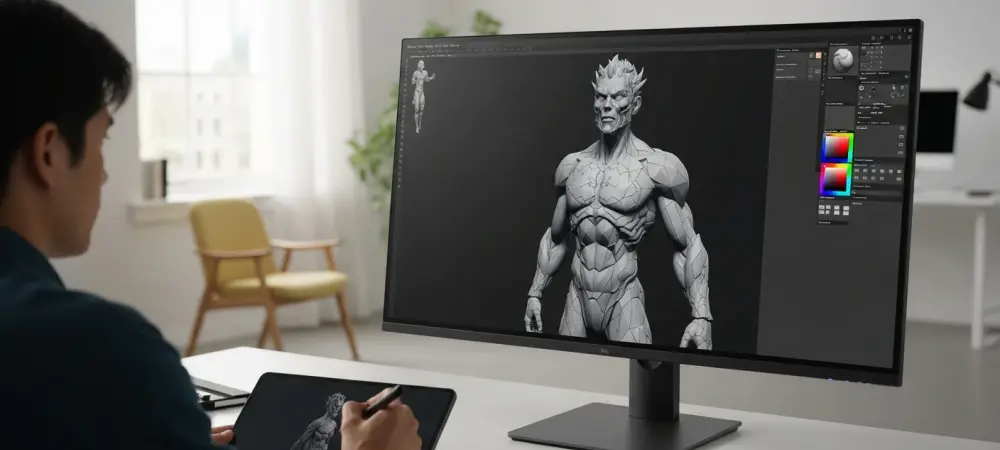
The line between digital creation and reality has never been finer, and HKC’s latest technology demonstration seeks to erase it entirely with its groundbreaking 8K MiniLED monitor. This showcase is more than just an incremental upgrade; it represents a potential paradigm shift for visual professionals, packing next-generation specifications into a display that feels like a window into the future of digital canvases.
A Glimpse into the Future Is 8K MiniLED the Next Big Leap
This review examines HKC’s technology demonstration to determine if its combination of 8K resolution and advanced MiniLED backlighting sets a new, worthwhile standard for professional-grade monitors. The goal is to move beyond the impressive on-paper numbers and evaluate whether this technological showcase represents a true step forward for content creators and visual artists, justifying future investment in the technology when it becomes commercially available.
The central question is one of practical value versus technological prowess. While higher resolutions and brighter displays are always welcome, their implementation must serve the nuanced needs of professionals. Consequently, this analysis will focus on how these advanced features translate into tangible benefits within demanding creative workflows, from intricate video editing to precise color grading.
Unpacking the Technology Core Specifications and Innovations
At the heart of this demonstration is a groundbreaking 36.5-inch display featuring a true 8K (7680 x 4320) resolution. This extreme pixel density delivers unparalleled image clarity, allowing professionals to work with native 8K content and view details with a level of sharpness previously unattainable on a desktop monitor. Such precision is critical for tasks requiring meticulous accuracy.
Driving this visual fidelity is a state-of-the-art MiniLED backlight system. Incorporating over 2000 local dimming zones, this technology achieves exceptionally deep black levels and a superior dynamic contrast ratio. Furthermore, the monitor boasts an exceptional peak brightness of 1800 nits for stunning HDR performance and covers the full 100% DCI-P3 wide color gamut, ensuring professional-grade color accuracy. It is important to note, however, that this monitor is currently a technology prototype, intended to showcase capabilities that will be integrated into HKC’s flagship products later this year.
Projected Performance for Creative Professionals
The visual fidelity offered by this monitor is transformative for detailed work. The extreme pixel density of 8K resolution on a 36.5-inch panel provides a massive digital canvas, benefiting photo editors who need to see fine textures, video producers working with high-resolution footage, and digital artists requiring precision at a granular level. The ability to view content at a one-to-one pixel ratio without scaling is a significant advantage.
Moreover, the advanced backlighting system directly addresses a common pain point in HDR displays. With its sophisticated local dimming algorithms, the monitor significantly reduces the halo effect, or blooming, that can appear around bright objects on dark backgrounds. This refinement is crucial for enhancing HDR content, as it allows for more accurate and immersive visuals where highlights pop without compromising the integrity of dark scenes. This makes it an ideal tool for colorists and post-production specialists.
Potential Strengths and Practical Hurdles
The key advantages of this technology are clear. It sets a new benchmark for visual detail, enabling creators to work with an unprecedented level of clarity. The monitor also achieves best-in-class HDR performance through its high brightness and meticulous backlight control, while its professional-grade color accuracy makes it suitable for the most demanding creative workflows where color fidelity is non-negotiable.
However, several significant disadvantages temper the excitement. Its current status as a non-commercial prototype means it is not yet available for purchase. More importantly, the immense graphical horsepower required to drive an 8K display at a stable frame rate presents a substantial barrier to entry. Finally, when this technology does reach the market, it is anticipated to carry a high cost, placing it out of reach for all but the most well-funded professionals and studios.
Summary a New Benchmark for Professional Displays
In summary, the HKC 8K MiniLED monitor is a formidable technology showcase that successfully combines cutting-edge specifications to create a new benchmark for visual performance. The synergy between its ultra-high resolution and advanced backlight system produces an image that is not only incredibly sharp but also boasts outstanding contrast and color realism, meeting the stringent demands of modern creative industries.
The final assessment is that this technology provides a clear and exciting preview of the next generation of high-end professional monitors. Based on its demonstrated capabilities, the technology is highly recommended for professionals to follow as it moves toward commercial release. It represents the direction the entire industry is heading, where no compromises are made on image quality.
Final Verdict Who Should Be Watching HKC
The concluding opinion was that HKC’s prototype served as a powerful statement, confirming that the future of professional displays lay in the synergy of ultra-high resolution and sophisticated backlight control. It successfully demonstrated that these two technologies, when combined, create a visual experience that surpasses current market offerings. This technology was most relevant for professional content creators, CGI artists, and post-production houses that required uncompromising image quality. These users should have considered this a preview of their next major hardware upgrade. Before adoption, however, it was essential for potential users to account for the substantial investment needed in supporting hardware, such as a top-tier GPU capable of handling the demands of 8K content creation and playback.