

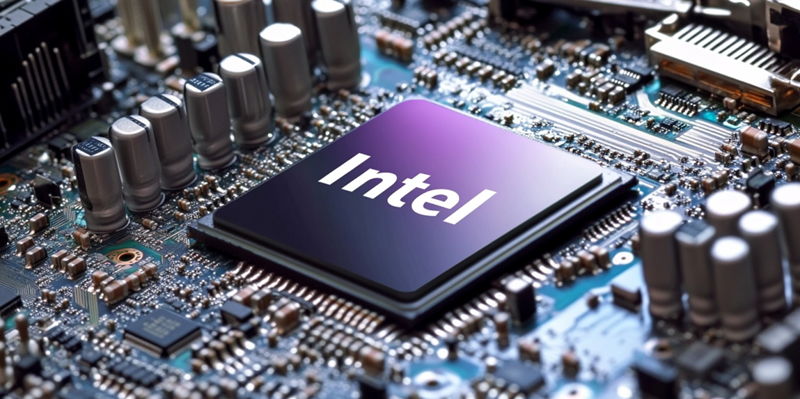
In the rapidly evolving landscape of high-performance computing, Intel has once again made headlines with its latest powerhouse CPU, the Core Ultra 7 265K, part of the Arrow Lake family. Leaked benchmarks have hinted at this processor’s impressive capabilities, igniting much anticipation and excitement within the tech community. With its promising specifications and performance metrics, Intel aims to reinstate its dominance in the CPU market. This article delves into the intricate details of the Core Ultra 7 265K, exploring its technical makeup, benchmark performance, and how it fares against industry rivals.
A Leap in Performance
The Core Ultra 7 265K showcases significant improvements over its predecessor, the Core i7-14700K, making it a notable upgrade for those seeking high-end processing power. According to the leaked Geekbench 6 benchmarks, this new CPU offers a substantial uplift in both single-core and multi-core performance metrics. For single-core performance, which is crucial for tasks that rely on quick, sequential processing – such as gaming and certain professional applications – the Core Ultra 7 265K reportedly outperforms the i7-14700K by 11.4%. This boost is likely due to newer silicon closer to retail specs and refined BIOS/microcode firmware, providing a preview into what Arrow Lake CPUs might deliver in final retail versions.
Multi-core performance is equally impressive and is vital for applications that can parallelize workloads, including video editing, 3D rendering, and scientific simulations. Here, the Core Ultra 7 265K showcases a remarkable 15.6% improvement over its predecessor. This significant leap suggests that Intel’s architectural advancements have effectively enhanced multi-threading capabilities. The performance increases in both single and multi-core tasks underline the Core Ultra 7 265K’s potential to handle a variety of demanding applications, making it a versatile choice for tech enthusiasts and professionals alike.
Under the Hood: Technical Specifications
At the heart of the Core Ultra 7 265K is an intriguing configuration of cores and cache that balances performance and efficiency. The CPU integrates a total of 20 cores and 20 threads, split between 8 Performance cores (P-Cores) and 12 Efficiency cores (E-Cores). Such a mix ensures that high-speed processing tasks can run on the P-Cores, while the E-Cores handle less demanding workloads more power-efficiently. The P-Cores operate at a base clock speed of 3.9 GHz, capable of boosting up to 5.5 GHz, whereas the E-Cores range from 3.3 GHz to 4.6 GHz.
Complementing this core architecture is a substantial cache system that includes 30 MB of L3 cache and 36 MB of L2 cache, totaling an impressive 66 MB. This cache size reduces latency and improves data retrieval speeds, which are crucial for maintaining high performance under heavy workloads. The CPU’s thermal design power (TDP) is set at 125W PL1 and 250W PL2, pointing towards both its power needs and the effectiveness of its performance. The substantial TDP figures highlight the importance of efficient cooling solutions to maximize the CPU’s potential.
Battling Rivals: Intel and AMD
When compared to its contemporaries, the Core Ultra 7 265K stands out impressively. Against Intel’s own Core i9-14900K and AMD’s Ryzen 9 9950X, the new CPU demonstrates strong multi-core performance, even surpassing high-end models such as the 14900KS in several benchmarks. This is a noteworthy feat given the fierce competition in the high-performance CPU segment. The Core Ultra 7 265K’s ability to outshine these models underscores Intel’s strategic advancements in CPU architecture and efficiency.
AMD has established itself as a formidable competitor in recent years, often leading in multi-threaded performance due to its higher core and thread counts. However, the Core Ultra 7 265K shows that exceptional performance isn’t solely dependent on core and thread numbers. Intel’s advanced architecture, optimized power configurations, and high-speed memory support collectively help achieve superior results. This combination allows the Core Ultra 7 265K to deliver top-tier performance across a variety of applications, challenging AMD’s dominance in multi-threaded tasks.
Clock Speed and Power Efficiency
Interestingly, the Core Ultra 7 265K achieves its impressive performance despite running at a lower maximum clock speed compared to some of its rivals. Competitors like AMD may boost their processors up to 6.0 GHz, whereas the Core Ultra 7 265K peaks at 5.5 GHz. This indicates efficiency in architectural design, enabling high performance through better resource management and execution efficiency rather than sheer clock speed. This efficiency demonstrates Intel’s ability to deliver powerful CPUs without requiring excessively high clock rates.
The Core Ultra 7 265K’s power consumption figures – 125W PL1 and 250W PL2 TDP – indicate robust cooling requirements, yet they also reflect efficient performance-to-power ratios. This balance is crucial for users who need high performance without significantly increasing energy consumption or necessitating complex cooling systems. The power efficiency of the Core Ultra 7 265K ensures that users can achieve top-notch performance while maintaining a manageable and sustainable power footprint, making it a practical choice for both enthusiasts and professionals.
Impact of Memory and Configuration
The leaked benchmarks also highlight the role of memory configurations in maximizing CPU performance. The tests were conducted with 64 GB of DDR5 RAM, which Arrow Lake CPUs are known to support effectively. High-speed memory has a pronounced effect on CPU performance, further enhancing the Core Ultra 7 265K’s capabilities in memory-intensive tasks. This factor is crucial for applications requiring quick data access and processing, such as large-scale simulations and creative workloads.
Performance profiles and power configurations play significant roles in the CPU’s operational efficiency. The final retail versions of the Core Ultra 7 265K are expected to offer additional options for tweaking these settings to suit various needs, from gaming to professional workloads. As more configuration details and independent reviews become available, users will gain a clearer understanding of how versatile and powerful this CPU can be in real-world scenarios. These insights will be critical for making informed decisions, particularly for those looking to build high-performance computing systems.
Anticipating the Official Launch
In the fast-paced world of high-performance computing, Intel has stepped into the limelight again with its latest flagship CPU, the Core Ultra 7 265K, part of the Arrow Lake series. Recent leaked benchmarks have showcased this processor’s remarkable capabilities, stirring much anticipation and buzz within the tech community. Equipped with cutting-edge specifications and standout performance metrics, Intel is poised to reaffirm its leadership in the CPU industry.
The Core Ultra 7 265K is designed to meet the demands of modern applications, offering enhanced speed and efficiency that go beyond its predecessors. The processor’s architecture promises significant improvements in data handling and computational power. This new addition to Intel’s lineup is expected to rival, if not surpass, the current offerings from competitors, making it a highly anticipated release in the market.
This article dives deep into the Core Ultra 7 265K, examining its technical structure, benchmark results, and competitive edge. Through this exploration, we aim to provide a comprehensive understanding of how Intel’s newest CPU stands poised to reshape the landscape of high-performance computing.