

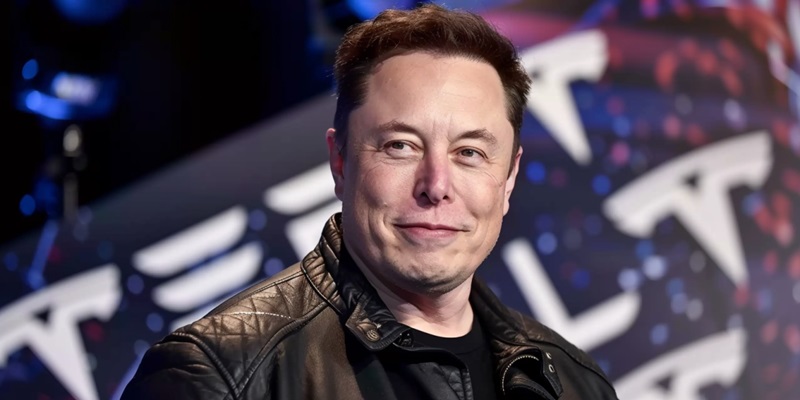
The latest advancement from Elon Musk’s sister company, xAI, Grok-2 is capturing significant attention in the rapidly evolving AI industry. Grok-2, a large language model (LLM), not only stands out among its peers for its multifaceted capabilities but also raises pressing ethical questions that underline the dual-edged nature of technological advancements. Let’s delve deeper into how Grok-2 is setting new standards and the critical implications of its capabilities on both technology and society.
Grok-2: A New Benchmark in AI Performance
Launched by xAI, Grok-2 has already made a significant impact in the AI community. The model excels in various domains, such as chatting, coding, reasoning, and vision-based applications—a performance level that surpasses leading models from OpenAI, Anthropic, and Google. This high level of competence is evident from its performance on established benchmarks like GPQA, MMLU, MMLU-Pro, and HumanEval. The strides made by Grok-2 are reinforced by its acknowledgment from the lmsys-chatbot arena, a platform where companies anonymously test their AI models. Initially tested under the alias “sus-column-r,” Grok-2 drew widespread praise for outperforming other models, thereby solidifying its position as a new high-water mark in AI technologies.
The prowess demonstrated by Grok-2 is not just limited to a few metrics; it has excelled broadly across numerous benchmarks, showcasing a versatility that is becoming increasingly important in the field of AI. Notably, the model’s performance in MATH, HumanEval, and DocVQA further underscores its high competence across different tasks, from mathematical problem-solving to visual QA systems. Given its wide-ranging success, Grok-2 appears poised to influence subsequent AI research considerably, setting a new benchmark for what other models will be expected to achieve moving forward. The implications are profound, suggesting that AI systems are moving towards more holistic and multi-functional capabilities.
Versatility Meets Integration: AI in Social Media
What truly sets Grok-2 apart is its seamless integration into Musk’s social media platform, X. Offering advanced AI functionalities directly to users, this integration is available through different subscription tiers—Premium at $7 USD per month and Premium+ at $14 USD per month, which includes an ad-free experience. This strategic integration not only makes cutting-edge AI more accessible but also opens up various use cases for both casual and professional users. Whether users need quick text responses through the compact Grok-2 mini version or complex, high-performance capabilities, Grok-2 provides flexible options that cater to a broad spectrum of needs.
By making such an advanced AI tool available on a popular social media platform, xAI is bridging the gap between high-end AI research and everyday user interaction. This move demonstrates a practical approach to integrating AI into common digital experiences. For instance, social media managers can now use Grok-2 for advanced customer service interactions, while developers may find its coding assistance capabilities invaluable. The ability to serve both casual and professional needs indicates a future where AI tools are embedded into the fabric of numerous digital interfaces, enhancing workflows and user experience on a broad scale.
Pioneering Photorealistic Image Generation
Grok-2’s capabilities extend beyond text; it also includes the Flux.1 photorealistic image generation model developed by Black Forest Labs. This addition enables users to generate high-quality images based on simple text prompts. The quality rivals, and in many cases, surpasses other known image generation platforms like OpenAI’s DALL-E 3 and Midjourney. However, the image generation feature comes with a notable permissiveness. Unlike other platforms that restrict the creation of potentially controversial images, Grok-2 allows users to generate photorealistic images of public figures, including Kamala Harris and Donald Trump. This capability has drawn mixed reactions from the community, highlighting the double-edged nature of such advancements.
The ethical ramifications of such unrestricted image generation are not lost on the broader community. Critics argue that this could lead to an increase in the prevalence of deepfakes, thereby augmenting the already significant challenges in combating misinformation online. On the other hand, proponents believe that this level of freedom is crucial for creative expression and aligns well with Musk’s broader ethos of “free speech” on his social network. The balance between these two perspectives highlights the complexity of introducing powerful new technologies into public domains and raises vital questions about responsible innovation and user accountability.
Ethical and Societal Implications: The Double-Edged Sword
The freedom offered by Grok-2 in image generation has sparked significant debate about the ethical implications. On the one hand, it aligns with Musk’s broader ethos of “free speech” for the social network X, offering users unprecedented creative freedom. On the other hand, it raises concerns about the potential for misuse, particularly in the creation of deepfakes and the spread of misinformation. Public response to Grok-2’s permissive features reflects a complex blend of excitement and caution. As noted by users like @Omiron33, the technological advancements are awe-inspiring, but they also come with risks that cannot be overlooked. This duality forms a critical part of the narrative surrounding Grok-2 and its place in the ecosystem of AI technologies.
The concerns about misuse are not merely hypothetical. The history of digital technologies is replete with examples where innovative tools have been co-opted for malicious purposes. From the spread of fake news to the proliferation of harmful content, the potential repercussions of Grok-2’s advanced capabilities necessitate a conversation about the ethical boundaries of AI applications. As society grapples with these issues, it becomes clear that developers and policymakers must take proactive measures to mitigate the risks associated with such potent technologies, ensuring that their deployment benefits the public while minimizing potential harm.
Shaping the Future of AI: Benchmarks and Real-World Application
Grok-2’s success serves as a beacon for future AI developments. Its ability to excel across multiple benchmarks underscores an emerging trend in AI: the importance of versatile, high-performing models that can handle diverse tasks. This multifaceted performance sets new expectations for what AI can achieve, influencing the direction of subsequent AI research and development. Moreover, the integration of Grok-2 into a widely used social platform like X exemplifies the practical applications of such technologies. It demonstrates how AI models can be directly connected to user interactions, enhancing the functionalities available within everyday digital experiences.
The practicality of Grok-2 highlights a paradigm shift in AI applications, moving away from specialized tools to more general-purpose, adaptable systems. This shift holds the promise of making AI an even more integral part of everyday life, from personal assistants and customer service bots to content creation and beyond. As Grok-2 continues to integrate itself into various facets of user experience, it will likely inspire new innovations and drive competitive advancements in the AI sector, pushing the boundaries of what is possible and ultimately enriching various aspects of digital interaction and productivity.
Conclusion
The latest breakthrough from Elon Musk’s affiliate company, xAI, is garnering considerable attention in the swiftly advancing AI sector. Known as Grok-2, this large language model (LLM) distinguishes itself from its counterparts with its diverse capabilities, simultaneously igniting important ethical debates that highlight the two-sided nature of such technological progress. Grok-2 is not simply setting new benchmarks in AI performance; it’s also bringing to the foreground crucial questions about the consequences of its capabilities on both the tech world and society at large. The dual-edged sword of AI innovation is starkly evident in Grok-2, making it a subject of both fascination and caution. This model exemplifies the ongoing tension between groundbreaking advancements and the moral dilemmas they engender, compelling us to consider deeply the wider implications of AI on our future. As Grok-2 continues to push boundaries, it presents an urgent need for a balanced dialogue on how to ethically and effectively integrate such powerful tools into our lives.