

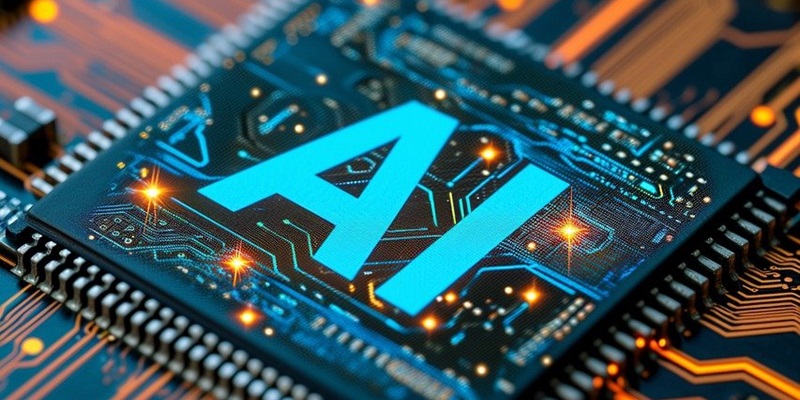
In recent months, the tech community has been abuzz with the announcement of Sohu’s new AI chip, which promises to enhance the capabilities of AI models like ChatGPT. Designed to improve processing speeds and overall performance, this chip has garnered significant attention and sparked widespread optimism. However, beneath the excitement lies a complex reality that includes engineering challenges, software compatibility issues, and concerns over real-world effectiveness. This article delves into the intricacies of Sohu’s AI chip, offering a balanced perspective on its potential to transform AI models and the challenges it must overcome to achieve a meaningful impact.
The Complexity of Designing a Groundbreaking AI Chip
One of the most intriguing aspects of Sohu’s new AI chip is the sheer complexity involved in its design and development. To fulfill its promise of enhanced processing speeds, the chip must not only be compatible with existing AI software but also deliver tangible performance improvements. Achieving both objectives is no small feat. The challenge begins with the need to produce the chip in large quantities without sacrificing quality, a task that demands precision engineering and rigorous quality control measures. Furthermore, integrating this advanced chip with existing systems adds another layer of complexity that cannot be overlooked.
The importance of software compatibility cannot be understated. Sohu’s chip, no matter how advanced, needs to seamlessly integrate with the current ecosystem of AI models. ChatGPT and other similar models are built on sophisticated algorithms and require substantial computational power to function optimally. A chip that accelerates processing but fails in terms of compatibility can cause disruptions rather than improvements. The task of ensuring that the chip works uniformly well across various platforms is a significant technical endeavor, highlighting the multifaceted nature of this innovation.
Hardware Alone Can’t Solve All Performance Issues
A salient point often overshadowed by the excitement surrounding new hardware is that improving the chip alone doesn’t guarantee sweeping enhancements in AI model performance. While increased processing power can certainly aid in handling more data and executing complex algorithms more swiftly, it is not a cure-all for the limitations inherent in current AI models. ChatGPT, for example, relies heavily on vast amounts of data and intricately designed software algorithms. Without these elements in place, even the most advanced chip would fall short in delivering dramatic performance boosts.
Data remains the backbone of modern AI models. The promise of Sohu’s AI chip lies in its ability to process large datasets more efficiently, yet this needs to be coupled with access to high-quality data and sophisticated algorithms to unlock its full potential. Moreover, developing these algorithms requires significant expertise and resources. Simply put, hardware improvements must be complemented by advancements in software development and data acquisition to produce any meaningful enhancement in the performance of AI models. Hence, the role of the hardware should be seen as enabling rather than transformative on its own.
The Skeptical Views Questioning Real-World Impact
Despite the enthusiasm surrounding Sohu’s new chip, skeptical viewpoints persist, questioning its real-world impact. The primary concern is whether the chip’s theoretical benefits will translate into practical advantages when applied to existing AI infrastructure. Much of the skepticism arises from the fact that while innovations may perform exceptionally well in controlled environments, they often face hiccups in real-world applications. This creates cautious optimism within the tech community, with many awaiting empirical evidence to validate the chip’s effectiveness.
The true measure of Sohu’s AI chip will be its ability to seamlessly integrate with existing AI systems and deliver palpable improvements in real-world scenarios. For instance, if the chip can significantly enhance the processing speed of ChatGPT without sacrificing data integrity or algorithm accuracy, it will mark a significant breakthrough. However, this remains a hypothetical scenario until proven otherwise. The road to successful deployment involves rigorous testing, feedback loops, and inevitable iterations. In the interim, while the chip holds immense potential, its actual performance remains speculative, warranting a tempered approach to expectations.
Balancing Excitement with Caution
In recent months, the tech community has been buzzing with excitement over Sohu’s announcement of a groundbreaking AI chip designed to bolster the capabilities of AI models like ChatGPT. This new chip aims to significantly boost processing speeds and overall performance, drawing considerable attention and generating widespread optimism. However, underneath the surface of this enthusiasm lies a complicated landscape filled with engineering challenges, software compatibility issues, and questions regarding its real-world effectiveness. While the chip has the potential to dramatically transform AI models, achieving this impact depends on overcoming significant hurdles.
This article explores the multifaceted nature of Sohu’s AI chip, presenting a balanced view of its promise to revolutionize AI technology and the obstacles it faces. From the technical difficulties involved in engineering the chip to ensuring seamless software integration, several critical factors will determine its success. As the tech community closely watches, the journey of this chip will offer valuable insights into the future of AI development and its practical applications.