

Dominic Jainy is a seasoned IT professional whose expertise spans the most demanding sectors of modern technology, from the intricate logic of artificial intelligence and machine learning to the decentralized complexities of blockchain. With a career defined by a relentless curiosity about how these systems intersect, he has become a leading voice in the evolution of digital infrastructure. In this conversation, we explore the transition of cryogenic cooling from highly guarded research labs into the heart of commercial data centers. We delve into the strategic partnership between AirTrunk and Emergence Quantum that is currently reshaping the industry, the massive performance breakthroughs for standard silicon chips, and the undeniable movement toward a quantum-ready future that integrates extreme thermal engineering into the very fabric of our global computing campuses.
Cryogenic cooling has traditionally been limited to specialized research labs. What specific performance gains can standard silicon chips achieve when we finally move them into these ultra-cold environments?
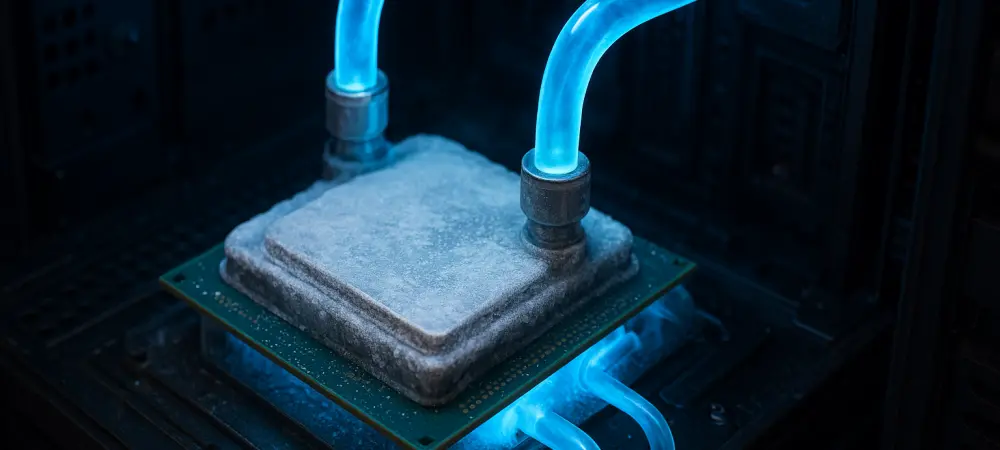
The transition to cryogenic cooling represents a massive leap for the silicon computer chips we rely on every day. By exploring liquid nitrogen cooling for CMOS chips, we are seeing a significant improvement in both processing speed and energy efficiency that simply isn’t possible with traditional air or liquid cooling. You can almost feel the shift in the industry as the tiny size of modern transistors finally allows us to overcome the thermal hurdles that kept this tech in the lab for decades. Professor David Reilly has noted that the cryo-computing epoch has finally arrived because the scale of our current data centers makes this approach economically viable for the first time. It is no longer just about keeping hardware from melting; it is about unlocking a reality where superconducting logic becomes a standard operational baseline for high-performance workloads, replaced by the specialized, quiet chill of sub-zero environments.
The partnership between AirTrunk and Emergence Quantum seems to go beyond simple cooling improvements. How does this collaboration challenge the traditional data center architecture and the broader innovation ecosystem?
This partnership is a deliberate move to challenge the status quo of how we build and manage massive computing campuses across the Asia-Pacific region. By signing a Memorandum of Understanding, AirTrunk and Emergence Quantum are merging deep expertise in thermal engineering and quantum technologies with real-world techno-economic models to prove these performance gains are commercially sustainable. They are not just adding a few cold pipes to existing rooms; they are redesigning the entire data center architecture to be quantum-ready from the ground up. Jose Castaneda, AirTrunk’s VP for innovation and intelligence, emphasizes that this is about redefining data centers as broader enablers of innovation within their communities. By embedding cryogenic cooling into the overall campus setup in locations like Sydney, Tokyo, and Singapore, they are creating a blueprint for the next generation of infrastructure that can support both today’s chips and tomorrow’s quantum processors.
With companies like Oxford Quantum Circuits and Diraq already placing hardware in colocation spaces, what does the “inevitable reality” of cryogenic data centers look like for the average enterprise user?
For the enterprise user, the inevitable reality means that high-speed, efficient silicon chips and quantum qubits will soon live right next to their standard cloud racks in professional colocation facilities. We are already seeing this shift in real-time, with hardware being deployed in facilities like Equinix in Tokyo and the LHR3 facility in Reading. As Professor Thomas Ohki has pointed out, all flavors of qubits need cryogenics one way or another, making this cooling infrastructure a foundational requirement for any business that wants to stay competitive. This isn’t just a niche upgrade for researchers anymore; it is a fundamental shift in how we house the world’s data. The physical sensation of walking through a data center is changing, moving away from the chaotic heat of traditional racks toward a more controlled, cryogenic environment that feels like the precipice of a new industrial revolution.
What is your forecast for the widespread adoption of cryogenic cooling within commercial data center infrastructure?
I forecast that over the next few years, cryogenic cooling will move from an experimental luxury to a standard necessity for any facility handling high-density AI or superconducting logic. As the scale of data centers in hubs like Melbourne, Johor, and Osaka continues to grow, the ability to run computers significantly faster and more efficiently in the cold will become the primary differentiator for top-tier providers. We will see a rapid expansion of quantum-ready campuses that can seamlessly host diverse hardware, from specialized CMOS chips to superconducting quantum processors. By the end of this decade, the integration of deep-tech cooling will be so thorough that the distinction between a standard data center and a cryogenic one will likely disappear entirely. The era of the cold data center is here, and it will be the backbone of every major technological breakthrough we see in the coming years.