

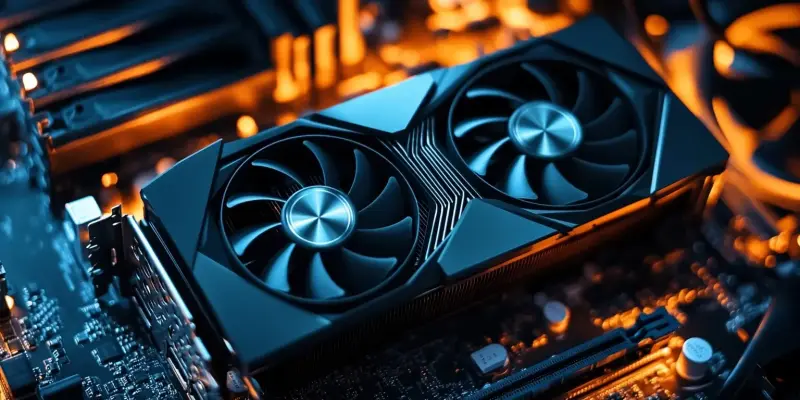
Corsair’s latest initiative aims to simplify the often complex process of selecting compatible hardware for new graphics cards by ensuring consumers can easily match components with next-gen GPUs from NVIDIA and AMD. In response to upcoming advancements in GPU technology, Corsair has introduced a “Next-Gen GPU Ready” program. The program highlights existing components that are fully compatible with the latest GPUs, focusing primarily on power supplies, PC cases, and cooling fans. This initiative stands out as it caters not only to tech enthusiasts but also to newcomers, making the entire selection process more accessible and straightforward.
Corsair has segmented its product lineup to clearly identify hardware that will work seamlessly with next-gen graphics cards. Particularly, the focus is on power supply units (PSUs) that can meet the power demands of these new GPUs, including NVIDIA’s RTX 50 series. The highlighted PSU series—RMe, RMX, and RMx SHIFT—offer modular cables and boast Cybenetics Gold certification, ensuring both efficiency and reliability. Equipped with new 12V-2×6 power cables, these units can deliver up to 600W, aligning perfectly with the power requirements of upcoming high-performance GPUs. This segmentation ensures that consumers have all the necessary information to make an informed purchase without worrying about compatibility issues.
In addition to power supplies, Corsair has identified specific PC cases and cooling fans capable of supporting next-gen GPUs. Compatible cases such as the 3500x series and 4000D Airflow provide ample space and necessary airflow to accommodate new GPUs, while cooling fans like the RS ARGB and iCUE Link series ensure optimal thermal performance. By clearly marking these existing products, Corsair helps users avoid the confusion often associated with upgrading hardware for new components. This proactive approach by Corsair demonstrates its commitment to reducing complexity for consumers, ensuring that even novice users can confidently assemble a system ready for next-gen GPUs without extensive research or guesswork.
Overall, Corsair’s “Next-Gen GPU Ready” program marks a significant step towards simplifying hardware selection for upcoming GPU releases. By clearly labeling and promoting compatible products within their existing lineup, Corsair positions itself as a consumer-friendly brand that prioritizes user experience. This initiative not only enhances customer satisfaction but also ensures that users are ready for the next wave of GPU innovations. As the technology landscape evolves, Corsair’s approach could set a new standard for other companies to emulate, ultimately leading to a broader adoption of next-gen technologies with minimal hassle for the end user.