

A Hundred-Million-Dollar Bet on Silicon Valley’s Digital Future
In a decisive move underscoring the relentless demand for digital infrastructure, CoreSite, an American Tower company, has acquired the Walsh Bowers Technology Center in Santa Clara for $100 million. This acquisition is far more than a simple real estate transaction; it represents a strategic investment aimed at significantly expanding the company’s already formidable presence in the heart of the tech world. This article will explore whether this purchase signals the creation of Silicon Valley’s next major data hub. We will delve into the strategic value of the acquisition, its place within the broader industry trend of converting commercial properties, and its potential to reshape the competitive landscape in one of the world’s most critical data center markets.
The Enduring Gravity of Silicon Valley’s Data Center Market
Despite high land costs and power constraints, Silicon Valley remains the epicenter of the global technology industry, creating an insatiable demand for data processing and storage. Its history as the cradle of innovation ensures a high concentration of tech giants, cloud service providers, and AI startups, all requiring low-latency connectivity to their operations and end-users. This geographic clustering fuels a self-perpetuating cycle: proximity to major peering exchanges and a rich fiber network makes the region indispensable. The ongoing explosion in AI, machine learning, and cloud computing has only intensified this need, making every square foot of available, powered land a highly contested asset and setting the stage for bold investments like CoreSite’s recent acquisition.
Deconstructing CoreSite’s Strategic Santa Clara Expansion
The 72-Megawatt Jewel: Why Pre-Approved Plans Are Golden
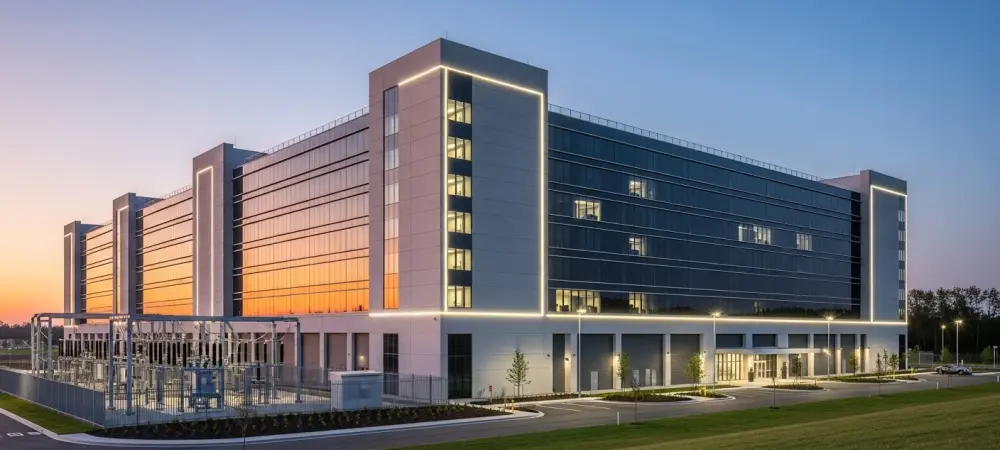
The centerpiece of CoreSite’s acquisition is the pre-approved plan for a four-story, 72-megawatt data center at 2805 Bowers Avenue. In a market notorious for lengthy and complex permitting processes, securing prior approval is a game-changing advantage. GI Partners, the seller, navigated the regulatory hurdles to get the project greenlit, effectively de-risking the investment and creating a turnkey development opportunity for CoreSite. This “shovel-ready” status dramatically accelerates the timeline for bringing new capacity online, a critical edge when speed-to-market can determine which provider captures the next wave of AI-driven demand. The inclusion of a new substation in the plans further sweetens the deal, addressing the region’s primary bottleneck: power availability.
From Office Parks to Powerhouses: The Conversion Trend Accelerates
This transaction perfectly illustrates a defining trend in major tech hubs: the adaptive reuse of underutilized commercial real estate for data center development. The Walsh Bowers Technology Center, comprising three office buildings on an 11-acre campus, represents the old economy of Silicon Valley making way for the new. As remote and hybrid work models diminish the demand for traditional office space, the surging need for data capacity creates a compelling economic case for conversion. This strategy is often more efficient than developing on scarce “greenfield” land, allowing operators to leverage existing locations in prime, well-connected urban areas. CoreSite is capitalizing on this market shift, transforming a relic of the office era into a state-of-the-art digital powerhouse.
Beyond the Megawatts: CoreSite’s Competitive Positioning and Unanswered Questions
With nine existing data centers totaling over 1.4 million square feet, CoreSite is already a dominant force in Silicon Valley. The addition of a campus with the potential for 72MW or more solidifies its position as a top-tier provider capable of meeting the hyperscale demands of the largest tech companies. However, the acquisition also raises strategic questions. While plans for the 72MW facility are clear, CoreSite’s intentions for the other two office buildings on the property remain undisclosed. Whether they will also be redeveloped into data centers or serve ancillary purposes is a key variable that will shape the campus’s ultimate scale. This move undoubtedly pressures competitors, intensifying the regional race to secure land and power for future growth.
The Future of Silicon Valley’s Digital Infrastructure
CoreSite’s investment is a clear indicator of where Silicon Valley’s digital infrastructure is headed. The scale of the planned 72MW facility points directly toward serving the high-density power and cooling requirements of artificial intelligence and machine learning workloads. This project, expected to come online between 2028 and 2030, sets a new benchmark for development in the region. It also highlights that future growth will depend on creative solutions like office conversions and, critically, the ability to secure new power infrastructure. As power grids become increasingly strained, projects that include their own substations will become the gold standard, likely forcing other operators to follow suit or risk being left behind in the AI arms race.
Navigating the Evolving Data Center Landscape
The key takeaway from CoreSite’s acquisition is that success in a mature market like Silicon Valley requires more than just capital; it demands strategic foresight and creative execution. For data center operators, the path forward involves identifying and acquiring properties with redevelopment potential, particularly those where the arduous task of permitting has already been completed. For enterprise clients, this development signals that new, high-density capacity is on the horizon, but they must plan their IT roadmaps years in advance to secure space. The actionable insight is clear: the most valuable assets in the digital economy are no longer just servers and fiber, but zoned land with entitled power.
A Calculated Move to Define the Next Era
CoreSite’s $100 million purchase was not just an expansion; it was a calculated play to build a next-generation data hub capable of powering the future of AI. The move encapsulated the industry’s most critical trends: the pivot from traditional real estate, the paramount importance of securing power, and the race to meet hyperscale demand. By acquiring a campus with a pre-approved, large-scale development, CoreSite bought itself a crucial head start in a market where time and megawatts were the ultimate currencies. This acquisition served as a powerful statement that even in the most developed markets, the next data hub was not just found—it was built through strategic vision and decisive action.