

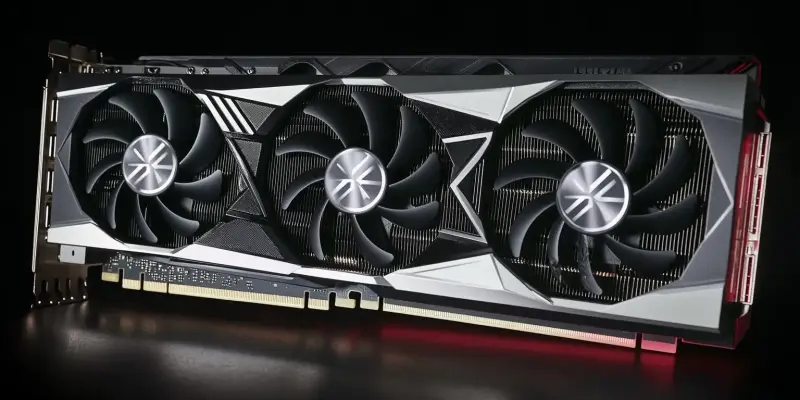
The tech community was buzzing with excitement at the prospect of AMD releasing a high-end Radeon RX 9070 XT graphics card with a massive 32GB of VRAM, especially after rumors circulated on the Chinese tech forum Chiphell. The rumor suggested that the 32GB variant, potentially positioned for AI applications, would also be marketed as a gaming card and command a premium price. However, AMD’s Chief Architect of Gaming Solutions and Marketing, Frank Azor, recently put an end to the speculation, emphatically stating that no such product is in the pipeline. According to Azor, the RX 9070 XT will feature 16GB of memory rather than 32GB. This announcement underscores AMD’s strategic direction, which currently emphasizes market-driven development rather than hyper-competitive, high-end gaming solutions.
The Origin of the Rumors
The initial whispers of a 32GB Radeon RX 9070 XT began on Chiphell, a well-known Chinese technology forum. A user on the forum hinted that AMD was planning to unveil a high-end RDNA 4 GPU in the first half of 2025 with up to 32GB of VRAM. Given the current trend of AI-driven applications and the increasing VRAM requirements for high-end graphics, the rumor seemed plausible to some. The 32GB variant was speculated to not only cater to gaming enthusiasts but also be heavily marketed towards AI applications due to its large memory pool. This assumption faced skepticism, as AMD’s declared strategy is to focus more on mid-range and lower-end products with RDNA 4 to enhance market share. This approach seems practical when considering their competition with Nvidia’s top-end Blackwell GPUs. It wasn’t long before AMD decided to officially address these rumors.
Official Statements and Future Roadmap
Frank Azor clarified AMD’s stance on the matter, stating there will be no 32GB version of the RX 9070 XT. This GPU will launch with 16GB of VRAM, aligning with AMD’s market strategy. While addressing the rumor, Azor did not entirely rule out the possibility of future RDNA 4 models with 32GB of VRAM. This does not mean we will see a gaming-focused 32GB GPU like the RX 9900 XTX soon, but future models might be for specialized, non-gaming tasks. These announcements emphasize AMD’s strategic differentiation from competitors, focusing on practical, scalable product development to meet broader market needs.
In conclusion, while the excitement around a possible 32GB Radeon RX 9070 XT was high, AMD’s clarification redirects the focus to their current strategic priorities. Although RDNA 4 models with 32GB of VRAM may appear in the future, they will likely be tailored for specialized applications rather than mainstream gaming. This approach aligns AMD with a more practical strategy, centering on mid-range and entry-level markets instead of the ultra-high-end segment. Thus, gamers looking for an upgrade will find options within the 16GB range.