

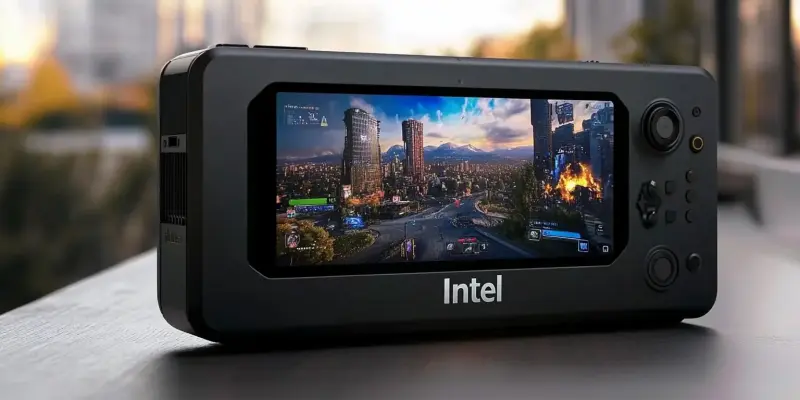
In recent years, the handheld gaming PC market has witnessed exciting developments, with major players striving to capture the attention of gamers on the go. Adding to its impressive portfolio, AMD unveiled its cutting-edge Z2, Z2 Go, and Z2 Extreme chipsets at CES 2025, reinforcing its hold on the market. However, Intel is poised to disrupt this dynamic by launching aggressive strategies aimed at dethroning AMD and establishing its own presence in the handheld gaming arena.
Intel Ramps Up Internal Resources and Developer Support
Determined to challenge AMD’s stronghold, Intel is pulling out all the stops to enhance its internal resources and provide substantial support to game developers interested in handheld devices. During a recent interview, Intel VP Robert Hallock highlighted that the company is increasing its staff, creating teams dedicated solely to assisting gaming independent software vendors (ISVs). These teams aim to bridge the gap between hardware and software, offering comprehensive solutions that optimize performance for handheld gaming PCs. By providing streamlined support for engineers and software developers, Intel aims to foster a robust development environment that will facilitate the creation of superior handheld gaming devices.
A pivotal part of Intel’s strategy revolves around offering game developers early access to Intel’s mobile gaming hardware. By supplying these game developers with prototype devices and development kits ahead of the anticipated Panther Lake launch, Intel hopes to inspire innovative titles tailored for handheld play and optimized to leverage the strengths of their new chipsets. This forward-thinking approach is set to open new horizons for developers, allowing them to experiment with cutting-edge technology while prioritizing seamless integration and maximum performance.
Showcasing Competitive New Chipsets and Upcoming Hardware
At CES 2025, Intel drew considerable attention by showcasing several forthcoming products incorporating its latest chipsets. Among the highlights were the MSI Claw 8 AI+ and Tencent Sunday Dragon 3D handhelds, both of which feature Intel’s powerful Arrow Lake-H SoC. The Arrow Lake-H has garnered accolades for its exceptional graphics performance, comparable to that of Lunar Lake, rendering it an ideal choice for handheld gaming devices operating at up to 30 watts. These show-stopping demonstrations underscored Intel’s commitment to delivering top-tier technology capable of rivalling AMD’s offerings.
Looking further ahead, Intel’s forthcoming Panther Lake chips promise unrivaled customization compared to their Lunar Lake predecessors. To compensate for the removal of on-package memory, Intel has developed alternative technologies designed to conserve power without compromising performance. This innovative approach not only benefits device manufacturers but also provides a more efficient and enjoyable gaming experience for users. Intel’s forward-looking strategies underscore its determination to push the boundaries of handheld gaming and challenge AMD’s dominance head-on.
Strategic Partnerships and Future Prospects
Intel’s entry into the scene promises to intensify the competition, possibly driving more innovation and better performance across devices. As Intel gears up to compete head-to-head, gamers can expect a new wave of advanced handheld gaming PCs. Both companies are expected to push the boundaries of technology, striving to deliver the ultimate gaming experience for users who play on the go.