

Modern enterprise platforms are being built to ensure that AI agents understand the specific relationships between different data sets within a secure environment. This fundamental shift marks a departure from the early days of generative artificial intelligence, where tools were primarily used for drafting short-form content or summarizing meeting transcripts. In the current landscape of 2026, the focus has moved toward a more sophisticated model of organizational orchestration. Instead of acting as a passive assistant, these systems are designed to navigate complex software environments and execute multi-step tasks autonomously across various departments. This transition signifies the rise of agentic workflows, which serve as a foundational layer connecting disparate business silos. By coordinating entire processes rather than just helping humans with isolated tasks, these agents resolve technical issues with minimal intervention to drive measurable growth.
Strategic Foundations and Infrastructure
Orchestrating Work: The Shift to Centralized Platforms
The movement toward an agentic workforce is being spearheaded by major technology players who are repositioning themselves as primary infrastructure providers. Meta has taken a significant lead in this area by launching its Enterprise Platform, a move that consolidates AI, security, and business applications under a single division. This strategic pivot, led by Chief Enterprise Platform Officer Chirantan Desai, aims to solve the pervasive problem of app fatigue that has long plagued corporate environments. By creating a central layer where work actually happens, these platforms allow agents to move safely across various systems without requiring employees to toggle between dozens of disconnected tools. The objective is to place AI at the heart of the business process, ensuring that agents have the necessary context to resolve operational challenges. This architectural shift is essential for organizations that want to leverage data effectively while maintaining a secure and cohesive digital environment.
Technical Depth: Moving Beyond Generic Generative Tools
Competition in this space is intensifying as companies like Google and Microsoft race to transition AI from the periphery of the desktop to the core of enterprise resource planning. These platforms are no longer just repositories for documents; they have become active participants in the business logic of the firm. The integration of specialized tools such as the Muse API and Muse Code allows for a level of technical depth previously unseen in enterprise products. These systems are designed to understand the underlying code and logic of a company’s unique software stack, enabling them to suggest and implement fixes in real time. This capability is critical because it moves the value proposition away from generic creative output and toward the high-stakes requirements of modern IT infrastructure. As businesses demand more from their digital investments, the ability to orchestrate tasks across multiple cloud environments will become the primary differentiator for successful enterprise platforms in the current market.
Practical Applications and Workflow Context
IT Management: Solving Real-World Operational Friction
In the current operational landscape, agentic AI is demonstrating its value through the resolution of high-friction IT tasks that traditionally drain organizational resources. Omnissa has emerged as a key player in this niche, introducing tools like the Horizon Delegate and the Digital Employee Experience (DEX) agent. These agents are specifically designed to handle the maintenance and troubleshooting that often creates bottlenecks in large-scale enterprises. For example, the Horizon Delegate can perform pre-approved actions within virtual desktop environments even when the user is offline, ensuring that systems remain updated and secure without manual intervention. Meanwhile, the DEX agent proactively identifies potential hardware or software issues before they escalate into tickets, allowing for a more seamless experience. By focusing on these practical, high-volume tasks, organizations can significantly reduce the backlog for their support teams, allowing human professionals to focus on strategic initiatives.
Workflow Integrity: Mapping Processes Before Automation
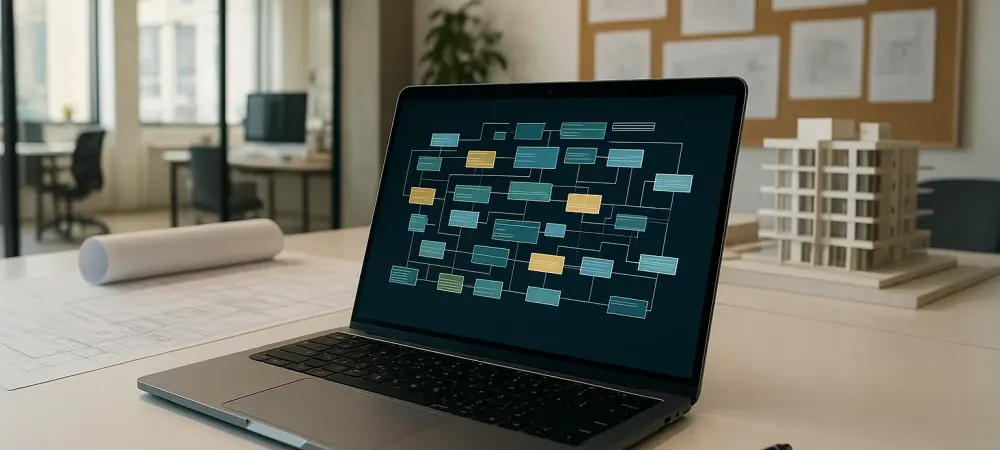
A critical prerequisite for the successful adoption of agentic AI is the thorough mapping of existing business workflows before any automation is applied. Many companies fall into the trap of attempting to automate processes that are fundamentally broken or poorly understood, which only serves to accelerate inefficiency. JAAM Automation, through its platform, provides a necessary reality check for organizations looking to scale their AI capabilities. They argue that most business processes are not nearly as linear as they appear on official organizational charts. Instead, these workflows are often held together by informal communications in messaging apps, messy spreadsheets, and the unwritten institutional knowledge of long-term employees. Attempting to deploy an agent into such a chaotic environment is likely to result in incidents that can disrupt operations. Therefore, the first step for any leader must be to gain a transparent view of how work actually flows before delegating work to an agent.
A New Operating Model for Digital Collaboration
The transition toward agentic AI marked a definitive shift in how corporations approached digital efficiency. It was no longer enough to have tools that could simply assist; the requirement evolved into having systems that could autonomously orchestrate. Successful organizations recognized that the foundation of this progress rested on process transparency and rigid security guardrails. To sustain this momentum, leadership teams initiated deep audits of their existing workflows to identify high-ROI opportunities for automation. They also invested in retraining their workforce to move from manual execution to high-level system supervision. This strategic pivot ensured that the speed of automation never outpaced the necessity for human oversight. By establishing clear audit trails and maintaining a human-in-the-loop framework, businesses achieved a balance that allowed for both rapid innovation and operational stability. The result was an operating model that viewed artificial intelligence as a core architectural component.