

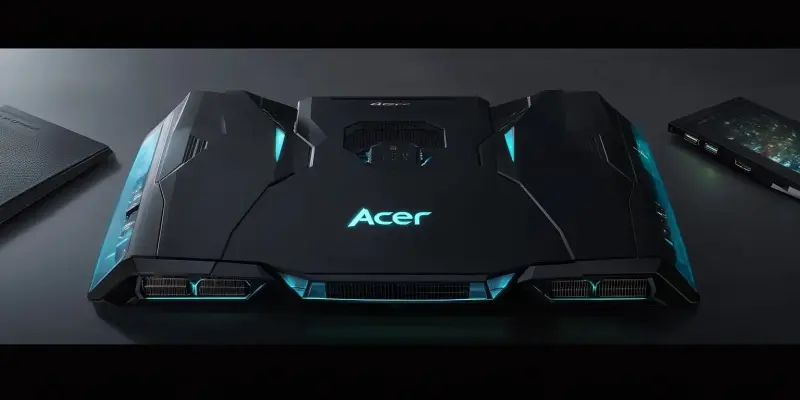
In a rapidly evolving market where technological advancements are the norm, Acer has announced its next-generation Predator Orion 7000 desktop lineup, featuring NVIDIA’s eagerly awaited GeForce RTX 50 series GPUs. The excitement surrounding this release has been palpable, particularly among gaming enthusiasts looking forward to experiencing unprecedented performance and speed. This latest reveal introduces two formidable configurations of the Predator Orion 7000: one sporting the NVIDIA GeForce RTX 5090 with 32 GB of GDDR7 VRAM and another equipped with the RTX 5080, which boasts 16 GB of GDDR7 VRAM. The release of these machines marks a significant step forward for high-performance gaming systems, promising enhancements that could redefine the standards of gaming PCs.
Cutting-Edge Hardware Inside
To complement the powerful graphics capabilities, Acer’s Predator Orion 7000 desktops will also feature Intel’s Arrow Lake Core Ultra 7 265KF processors, delivering substantial processing power to match the robust GPUs. Alongside the cutting-edge processors, these systems come with 32 GB of DDR5 RAM, which can be expanded up to an impressive 128 GB, ensuring future-proofing and adaptability for various gaming and application needs. Storage won’t lag either, with dual 1TB PCI-E SSDs offering ample and speedy access for storing the latest games and applications. Running on Windows 11 Home, users can expect an optimized and seamless gaming experience out of the box.
This pre-launch information was unintentionally revealed on Acer Germany’s website and subsequently reported by Videocardz, aligning with earlier leaks about the VRAM configurations for the RTX 50 series. The RTX 5090 is positioned as the flagship model, featuring an estimated 21,760 CUDA Cores and an imposing Total Board Power (TBP) of up to 600W. Meanwhile, the RTX 5080 stands as the second most powerful option, boasting around 10,752 CUDA Cores and a TBP of 400W. These specifications suggest that users can expect nothing short of amazing graphical fidelity and performance headroom for the most demanding AAA titles and graphic-intensive applications.
With the Predator Orion 7000, gamers can expect superior graphics, faster load times, and a more immersive gaming experience. This release positions Acer at the forefront of technology, catering to gamers’ growing demands for cutting-edge equipment and pushing the envelope for PC gaming performance.