

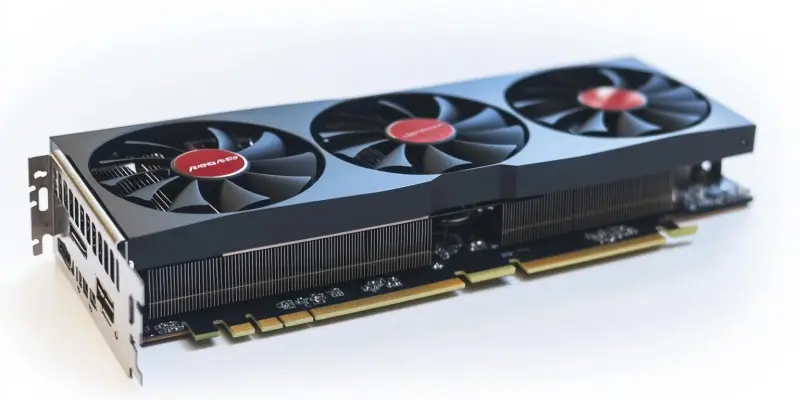
A significant development in the world of graphics cards emerged recently when AMD decided to halt the production of its Radeon RX 7900 GRE, marking its end-of-life status. According to a report from Dutch tech site Tweakers, this decision has been confirmed by multiple suppliers and retailers, who have observed the dwindling stock levels of the GPU. The RX 7900 GRE, which began as an Asia-only model before becoming globally available, was considered one of AMD’s mid-range offerings and had even been rated as the best graphics card by Tech Radar.
Reasons Behind the Discontinuation
Dwindling Stock and Production Halts
The decision to discontinue the RX 7900 GRE was informed by various industry dynamics, one of which is the visibly decreasing availability of the card in retail stores. Suppliers and retailers have consistently reported diminished stock levels, aligning with reports of the production halt. Despite the discontinuation, AMD assured the continuation of driver support for the GPU, ensuring that users could still receive software updates and maintain the card’s performance and compatibility with future games and applications.
Another crucial dimension involves AMD’s communication, or the lack thereof, on the matter. The company has not responded to inquiries confirming their decision to cease production. This has left room for speculation about the underlying reasons, with various theories circulating within the tech community. One prevalent idea hints at financial and logistical factors, such as potential issues with the Navi 31 chip yields, which power the RX 7900 series. As the stringency of Navi 31 production increases, the decision to reallocate resources might be strategic, paving the way for the development and mass production of newer RDNA 4 graphics cards.
Anticipating RDNA 4 Launch
The evolving tech landscape necessitates frequent updates and innovations, and AMD seems to be aligning with this trend. With the discontinuation of the RX 7900 GRE, the spotlight is now on AMD’s upcoming RDNA 4 graphics cards. Reports suggest that new GPUs, including the RX 8800 XT, could launch as early as Q1 2025, signaling a substantial upgrade from the current lineup. This potential release makes it logical for AMD to phase out older models, thus avoiding an overlap that could diminish the perceived value of new offerings.
The transition highlighted in AMD’s decisions is a common strategy in the tech industry, where companies phase out existing models to introduce more advanced technologies. Such moves are often aimed at maintaining competitiveness and ensuring that a brand stays at the forefront of technological innovation. In line with this, AMD’s anticipated reveal of RDNA 4 GPUs at CES 2025 has created a buzz. Following the unveiling, the new boards are expected to be available to consumers, propelling AMD into the next phase of its GPU product cycle.
Broader Market Implications
Supply Chain and Resource Reallocation
The end-of-life status of the RX 7900 GRE brings to light important considerations about supply chain dynamics and resource management within the tech industry. As AMD shifts its focus to the newer RDNA 4 architecture, the reallocation of resources becomes a necessity. This involves not just manufacturing adjustments but also substantial changes in marketing strategies, logistics, and distribution channels. Retailers experiencing dwindling stocks of the RX 7900 GRE may now prepare for the incoming RDNA 4 models, ensuring a smooth transition.
Moreover, this shift could imply broader market implications, including pricing adjustments and consumer behavior changes. As the RX 7900 GRE exits the market, enthusiasts and gamers might turn their attention to alternative options, whether within AMD’s existing lineup or from competitors. This period of transition could also present opportunities for retailers to clear out existing inventory, potentially offering discounts to incentivize purchases before completely phasing out the model. These market responses can significantly influence the competitive landscape and consumer expectations.
Industry Trends and Competitive Landscape
Phasing out older models in favor of new, advanced technologies is a reflection of a broader trend in the tech industry. Companies are constantly innovating and evolving, striving to outpace competitors and deliver cutting-edge products to consumers. For AMD, the move aligns with a strategic anticipation of market needs and technological advancements. By discontinuing the RX 7900 GRE, AMD is not only making way for its upcoming RDNA 4 GPUs but also signaling a commitment to pushing the boundaries of performance and capability.
This strategy is crucial for maintaining AMD’s position within the fiercely competitive GPU market. Rivals like NVIDIA and Intel are also continuously evolving their product lines, seeking to capture a larger share of the market. In this context, AMD’s proactive shift to future-facing products underscores the importance of staying relevant and appealing to consumers who seek the latest and most powerful technologies. As the tech world awaits the launch of RDNA 4 GPUs, AMD’s approach may serve as a blueprint for other companies navigating similar transitions.
Looking Forward
The Future of AMD’s Product Line
In light of the ongoing developments and strategic decisions, the future of AMD’s product line appears promising. The anticipated RDNA 4 GPUs are expected to bring significant enhancements in performance, efficiency, and user experience. Early reports and leaks indicate that these new graphics cards, including the RX 8800 XT, will offer substantial improvements over their predecessors, thereby raising the bar for what users can expect from AMD’s offerings. This future trajectory underscores AMD’s dedication to innovation and leadership in the graphic technology space.
As AMD continues to innovate, the impact on the broader market will become evident. The introduction of new technologies can drive competition, spurring other companies to enhance their offerings and potentially leading to rapid advancements in graphics card capabilities. Users stand to benefit from this competitive environment as they gain access to newer and better-performing GPUs. The discontinuation of the RX 7900 GRE is thus seen as a natural progression in AMD’s pursuit of excellence and market leadership.
Strategic Planning and Technological Advancements
Recently, a noteworthy shift occurred in the graphics card industry when AMD decided to stop producing its Radeon RX 7900 GRE, designating it as end-of-life. This information was substantiated by various suppliers and retailers, according to a report by Dutch tech outlet Tweakers. These sources have noticed the dwindling stock of the GPU, indicating that the product is being phased out. Originally launched as an Asia-exclusive model, the RX 7900 GRE eventually became available worldwide. This graphics card was recognized as one of AMD’s mid-range products and even earned the title of best graphics card by Tech Radar. The decision to discontinue the RX 7900 GRE marks the end of a significant era for AMD’s mid-tier offerings. It’s noteworthy that the RX 7900 GRE had garnered considerable praise and was highly regarded within the tech community. AMD’s strategic decision to focus on future innovations likely influenced this move, as the company aims to maintain its competitive edge in the rapidly evolving world of graphics technology.