

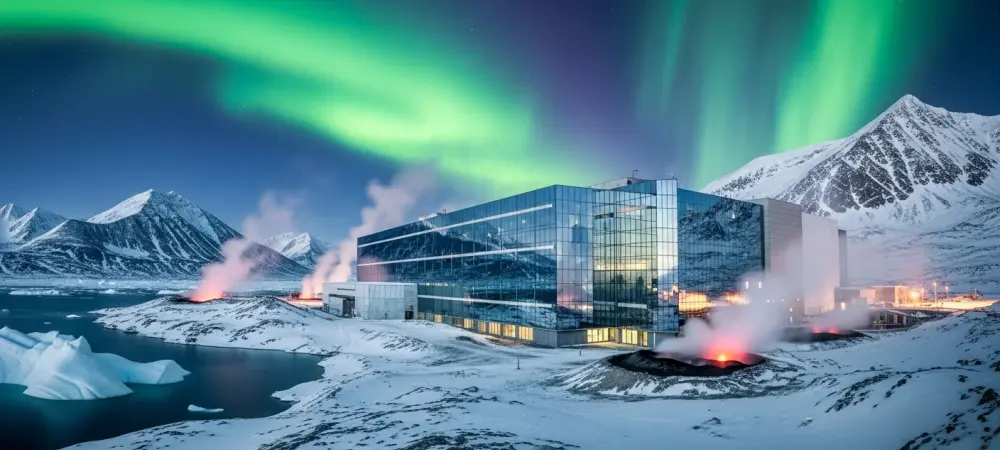
We’re joined today by Dominic Jainy, an IT professional whose work sits at the fascinating intersection of artificial intelligence, large-scale infrastructure, and geopolitics. We’ll be dissecting a proposal of monumental ambition: a gigawatt-scale data center campus in Greenland. This interview will explore the immense logistical and environmental challenges of powering such a facility in an arctic fjord, the project’s aggressive timeline and multi-billion-dollar financing structure, and the delicate diplomatic dance required to navigate Greenlandic, Danish, and US interests. We will also touch on how a project of this magnitude could transform Greenland’s local economy and its surprising connection to the global race for critical minerals.
The proposed power solution involves both LNG barges and a new hydroelectric plant. What are the primary logistical and environmental challenges of this hybrid model in an arctic fjord, and what steps are planned to ensure consistent, reliable power for a 1.5-gigawatt campus?
This is an audacious energy strategy, and the challenges are as immense as the landscape itself. The primary logistical hurdle is establishing a continuous supply chain for Liquefied Natural Gas in a remote arctic fjord, which is a massive undertaking with significant environmental risks. You’re essentially creating a floating power plant that needs constant refueling. Simultaneously, constructing a new hydroelectric facility in such an environment is a multi-year engineering feat. The real test isn’t just generating the raw power, but ensuring the kind of unwavering, “five-nines” reliability a 1.5-gigawatt campus demands. The project’s success hinges on perfectly synchronizing these two very different and complex power sources from day one.
An initial 300MW phase is targeted for mid-2027, with a rapid scale-up to 1.5GW by the end of 2028. What are the most critical milestones in that ambitious timeline, and how does the project’s financing structure support such a capital-intensive, multi-billion-dollar build-out?
That timeline is incredibly aggressive, moving from concept to a massive operational phase in just a few years. The most critical, front-loaded milestone isn’t technical; it’s political. As the proponents have stated, they are still waiting on approvals from the Greenlandic side and have yet to secure the land. Nothing can happen until that’s resolved. From there, concurrently developing the power infrastructure—both the LNG barge system and the hydroelectric plant—and the data center buildings themselves is a Herculean task. The financing for this multi-billion-dollar effort is structured with binding commitments covering half the initial phase and half the final phase, a mix of debt and equity. This provides a strong foundation, but it also means they will be fundraising for the other half while trying to meet these demanding construction deadlines.
Given the complex diplomatic landscape, you’ve noted that success depends on buy-in from all affected parties. How are you navigating geopolitical sensitivities with Greenlandic and Danish authorities, and what specific measures are being taken to secure local approvals for land use and operations?
This is where the project transcends a simple infrastructure build and becomes an exercise in high-stakes diplomacy. The entire effort is shadowed by the unresolved political tensions, particularly the US interest in the territory, which puts Denmark in a very defensive position. The CEO leading the effort has been clear that this private venture can only succeed with the buy-in of all relevant countries. Right now, their strategy appears to be focused on direct engagement on the ground, having established a partnership with a Greenlandic entity. They’ve spent a year laying the groundwork, but the critical step of securing formal approvals for land and operations from local authorities remains the single biggest variable. It’s a delicate dance, proving this project offers tangible benefits to Greenland without being perceived as a Trojan horse for foreign geopolitical interests.
A project of this scale would fundamentally alter Greenland’s current digital infrastructure, which is quite small. Beyond construction, what is the strategy for integrating this massive campus into the local community and economy? Could you provide examples of the long-term partnerships you envision?
The contrast is stark. You’re talking about planting one of the world’s largest digital hubs in a territory with a population of less than 60,000 and a data center market that is, for all practical purposes, nonexistent, with just two small facilities run by the state-owned telco. The integration strategy has to be about more than just construction jobs. While the details aren’t public, the mention of a “Greenlandic partner on the ground” is the first clue. A successful long-term vision would involve partnerships with Tusass, the local telco, to leverage and expand its subsea cable network. It would also mean creating training programs and tech-focused educational opportunities to ensure the local community can participate in the high-skilled operational jobs, rather than just being a host location.
Your firm’s stated focus is on critical mineral supply chains. How does developing a gigawatt-scale data center in Greenland align with that core mission? Please elaborate on the strategic link between building digital infrastructure and securing access to the region’s valuable natural resources.
This is the most strategic, and perhaps most revealing, aspect of the entire proposal. On the surface, data centers and mining seem unrelated. However, by establishing such a massive and critical piece of digital infrastructure, GreenMet accomplishes two things. First, it builds significant goodwill and deep operational roots within Greenland, which is invaluable when negotiating for access to other resources. Second, the immense power and data processing capabilities of a 1.5-gigawatt campus could directly support modern, data-intensive mining and mineral processing operations. This isn’t just about building a data center; it’s about building a foundational piece of infrastructure that makes the entire region more attractive and accessible for the development of the critical mineral supply chains that are the company’s core focus.
What is your forecast for Greenland’s future role in the global data center industry?
If this project overcomes its significant geopolitical and logistical hurdles, it could catapult Greenland from a non-entity to a key player in the niche market of sustainable, large-scale computing. Its strategic location and potential for vast renewable energy make it an ideal future hub, especially for AI and high-performance computing workloads that require immense power. However, its future isn’t guaranteed. Success will depend entirely on whether it can establish a stable, predictable, and welcoming political and regulatory environment. If it can, Greenland could become a blueprint for how remote, energy-rich regions can power the next generation of digital infrastructure.