

Dominic Jainy stands at the forefront of the modern infrastructure revolution, where the massive energy requirements of blockchain and artificial intelligence converge. With a seasoned background in managing high-density computing environments, he has observed firsthand how the digital landscape is being physically reshaped by the demand for GPU power. His insights provide a rare look into the logistical and technical hurdles of scaling “neocloud” services to meet the needs of the world’s largest technology providers.
The discussion explores the rapid transformation of industrial sites into high-performance AI hubs, the complexities of liquid-cooling systems at scale, and the strategic financial shifts required to pivot from cryptocurrency mining to long-term cloud service contracts.
The delivery of the Horizon 1 building marks a significant milestone in high-density computing; what does it take to get a 50MW direct-to-chip liquid-cooled facility operational for a major partner?
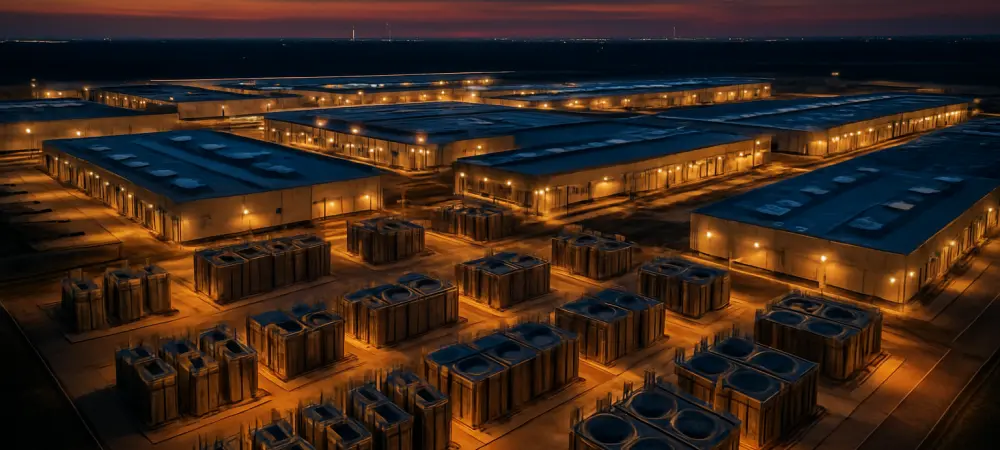
Bringing 50MW of IT load online is a monumental task that requires a seamless blend of mechanical engineering and rapid construction. When you walk through a facility like Horizon 1 in Childress, you can feel the vibration of the infrastructure and the meticulous organization of the direct-to-chip cooling systems designed to handle intense heat. It took the collective effort of over 3,000 people on the site team to ensure every connection was perfect and every cooling loop was pressurized correctly. This isn’t just about plugging in servers; it’s about managing a vertically integrated model that can execute complex AI infrastructure projects at a speed that matches the current market frenzy.
How is the transition from a Bitcoin-centric operation to an AI-driven neocloud changing the way companies manage their physical assets and cash flows?
The pivot we are seeing involves a strategic winding down of Bitcoin mining operations to funnel every available dollar of cash flow into the AI cloud business. It’s a complete reimagining of what a 576-acre campus can be, moving away from the chaotic noise of mining rigs to the sophisticated, high-stakes environment of a five-year, $9.7 billion cloud services contract. This transition requires upgrading the fleet to some 23,000 GPUs, of which 11,000 have already been secured under contract. The physical assets are being transformed from speculative tools into the bedrock of a multi-billion dollar service model that provides much more stability for the long term.
With the massive expansion planned across North America and internationally, how do these diverse locations contribute to the goal of reaching 1.2GW in capacity?
Reaching a gross capacity of 1.2GW by 2027 requires a footprint that spans far beyond a single site in Texas. By leveraging established locations in Oklahoma and various parts of British Columbia, like Mackenzie and Canal Flats, the foundation is laid for a massive global network. The acquisition of a Spanish data center developer and the push into South Australia show that this growth is not just local, but a global effort to capture market share. Each of these sites contributes to the target of 480MW of gross AI cloud capacity within this current year, providing the necessary scale to support massive machine learning workloads across continents.
What is your forecast for the evolution of high-density AI campuses over the next few years?
I anticipate a rapid move toward gigawatt-scale sites as the demand for liquid-cooled, high-density environments becomes the standard rather than the exception. We are going to see a shift where the legacy of cryptomining sites provides the power and land foundation, but the technology inside will be purely focused on the 1.2GW gross capacity targets that are now being set. As more contracts are secured for the thousands of GPUs currently in fleets, the focus will shift heavily toward the efficiency of these direct-to-chip systems to keep operational costs low. The era of the small-scale data center is ending, and we are entering the age of the industrial-scale AI factory.