

Dominic Jainy is a seasoned IT professional with an extensive background in artificial intelligence, machine learning, and the evolving architecture of blockchain technologies. His deep understanding of hardware-software synergy makes him a leading voice in evaluating how cutting-edge mobile components are integrated into consumer electronics. Today, he joins us to dissect the technical milestones of the upcoming iQOO Z series, exploring how massive battery capacities, high-refresh-rate displays, and specialized chipsets are shifting the boundaries of mid-range smartphone performance and durability.
With the integration of a massive 9,020mAh battery alongside a 165Hz high-refresh-rate display, how do these components interact to balance endurance with peak performance? What specific engineering challenges arise when implementing such high capacities alongside 90W fast charging capabilities in a standard mid-range chassis?
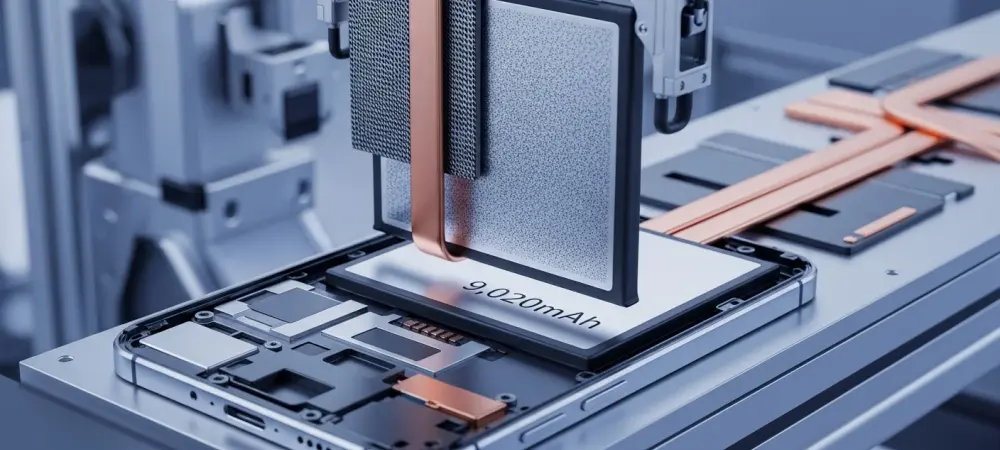
The interaction between a 9,020mAh battery and a 165Hz display is a fascinating exercise in power management, as high refresh rates typically drain power at an accelerated pace. By utilizing such a massive cell, the hardware allows users to enjoy that buttery-smooth 165Hz experience for much longer periods without the anxiety of a dying phone by midday. However, cramming a 9,020mAh battery into a standard chassis while supporting 90W fast charging presents a significant thermal hurdle, as the chemical heat generated during rapid charging must be dissipated through a relatively small surface area. Engineers have to be incredibly precise with the internal layout to ensure that the heat from the charging coils doesn’t degrade the longevity of the battery or throttle the display’s performance. It is a delicate dance of structural integrity and thermal dissipation that usually requires advanced vapor chambers or graphite cooling sheets to keep everything stable.
The Dimensity 8500 chipset is delivering single-core scores around 1,717 and multi-core scores near 6,795 when paired with 16GB of RAM. How do these benchmarks translate to real-world gaming and heavy multitasking, and what thermal management steps are necessary to maintain these speeds during extended use?
A multi-core score of 6,795 indicates that this device is more than capable of handling intensive modern games and heavy background processing without breaking a sweat. In real-world scenarios, the 16GB of RAM ensures that the OS doesn’t kill background apps, allowing for seamless switching between a high-fidelity game and a resource-heavy browser. To keep these benchmarks from dropping during a two-hour gaming session, the device must employ aggressive thermal throttling algorithms and high-quality heat sinks. If the Mali-G720 MC8 GPU gets too hot, you’ll see frame drops, so the system likely relies on the OriginOS 6 software to intelligently distribute the load across the Dimensity 8500’s cores. The goal is to provide a consistent tactile feel where the back of the phone stays comfortably warm rather than reaching temperatures that would force the CPU to downclock.
Looking at the Z11x variant, we see a 7,200mAh battery combined with IP68 and IP69+ durability ratings. In what ways does this combination of ruggedness and longevity redefine consumer expectations for the budget-conscious segment, and how do the internal cooling requirements differ from the OLED-based standard model?
This combination of a 7,200mAh battery and IP69+ rating is a game-changer for budget-conscious users who need a phone that can survive a high-pressure water jet or a dusty job site. It shifts the perception of a “budget” phone from something fragile to a tool that is virtually indestructible and can last two days on a single charge. Regarding cooling, the Z11x uses a 120Hz LCD screen which has different thermal properties compared to the 1.5K OLED found on the standard model. LCDs require a backlight that generates its own constant heat, whereas OLEDs generate heat per pixel, meaning the Z11x has to manage a more uniform heat profile across the front of the device. This requires a different internal architecture to ensure the Dimensity 7400 Turbo SoC remains cool despite the less efficient thermal dissipation typically found in LCD-based designs.
Pricing for high-performance devices often fluctuates between CNY 2,000 and 3,000 depending on the internal storage and display technology used. How does this price-to-performance ratio impact competition in the international smartphone market, and what logistical factors typically determine whether a specific regional model expands to other territories?
When a device offers 512GB of storage and a 9,020mAh battery at a price point of roughly CNY 2,000 to 3,000, it creates immense pressure on global competitors who often charge double for similar specs. This aggressive pricing forces other brands to innovate faster or risk losing market share in hyper-competitive regions like India and Southeast Asia. The decision to expand a model like the Z11 internationally usually boils down to local certification costs, supply chain availability for specific parts like the 1.5K OLED, and regional software localization. For instance, the Z11x has already made its way to India, but the standard Z11 remains a China-exclusive for now, likely due to the logistical complexity of scaling the production of that record-breaking 9,020mAh battery for multiple markets. It is always a tug-of-war between the desire for global reach and the practicalities of maintaining a lean, profitable inventory.
What is your forecast for the iQOO Z series?
I believe the iQOO Z series is setting a new industry standard where “mid-range” no longer implies a compromise on battery life or display fluidity. Moving forward, we will likely see this series become the primary testing ground for ultra-high-density battery tech, eventually hitting the 10,000mAh mark while maintaining a slim profile. As software like OriginOS 6 becomes even more efficient, the synergy between massive hardware and AI-driven power saving will make these devices the preferred choice for power users who value utility over brand prestige. We are entering an era where the Z series could bridge the gap between rugged specialty phones and mainstream flagships, offering a “best-of-both-worlds” scenario that will force the entire industry to rethink its pricing tiers. Expect iQOO to continue pushing these boundaries, making high-refresh rates and multi-day battery life the minimum expectation for every consumer.