

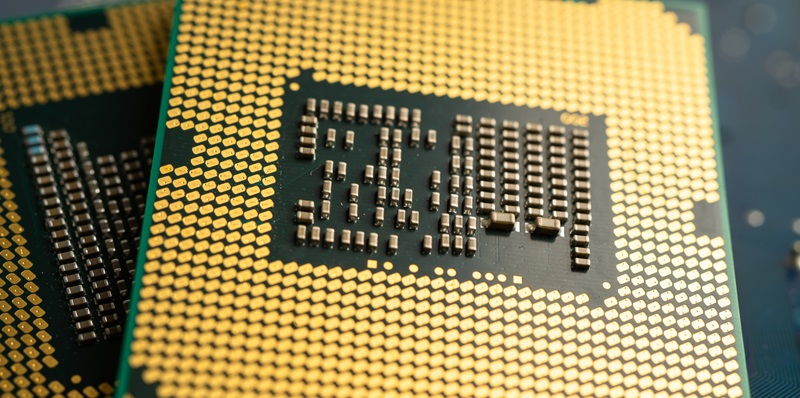
In the world of technology, advancements are constantly being made, pushing the boundaries of what is possible. Intel’s upcoming Meteor Lake processors have generated significant buzz, hinting at the potential to power affordable gaming laptops and handheld devices. With a newly leaked benchmark test showcasing their capabilities, these processors could pose a serious challenge to AMD’s Ryzen Z1 Extreme, which currently reigns as the engine of choice for popular gaming portables.
Potential competition for AMD’s Ryzen Z1 Extreme
AMD’s Ryzen Z1 Extreme chip has cemented its place as a powerful choice for gaming portables. However, with the introduction of Intel’s Meteor Lake processors, the company may have some cause for concern. These new processors promise improved performance and efficiency, raising the bar for affordable gaming devices.
Leaked details: 3DMark gaming test
An exciting leak has provided us with a glimpse into the performance of Intel’s Core i7-155H Ultra processor with integrated Arc Alchemist graphics. The leaked 3DMark gaming test puts this processor through its paces, showcasing its potential.
Performance Comparison: Intel vs. AMD
According to the leaked 3DMark test, the Core Ultra 7 155H processor achieved an impressive score of 3,339 in the Time Spy benchmark. While AMD’s Ryzen Z1 Extreme does hold a slight advantage in overall performance, the Intel Core Ultra 7 emerges victorious in the graphics department. This indicates that Intel’s Meteor Lake chip possesses superior graphics capabilities, a crucial factor for gaming laptops and handheld devices.
Analysis of CPU performance discrepancy
Examining the performance gap between the two processors reveals an interesting discrepancy. The Intel chip appears to rely solely on performance cores, while AMD’s Ryzen Z1 Extreme offers a combination of performance and efficiency cores. This configuration could explain why the Intel processor falls short in CPU performance but excels in graphics capabilities.
Cinebench R23 comparison
Taking a closer look at the Cinebench R23 benchmark, it becomes clear that AMD’s APU is approximately 15% faster than Intel’s Core i7 in both single and multi-core performance. This finding suggests that the gap in CPU performance may close when considering other benchmarks, leading to a more competitive comparison between the two processors.
Overall Processor Performance Conclusion
While AMD currently holds the lead in CPU performance, Intel’s Meteor Lake chip showcases its strength in the graphics department. The battle between these two giants results in a balanced competition where each processor has its own set of advantages. It is essential to consider the specific needs and priorities of users when choosing between the two.
Importance of Integrated Graphics for Gaming Devices
The demand for affordable gaming laptops and handhelds is on the rise, with users increasingly relying on integrated graphics for their gaming experiences. The power and capabilities of on-board integrated graphics play a crucial role in delivering an enjoyable gaming performance, even on budget-friendly devices. Intel’s Core i7 processor’s exceptional graphics capabilities make it an enticing option for gamers looking for a more affordable gaming solution.
Impressive Graphics Capability of Core Ultra 7
Intel’s Core Ultra 7 processor promises to deliver robust graphics performance within a reasonable power envelope. This means that users can expect a satisfying gaming experience without compromising on battery life. As portable gaming devices continue to evolve, finding a balance between performance and power efficiency becomes increasingly important, making Intel’s Meteor Lake processors a promising contender for the future of gaming on the go.
Intel’s Meteor Lake processors have unleashed a whirlwind of excitement as they make their way into the realm of affordable gaming laptops and handhelds. While AMD’s Ryzen Z1 Extreme currently holds a strong position in the market, the Intel Core Ultra 7 chipset exhibits commendable potential, particularly in graphics performance. As the battle between Intel and AMD ensues, it is ultimately the gamers who emerge as the winners, with more choices and enhanced gaming experiences on the horizon.