

The End of an ErHow the CPU Landscape Is Being Redrawn
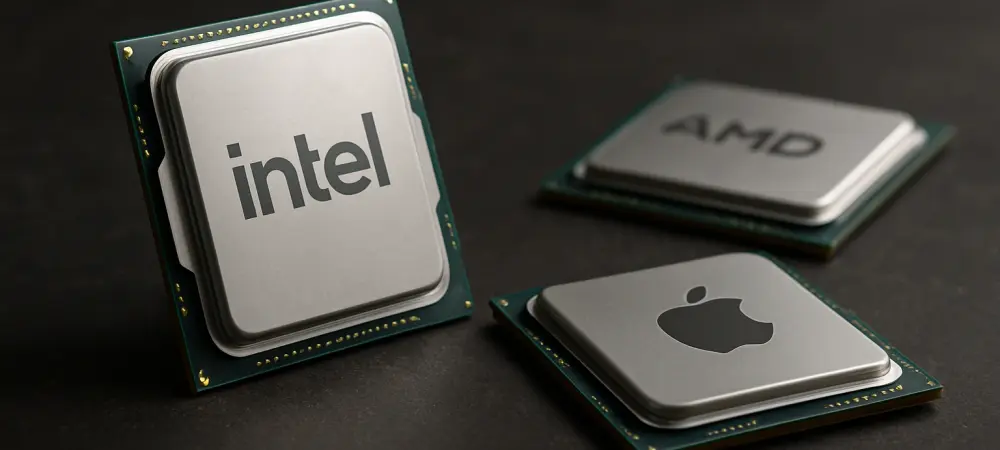
For decades, Intel was synonymous with the central processing unit (CPU), its brand a seal of quality and performance in the personal computing world. This long-standing dominance, however, is no longer unshakable. A dramatic shift is underway, fueled by relentless innovation from two formidable rivals: AMD and Apple. The once-uncontested giant now finds itself fighting a war on two fronts, with its market share eroding in both the notebook and desktop sectors. This article explores the forces behind Intel’s faltering grip, analyzes the current state of the market, and examines what the future holds for this newly competitive landscape.
A Titan’s Reign: Understanding Intel’s Decades of Market Supremacy
To appreciate the magnitude of the current market shift, one must recall the era of Intel’s near-total control. The “Intel Inside” campaign was more than a marketing slogan; it was a reflection of reality. For consumers and manufacturers alike, Intel processors were the default choice, setting the standard for performance and compatibility in the x86 ecosystem. Before 2018, the company commanded a staggering majority of the CPU market, often holding over 80% or 90% in the notebook and desktop segments, respectively. This historical context underscores the significance of the recent challenges, transforming a market once defined by a single leader into a dynamic, multi-faceted arena.
The Two-Front War Eroding Intel’s Market Share
The Notebook Shake-Up: AMD and Apple Carve Out Their Territory
The laptop market has become a primary battleground where Intel’s losses are most striking. Since 2018, its share has plummeted from a commanding position of over 80% to approximately 60%. This decline is not the result of a single competitor but a pincer movement from two distinct rivals. AMD has steadily gained ground with its highly successful Zen-based Ryzen processors, offering compelling performance and efficiency that has won over manufacturers and consumers. Simultaneously, Apple executed a masterful transition to its in-house M-series Arm-based chips, completely reshaping the premium notebook segment with an unmatched blend of power and battery life. Today, AMD and Apple each command roughly 20% of the notebook CPU market, effectively dismantling what was once an Intel monopoly.
The Desktop Battlefield: AMD’s Ryzen Ascends
A similar, though differently composed, narrative has unfolded in the desktop segment. Here, Intel’s share has fallen from a near-absolute 90% to around 60%, with AMD being the primary beneficiary of this shift. AMD’s strategic focus on the desktop market, particularly for gamers and enthusiasts, has paid off handsomely. Innovations like its fifth-generation Zen architecture and groundbreaking 3D V-Cache technology, which dramatically boosts gaming performance, have given it a powerful competitive edge. This success is reflected in platforms like Steam, where AMD processors are now found in over 40% of surveyed user systems. While Apple’s M-series desktops hold a smaller, stable 10% share, AMD’s aggressive push has been the main force in turning the desktop space into a true two-horse race.
Beyond Market Share: The Technology Behind the Upset
The erosion of Intel’s dominance is not merely a story of numbers but one of technological divergence and innovation. For years, Intel’s product cycles were criticized for delivering only iterative improvements, while manufacturing stumbles delayed its transition to smaller, more efficient process nodes. In contrast, AMD’s Zen architecture represented a revolutionary leap, leveraging a chiplet design that improved scalability and cost-effectiveness. Meanwhile, Apple’s pivot to Arm architecture allowed it to achieve an unprecedented level of hardware and software integration, yielding M-series chips with remarkable performance-per-watt. The combined success of AMD’s raw performance gains and Apple’s efficiency-first approach has fundamentally altered consumer expectations and proven that viable, powerful alternatives to Intel’s architecture now exist.
The Horizon Beckons: Future Trajectories and Emerging Challengers
The CPU market shows no signs of returning to its former state of stasis. Intel is not standing still and is preparing a counteroffensive with its upcoming Core Ultra 3 (Panther Lake) processors, aiming to reclaim lost ground in performance and efficiency. However, the competitive pressures are set to intensify. The Arm-based laptop market, which Apple currently dominates, is attracting new entrants. Competitors like Qualcomm and Nvidia are developing their own Arm-based chips for Windows, posing a long-term threat that could further fragment the market. The overarching trend suggests that the era of a single dominant player is over, replaced by a more diversified and fiercely competitive environment.
Navigating the New CPU Market: Key Takeaways for Consumers and Industry Watchers
The most significant takeaway from this market transformation is the end of Intel’s de facto monopoly and the rise of genuine competition. For consumers, this is unequivocally good news, as it fosters innovation, competitive pricing, and a wider array of choices tailored to specific needs—from AMD’s high-performance gaming chips to Apple’s ultra-efficient mobile processors. Industry watchers should recognize that brand loyalty is no longer a sufficient guide for purchasing decisions. The key recommendation is to evaluate products based on current, real-world benchmarks, power efficiency, and value, as the “best” CPU is now a constantly shifting target dependent on the user’s specific application.
A New Competitive Balance Is Here to Stay
The seismic shifts in the CPU industry have redrawn the competitive map for the foreseeable future. The combined and sustained pressure from AMD and Apple has successfully broken Intel’s long-held hegemony, ushering in a new era defined by choice and innovation. This multi-polar market is not a temporary anomaly but the new normal, ensuring that progress will be driven by fierce competition rather than the roadmap of a single company. For anyone involved in the world of computing, from the casual user to the enterprise client, the message is clear: the race for the heart of our devices is more intense and exciting than ever before.