

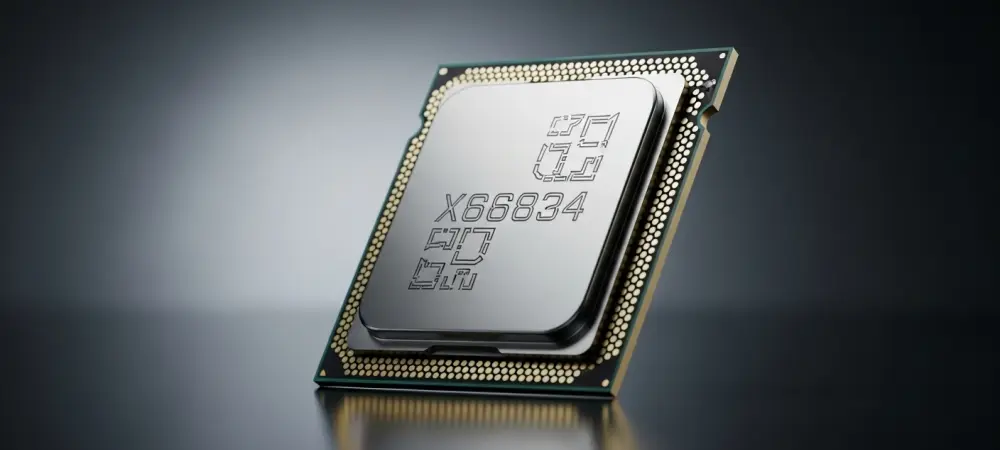
In the highly competitive arena of PC gaming hardware, where every frame per second counts, AMD has introduced a new challenger aimed squarely at enthusiasts demanding peak performance without compromise. The company has officially announced the Ryzen 7 9850X3D, a processor designed to be a refined and potent option for the high-end gaming market, which is set for a retail release on January 29 with a manufacturer’s suggested retail price of $499. This strategic release builds upon the success of its X3D lineup, known for leveraging advanced 3D V-Cache technology to push gaming performance to new heights. The new chip enters the market not as a radical architectural overhaul, but as a finely tuned instrument, promising incremental yet meaningful gains for a specific segment of the gaming community, reinforcing the company’s focus on dominating the gaming CPU space. This move signals a deliberate effort to solidify its position by offering a new best-in-class 8-core processor for those building new systems on the AM5 platform.
An In-Depth Look at the New Processor
Architectural Refinements and Performance Gains
The Ryzen 7 9850X3D is fundamentally an exercise in optimization rather than a complete redesign, sharing its core DNA with its direct predecessor, the highly regarded 9800X3D. It is built on the same foundational Zen 5 architecture, maintaining the familiar 8-core, 16-thread configuration that has proven to be a sweet spot for modern gaming and multitasking workloads. The processor also retains the same 120W Thermal Design Power (TDP) and the signature 104 MB of total cache, made possible by the second-generation 3D V-Cache technology. The critical distinction lies in its clock speed. This new model is a higher-binned variant, meaning it is constructed from silicon wafers that have demonstrated superior quality, allowing them to sustain higher frequencies stably. This manufacturing selection process enables a significant 400 MHz increase in the peak boost clock, pushing it from 5.2 GHz on the 9800X3D to an impressive 5.6 GHz on the 9850X3D. This enhancement is a testament to the maturation of the fabrication process, squeezing more performance out of a proven and efficient design.
This carefully engineered clock speed improvement is projected to deliver tangible benefits where they matter most to the target audience: in-game performance. According to internal benchmarks, the 400 MHz boost translates to a performance uplift ranging from 3 to 8 percent in 1080p gaming, with the exact gains being highly dependent on the specific title and how it utilizes the CPU. While these numbers may seem modest, they can be the deciding factor in competitive gaming scenarios. Furthermore, AMD makes a bold claim regarding its standing against the competition, stating that the 9850X3D delivers, on average, 27 percent higher gaming performance than Intel’s Core Ultra 9 285K at 1080p. This substantial performance delta highlights the effectiveness of the 3D V-Cache technology in alleviating CPU-bound scenarios, which are most common at lower resolutions where GPUs can render frames faster than the processor can prepare them. The focus on 1080p underscores the chip’s positioning for esports and high-refresh-rate gamers.
Value Proposition and Market Positioning
Beyond raw clock speeds, a significant part of the Ryzen 7 9850X3D’s appeal lies in its efficiency and the overall platform value it presents. One of the most compelling aspects highlighted by the manufacturer is the processor’s remarkable performance consistency with various memory speeds. Internal testing conducted across a wide array of games has revealed less than a 1 percent average difference in frame rates when pairing the CPU with standard DDR5-4800 RAM compared to more expensive, high-frequency DDR5-6000 kits. This is a crucial benefit for system builders operating on a budget. It suggests that the massive 104 MB L3 cache is so effective at feeding the CPU cores with data that the system’s reliance on fast system memory is significantly reduced for gaming tasks. Consequently, consumers can allocate funds that would have been spent on premium RAM towards other critical components, such as a more powerful graphics card or a larger NVMe SSD, maximizing the overall performance and responsiveness of their new build without sacrificing CPU potential.
This processor is meticulously aimed at a specific demographic within the PC building community, primarily targeting two key groups. The first consists of enthusiasts building a brand-new system on the AM5 platform who are seeking the absolute best 8-core gaming CPU available from day one. For them, the 9850X3D represents the pinnacle of what the architecture can offer in this segment. The second group includes users undertaking a complete system overhaul from much older platforms, such as AM4 or even earlier Intel generations, for whom the performance leap will be substantial. However, it is important to note that for existing owners of the 9800X3D, the minor performance gains are unlikely to justify the cost and effort of an upgrade. The introduction of this new flagship may, however, create a positive ripple effect in the market, potentially leading to price reductions on the still-excellent 9800X3D, making it an even more attractive option for budget-conscious gamers looking for a powerful upgrade.
The Future of Gaming Performance
Strategic Implications for the Market
The launch of the Ryzen 7 9850X3D was a calculated move within the broader landscape of the CPU market, reflecting a strategy of incremental innovation and market segmentation. By introducing a higher-binned version of an existing product at a premium, the company effectively created a new tier at the top of its 8-core gaming lineup without investing in a completely new architecture. This approach allowed for the maximization of yields from the Zen 5 silicon, ensuring that the very best chips were packaged and sold as a premium product. This strategy also placed renewed pressure on competitors, forcing them to respond not to a generational leap, but to a refined and highly optimized gaming-specific product. The release also served to keep the AM5 platform in the spotlight, showcasing its continued evolution and its capacity to support progressively faster processors, which was a key selling point for those considering a long-term investment in a new PC build.
A Look Back at the Launch
The processor’s arrival on January 29 at a $499 price point was met with keen interest from the enthusiast community. It successfully carved out its niche as the go-to option for new AM5 builders who prioritized gaming performance above all else. The discussion around its value was nuanced; while the performance gains over its predecessor were modest, its clear dominance over competing CPUs in many gaming benchmarks justified its premium for those seeking the ultimate edge. Furthermore, the chip’s memory efficiency proved to be a significant talking point in reviews, with many builders appreciating the flexibility it offered in system configuration. The launch ultimately solidified the reputation of the X3D line as the gaming performance leader and demonstrated that significant gains could still be achieved through intelligent engineering and optimization of an existing, powerful architecture. This release was a chapter in the ongoing story of CPU innovation, emphasizing refinement as a powerful tool in the quest for performance.