

Setting the Stage for a Market Shift
In the competitive realm of workstation graphics, a staggering statistic has emerged: a budget GPU has surged to the top of Newegg’s best-seller list in under two weeks since its debut, signaling a potential upheaval in a market long dominated by high-cost solutions. Intel’s Arc Pro B50, priced at a mere $349, has captured the attention of professionals and enthusiasts alike. This analysis delves into the dynamics propelling this unexpected contender, examining how its blend of affordability and robust features is reshaping expectations for budget workstation hardware. The purpose here is to dissect current market trends, evaluate the implications of this GPU’s rise, and forecast its impact on the industry’s future trajectory. As demand for cost-effective yet capable tools grows, understanding this phenomenon becomes essential for stakeholders across the tech landscape.
Dissecting Market Trends and Performance Metrics
A New Benchmark in Affordability and Capability
The budget workstation GPU segment has historically been a challenging space, often forcing users to compromise between price and performance. Intel’s Arc Pro B50, part of the Xe2-based Battlemage Arc Pro series, has disrupted this narrative by offering 16 GB of GDDR6 VRAM at an unprecedented $349 price point. This memory capacity stands out sharply against competitors like NVIDIA’s A1000, which typically maxes out at 8 GB in a comparable price range. For tasks such as video editing with extensive timelines or 3D rendering with complex textures, this doubled VRAM offers a lifeline to professionals constrained by budget. The rapid climb to the top spot on Newegg’s charts reflects a market hungry for value-driven hardware that doesn’t skimp on essential specs.
Design Innovation Fuels Market Appeal
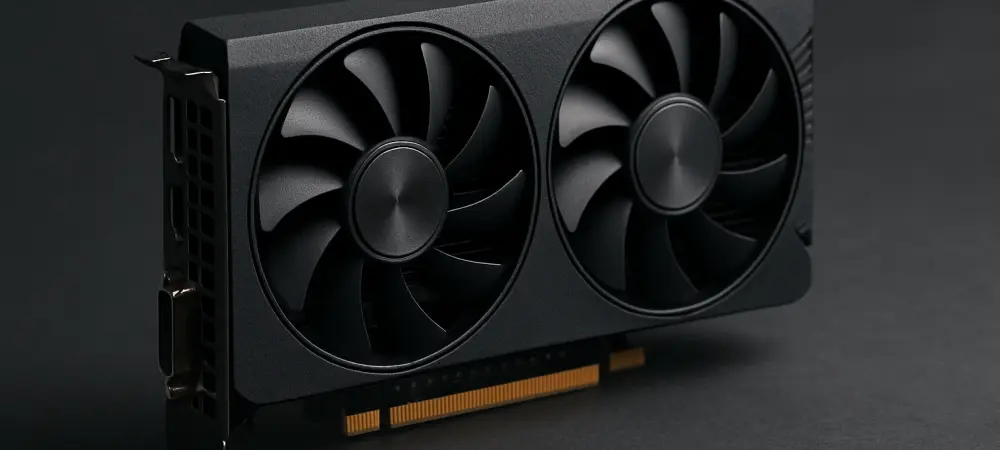
Beyond raw specifications, the Arc Pro B50 distinguishes itself through practical design tailored to modern workstation needs. Consuming just 70W of power directly from the PCIe x16 slot, it eliminates the hassle of external power connectors, streamlining system builds. Its low-profile form factor further enhances its versatility, fitting seamlessly into small form factor (SFF) cases—a critical advantage for users with limited workspace. Additionally, support for up to four HDR displays via mini DP 2.1 ports positions it as a forward-looking option in a segment where multi-display setups are increasingly vital. These design elements collectively broaden its appeal, catering to a diverse user base seeking efficiency without complexity.
Demand Dynamics and Distribution Reach
Market reception of the Arc Pro B50 underscores a significant shift toward affordability in professional graphics. Within days of its launch, the GPU secured the leading position among workstation graphics cards on Newegg, with pricing holding steady at its MSRP of $349. Shipping commenced recently, and availability extends across major North American retailers like B&H, with Intel expanding distribution to global markets. This widespread accessibility, coupled with sustained demand, suggests that budget-conscious buyers are ready to embrace alternatives to traditional high-end brands. However, supply chain constraints remain a potential hurdle, as maintaining stock levels could prove challenging if popularity continues to soar. Industry observers note this trend as indicative of a broader pivot toward cost-effective solutions in tech hardware.
Projecting the Future of Budget Workstation GPUs
Emerging Patterns in Consumer Preferences
Looking ahead, the success of the Arc Pro B50 points to a growing preference for hardware that balances cost with capability in the workstation GPU market. Professionals and small businesses, often operating under tight budgets, are increasingly prioritizing value, especially as workloads like AI training and high-resolution content creation become more common. The demand for higher VRAM at lower price points is likely to push competitors to rethink their offerings over the next few years, potentially from this year to 2027. Intel’s approach of embedding high-end features into budget products could set a new standard, compelling established players to innovate or risk losing market share in this evolving segment.
Technological Advancements on the Horizon
Technological evolution will play a pivotal role in shaping the future of budget GPUs, with the Arc Pro B50 serving as a benchmark. Features like PCIe 5.0 compatibility (albeit capped at x8 speeds) and advanced display support are expected to become more widespread, even in lower-tier products. As software demands grow, the need for power-efficient designs and compact form factors will likely intensify, particularly for industries reliant on portable or space-constrained setups. Intel’s challenge lies in strengthening its software ecosystem to match the maturity of competitors like NVIDIA, a factor that could determine whether its foothold in this market expands or stalls in the coming years.
Competitive Landscape and Strategic Implications
The competitive dynamics in the workstation GPU space are poised for transformation following Intel’s entry with the Arc Pro B50. If Intel sustains its momentum, it could catalyze a wave of innovation among rivals, driving down prices while elevating baseline specifications across the board. Market analysts anticipate that budget GPUs will increasingly cater to professional-grade tasks, blurring the lines between entry-level and mid-range offerings. For now, the Arc Pro B50’s limitations—primarily in software compatibility—remain a hurdle, but its value proposition suggests that many users are willing to adapt. This shift hints at a future where affordability no longer equates to sacrifice, potentially redefining purchasing decisions for years to come.
Reflecting on Insights and Charting the Next Steps
The analysis of Intel’s Arc Pro B50 reveals a transformative moment in the budget workstation GPU market, as its unprecedented 16 GB VRAM and $349 price tag challenge long-standing norms. Its swift ascent to bestseller status on Newegg, alongside robust demand and expanding global availability, underscores a market eager for accessible, high-value hardware. Despite hurdles in software compatibility compared to entrenched competitors, its design efficiency and feature set mark a significant departure from traditional budget offerings. Moving forward, stakeholders must monitor Intel’s ability to scale supply and enhance ecosystem support, while competitors recalibrate strategies to address this disruptive entrant. A key takeaway is the importance of anticipating consumer shifts toward value-driven solutions, urging manufacturers to prioritize innovation in affordable segments. As the landscape evolves, the focus shifts to fostering partnerships and software optimizations to ensure long-term relevance for such groundbreaking products.