

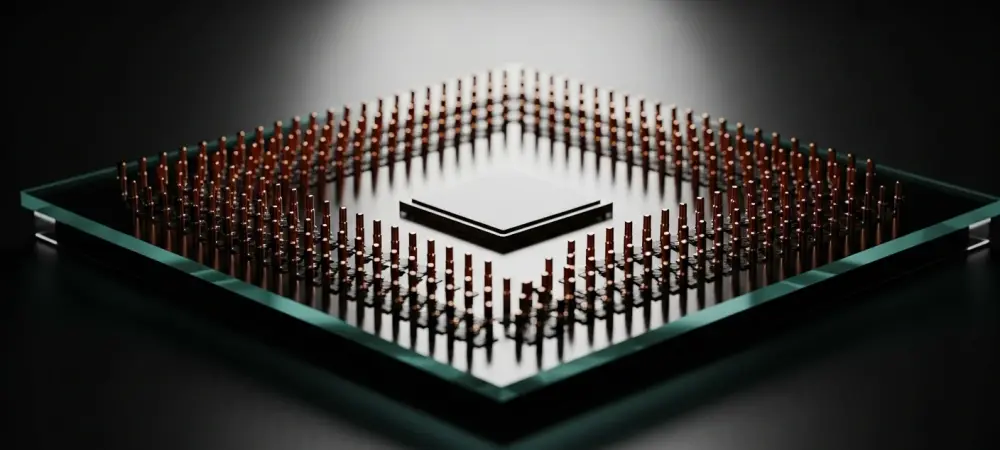
The relentless demand for artificial intelligence processing power has pushed traditional semiconductor packaging to its physical breaking point, forcing a fundamental shift in material science that favors glass over organic compounds. For decades, the industry relied on organic substrates like Ajinomoto Build-up Film to connect silicon chips to circuit boards. However, as chips grow larger and hotter, these materials suffer from warpage and signal loss, making them unsuitable for the massive AI models currently dominating the tech landscape. Intel’s Rio Rancho facility in New Mexico has emerged as the definitive epicenter for this transition. By pivoting from traditional fabrication to advanced packaging, this site bridges the gap between raw silicon production and the finalized, high-performance systems required by hyperscale data centers. This strategic move positions Intel at the forefront of the global chip manufacturing ecosystem, transforming a legacy facility into a modern hub of innovation.
High-performance computing now operates within an AI supercycle that demands unprecedented interconnect density. As chipmakers move toward chiplet architectures, the packaging must support thousands of connections across a perfectly flat surface. Glass provides this structural integrity where organic materials fail, allowing for tighter spacing and more efficient data transfer between processor components.
Strategic Market Shifts and the Trajectory of Advanced Materials
Primary Drivers Behind the Move to Glass Substrate Technology
The physical limitations of organic build-up films have become a bottleneck for next-generation hardware development. Organic materials are inherently flexible and expand at different rates than silicon when heated, leading to mechanical stress and potential failure in large-scale chips. Glass, with its exceptional flatness and thermal coefficient matching that of silicon, resolves these structural discrepancies, ensuring long-term reliability for expensive AI hardware.
Moreover, evolving consumer behaviors and the explosion of generative AI workloads require hardware that can handle sustained, high-temperature operations. Glass substrates enable the creation of larger packages that can house multiple dies without the risk of bending. This advancement facilitates the next generation of interconnect density, allowing data to move faster and with lower latency than previously possible.
Market Data and the Financial Outlook for Intel Foundry Services
Current projections indicate that the high-volume manufacturing lines in New Mexico will significantly bolster foundry revenue as the technology matures. The facility serves as a proof of concept for Intel’s transition into a specialized service provider for external clients. Strategic partnerships with major entities like AWS and Cisco have already validated the commercial viability of these advanced packaging techniques, creating a robust order book for the coming years.
The financial trajectory for the glass-based processor market looks promising, with full commercialization expected to accelerate from 2026 to 2028. As the initial capital expenditures for the Rio Rancho revitalization begin to yield high-yield manufacturing outputs, the company is well-positioned to recapture market share from traditional packaging houses. This shift toward specialized materials creates a high-margin revenue stream that offsets the cyclical nature of the broader semiconductor market.
Navigating Engineering Obstacles and Supply Chain Instability
Moving from pilot lines to mass production involves significant technical hurdles, particularly regarding material warpage and structural integrity at scale. Glass is notoriously brittle compared to organic plastics, requiring entirely new handling equipment and cleanroom protocols to prevent breakage during assembly. Engineers have implemented proprietary stress-distribution techniques to ensure that these thin glass layers can withstand the rigors of high-volume assembly without compromising the delicate silicon above.
This transition also addresses the severe supply chain vulnerabilities exposed by traditional substrate shortages. By diversifying away from organic substrates, which were often concentrated in a few geographic regions, Intel has created a more resilient domestic production capability. This self-reliance reduces the risk of global logistics disruptions and ensures a steady flow of components for high-priority projects.
Implementing advanced cooling and power delivery solutions is essential to support glass core integration. Because glass is a better insulator than organic materials, it allows for more precise power routing, reducing electrical leakage. This efficiency is critical for maintaining performance in hyperscale environments where energy consumption is a primary operational cost.
Compliance and the Regulatory Landscape of Modern Fabrication
The expansion of Rio Rancho aligns closely with federal investment policies aimed at securing domestic semiconductor manufacturing. Compliance with modern manufacturing standards requires adherence to strict guidelines regarding labor, safety, and technological sovereignty. As a critical piece of the national tech infrastructure, the facility must navigate a complex web of government oversight while maintaining the agility needed to compete in a fast-paced global market.
Environmental regulations also play a significant role in high-volume glass production. The manufacturing process for glass involves different chemical treatments and energy requirements compared to organic films. Implementing sustainable water recycling and energy-efficient kilns has become mandatory to meet both state and federal environmental targets, ensuring that production does not come at the expense of local resources.
Security protocols and compliance measures are paramount when handling designs for defense contractors and high-stakes foundry clients. Intel has established rigorous protocols to protect intellectual property and ensure that sensitive chip architectures remain secure throughout the packaging process. Navigating international trade standards requires constant adaptation to shifting global semiconductor regulatory environments.
The Horizon of Silicon Photonics and Integrated Optical Architectures
The synergy between glass substrates and light-based data transmission represents the next frontier of computing performance. Unlike organic materials, glass can be manufactured with extremely precise holes and channels that facilitate the integration of optical fibers. This capability is essential for silicon photonics, where light is used instead of electricity to move information across the package, virtually eliminating the signal degradation common in copper-based systems.
Future growth areas in co-packaged optics are expected to resolve many of the current limitations in hyperscale computing. By placing optical engines directly onto the glass substrate alongside the processor, manufacturers can reduce the distance data must travel. This reduction in travel distance translates directly to lower power consumption and higher bandwidth, providing the infrastructure necessary for data center expansion in the 2030s.
Ongoing material innovation will likely disrupt traditional hardware lifecycles by extending the performance ceiling of current silicon designs. As copper interconnects reach their physical limit, the transition to optical communication enabled by glass will become the new industry standard. This shift will force a rethink of hardware benchmarks, moving the focus from raw clock speed to total system bandwidth and energy efficiency.
Solidifying the Future of High-Performance Computing at Rio Rancho
The transition to glass substrates at Rio Rancho solidified the facility’s position as a leader in the next generation of semiconductor packaging. This material evolution proved to be the definitive successor to organic substrates, offering the thermal and structural properties necessary for the AI era. The facility successfully moved the technology from a specialized pilot phase into a high-volume manufacturing powerhouse, which stabilized the supply chain for high-performance computing. Intel’s strategic pivot from a traditional chipmaker to a specialized foundry leader provided a clear path forward for the organization. The economic prospects for the New Mexico facility remained strong as external clients sought out its unique capabilities to solve complex engineering challenges. By investing in advanced packaging, the company established a cornerstone for the global digital economy, ensuring that future hardware could meet the rising demands of an AI-driven society.
Future investment strategies should prioritize the integration of quantum-ready materials and even deeper optical coupling to stay ahead of global competitors. Stakeholders recognized that the success of the Rio Rancho model offered a blueprint for future domestic fabrication sites. Ultimately, the commitment to material science innovation ensured that the infrastructure for the next decade of computing was both resilient and technologically superior.