

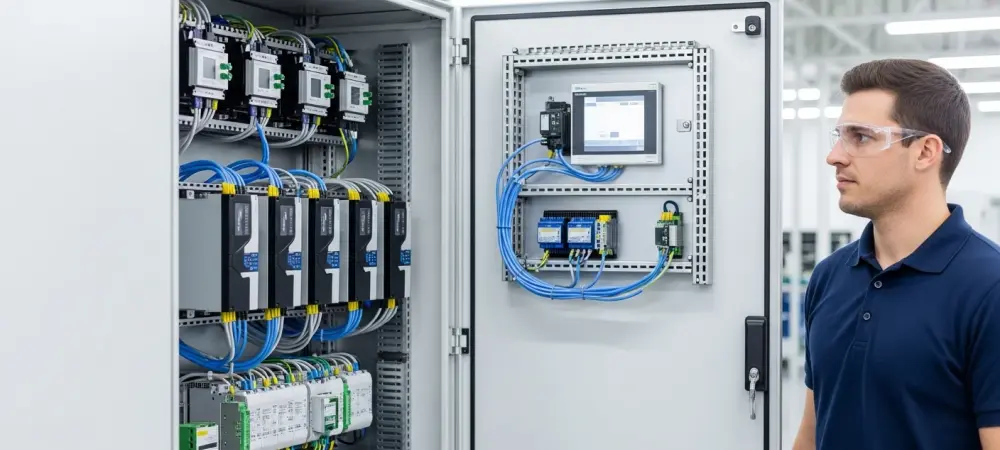
The factory of tomorrow is not being built with grand, monolithic leaps but through the deliberate and intelligent integration of increasingly powerful, compact, and interconnected components. The recent expansion of B&R Industrial Automation’s product portfolio serves as a compelling case study of this evolution, signaling a significant advancement in the industrial automation sector. This review explores the progression of their integrated ecosystem, examining its key technological features, performance metrics, and the tangible impact it has on diverse manufacturing applications. The objective is to provide a thorough understanding of these new technologies, their current capabilities, and their potential to shape the future of smarter, more efficient production environments.
The Evolution Toward a Cohesive Automation Ecosystem
B&R’s strategy to broaden its product portfolio demonstrates a clear commitment to an integrated and forward-looking automation philosophy. This approach is built on three foundational pillars: aggressive miniaturization to conserve valuable factory floor space, the adoption of future-proof communication protocols like OPC UA over TSN, and the deep, seamless integration of motion control, robotics, and artificial intelligence. By weaving these elements together, the company is moving beyond collections of individual components toward a truly unified platform.
This strategy mirrors a broader industry trend where manufacturers and machine builders are demanding more cohesive and powerful automation solutions. The ultimate goal is to simplify system architecture while simultaneously enhancing performance from the sensor level all the way to the cloud. A unified ecosystem reduces engineering complexity, accelerates commissioning times, and provides a scalable foundation that can adapt to future technological shifts, ensuring that investments made today remain viable for years to come.
Core Technology Deep Dive Motion Control and Drives
ACOPOS M4 Servo Drive Power Density and Future-Proof Communication
The new four-axis ACOPOS M4 servo drive is a testament to the benefits of advanced engineering, achieving an impressive 60% reduction in cabinet footprint compared to previous generations. This breakthrough in power density allows machine builders to design more compact and cost-effective systems without sacrificing performance. Furthermore, the drive operates at nearly 99% power efficiency, minimizing energy consumption and thermal output. Its versatility is another key asset, offering robust control for a wide range of motor types, including synchronous, asynchronous, linear, and torque motors, while integrated components like EMC filters streamline installation and reduce external hardware requirements. Perhaps most significantly, the ACOPOS M4 is engineered with native support for OPC UA over TSN with the Field Exchange (FX) extension. This feature positions the drive at the vanguard of a crucial industry-wide transition away from proprietary, vendor-specific communication protocols. By embracing a unified, secure, and interoperable standard, B&R is helping to dismantle the communication silos that have long complicated factory-floor integration, paving the way for more flexible and collaborative automation architectures.
ACOPOS X2 Compact Drive Versatility in Small Scale Motion
For applications requiring precise control on a smaller scale, the ACOPOS X2 offers a compact and highly versatile solution. This controller is designed to manage either two stepper motors or two brushless DC motors, providing flexible control with or without the use of encoders. Its modular design allows it to be seamlessly integrated into existing systems, making it an ideal choice for tasks where space is limited but precision cannot be compromised. Beyond its motion capabilities, the ACOPOS X2 incorporates a fundamental layer of machine safety with an integrated Safe Torque Off (STO) function. This feature provides a reliable method for removing power from the motors in a safety-critical event, preventing unintended movement without requiring complex external safety relays. By embedding this functionality into a small, modular package, the X2 delivers both performance and peace of mind in a cost-effective form factor.
ACOPOS X4 Servo Drive High Precision Integrated Motion
The ACOPOS X4 four-axis servo drive exemplifies the power of deep system integration, operating as a high-performance module within the X20 I/O system. This tight coupling enables an exceptionally fast scan time of just 50 microseconds, delivering the high-precision control necessary for dynamic applications involving small servo motors. Its compact design and powerful processing capabilities make it a formidable solution for robotics, packaging, and other industries where speed and accuracy are paramount.
A standout feature of the ACOPOS X4 is its implementation of B&R’s SafeMotion technology. This innovative approach transitions safety logic from traditional hardwired hardware into the software environment, a shift that dramatically reduces wiring complexity and associated costs. More importantly, software-based safety enables the creation of more dynamic and responsive safety systems that can adapt to changing operational conditions, enhancing both operator protection and machine productivity.
Emerging Trends in AI and Intelligent Transport
The latest additions to B&R’s portfolio align directly with two of the most transformative trends in manufacturing: the proliferation of artificial intelligence at the edge and the continuous improvement of high-speed, intelligent material handling systems. The integration of AI into factory-floor operations is enabling machines to perform complex inspections, predict maintenance needs, and optimize processes in real time.
Simultaneously, advancements in intelligent transport systems are redefining the speed and flexibility of production lines, allowing for mass customization and higher throughput. Together, these trends are pushing the boundaries of what is possible in automated manufacturing, creating a foundation for factories that are not only faster and more efficient but also more adaptive and intelligent.
Real World Applications and Industry Impact
AI on the Factory Floor The APC50A Industrial PC
The APC50A industrial PC is engineered specifically to bring high-performance computing to the demanding environment of the factory floor. Configurable with top-tier processors like the Intel i9 and featuring expansion slots for full-sized GPUs or specialized AI hardware, it serves as a robust platform for running computationally intensive tasks. This power is essential for applications such as advanced machine vision, complex data processing, and real-time analytics. By enabling AI and other demanding workloads to run directly at the machine (at the edge), the APC50A mitigates the latency and bandwidth limitations of cloud-based processing. This is critical for applications like high-speed quality inspection, where split-second decisions are necessary to maintain production flow. The result is a more responsive, reliable, and intelligent manufacturing process that can identify defects and optimize performance without external dependencies.
Robotics Integration The Codian SR Six-Axis Robot
B&R’s Codian SR articulated robot marks a significant step toward truly unified automation by being fully integrated into the company’s control ecosystem. This deep integration allows a standard B&R PLC to provide direct control over the robot’s movements, completely eliminating the need for a separate, proprietary robot controller and the complex communication gateways that typically connect them.
This streamlined architecture vastly simplifies programming, commissioning, and maintenance, as engineers can work within a single software environment for the entire machine. The robot’s high-stiffness design ensures exceptional precision even during high-speed operations, making it an ideal solution for pick-and-place, assembly, and packaging tasks in industries ranging from pharmaceuticals and consumer goods to electronics manufacturing.
Enhancing Material Handling The ACOPOStrak Metal to Metal Upgrade
The ACOPOStrak linear servo conveyor system has received a crucial mechanical enhancement designed to broaden its application range. The new “metal-to-metal” upgrade reinforces the track with an additional support structure and bearings, a modification that dramatically increases the system’s physical resilience and payload capacity. With this upgrade, each shuttle can now carry up to 10 kg at speeds reaching 5 m/s, a significant improvement that opens the door to more demanding material handling applications. This enhancement enables more robust designs, such as those with cantilevered pallets, without the previous need to compromise on payload or speed, providing machine builders with greater design freedom for high-speed transport tasks.
Addressing System Level Challenges and Limitations
Overcoming Cabinet Space and Wiring Complexity
For decades, machine builders have contended with the persistent challenges of limited control cabinet space and the high costs associated with complex field wiring. Innovations like the miniaturized ACOPOS M4 drive, which drastically reduces the physical footprint of the motion control system, directly address these issues. This allows for the design of smaller, more efficient machines. Complementing this hardware advancement, the software-based SafeMotion technology within the ACOPOS X4 provides an elegant solution to wiring complexity. By moving safety logic from physical relays to software, it eliminates a significant amount of wiring, which in turn reduces installation time, potential points of failure, and overall system cost. Together, these technologies empower engineers to create more compact, cost-effective, and easier-to-maintain automation systems.
Mitigating Communication Fragmentation with OPC UA FX
The historical landscape of industrial communication has been characterized by a fragmented array of proprietary protocols, creating vendor lock-in and adding significant complexity to system integration. The native integration of OPC UA over TSN with the Field Exchange extension in the ACOPOS M4 represents a strategic move to overcome this long-standing industry challenge.
This commitment to an open, unified standard is a critical step toward achieving true interoperability on the factory floor. It helps mitigate system complexity by allowing devices from different vendors to communicate seamlessly and securely. For machine builders and end-users, this fosters greater flexibility, simplifies integration efforts, and lays the groundwork for a more cohesive and secure communication architecture across the entire enterprise.
Future Outlook The Trajectory of Integrated Automation
The convergence of operational technology (OT), information technology (IT), and robotics within a single, unified control ecosystem signals a clear and definitive trajectory for the future of manufacturing. This trend is moving the industry away from siloed systems and toward more tightly coupled and intelligent factory environments where data flows seamlessly from the sensor to the enterprise level.
B&R’s recent portfolio expansion provides a clear blueprint for this future. The emphasis on integrated intelligence, unified communication, and modular hardware points to a new generation of automation solutions that are not only more powerful but also significantly more adaptable, scalable, and faster to commission. This approach is poised to become the standard for building the flexible and data-driven factories required to compete in a rapidly changing global market.
Conclusion A Unified Vision for Modern Manufacturing
This review of B&R’s recent product introductions highlights a strategic and well-executed focus on creating a cohesive, forward-looking automation ecosystem. The advancements in motion control deliver not just incremental improvements in performance but fundamental shifts in power density, efficiency, and integrated safety. These developments are thoughtfully complemented by the seamless integration of AI and robotics, which provides the intelligence and physical dexterity required for next-generation manufacturing tasks. Ultimately, the commitment to open communication standards like OPC UA over TSN acts as the crucial connective tissue, ensuring these powerful components can work together in a truly unified system. Collectively, these innovations provide a potent toolkit for modern machine builders and manufacturers. They demonstrate a clear and compelling vision for the future of industrial automation—one where elite performance, operational flexibility, and elegant simplicity converge to meet the complex demands of a dynamic industrial landscape.