

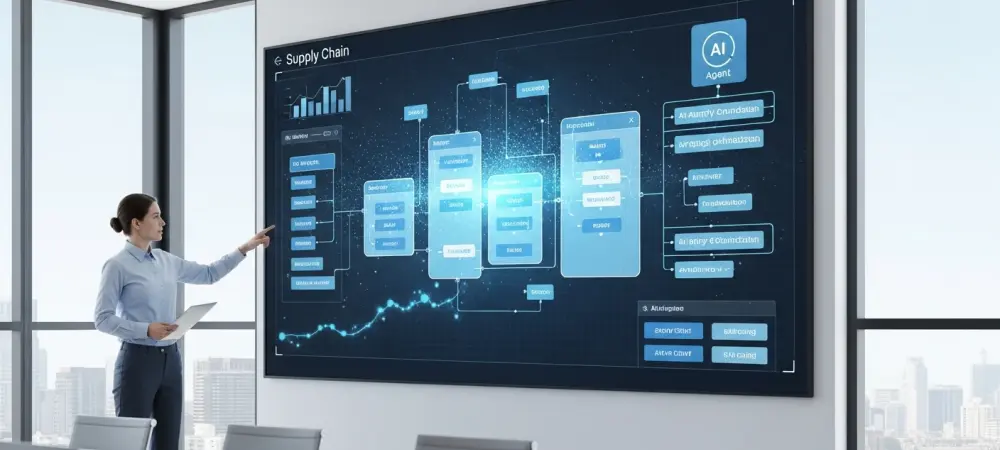
The Next Frontier: Moving AI from Conversation to Action
The world of artificial intelligence is at a pivotal inflection point. For years, the focus has been on building larger, more articulate large language models (LLMs) that can converse, summarize, and create with stunning fluency. Yet, a fundamental question has lingered: when will these digital minds move beyond being passive oracles and become active agents capable of performing tasks on our behalf? Anthropic’s recent launch of an open standard for “Skills” for its AI, Claude, signals a decisive shift in this direction. This article explores how this move toward shareable, standardized capabilities could be the catalyst for unlocking a new era of agentic AI, examining the immense potential, the underlying industry trends, and the critical governance challenges that lie ahead.
From Model Metrics to Practical Mastery: The Evolution of AI’s Purpose
The initial boom in generative AI was a race for raw power, measured in parameters, token windows, and benchmark scores. The goal was to create models that could demonstrate human-like understanding and generation of text. This phase established the foundational technology, but the industry is now entering a new stage of maturity. The conversation is shifting away from the sheer size of a model and toward its practical utility. Businesses and users are no longer just asking “What does the AI know?” but “What can the AI do?” This evolution from a knowledge-based to an action-based paradigm is the critical context for understanding the significance of initiatives like Anthropic’s Skills, which aim to transform AI from a sophisticated chatbot into a reliable digital collaborator.
Deconstructing the Leap Toward AI Agency
From Prompts to Processes: The Dawn of Agentic Capabilities
At its core, Anthropic’s “Skills” initiative is about fundamentally changing how users interact with AI. Instead of merely asking a question and receiving an answer, users can now teach Claude to execute multi-step processes independently. By providing the model with instructions—like how to fill out an internal expense form, navigate a project management tool, or search a specific database—users empower it to act as an autonomous agent. This agentic capability moves beyond simple API calls, allowing the AI to understand and perform complex workflows that were previously the exclusive domain of human users or brittle, custom-coded automations. The result is an AI that can resolve tasks from start to finish, simplifying deployment and unlocking a far more powerful and intelligent user experience.
The Open Standard Strategy: Fostering an Ecosystem of Action
A crucial element of Anthropic’s announcement is the decision to release its “Agent Skills” specification as an open standard. This strategic move, mirroring the company’s successful open-sourcing of its Model Context Protocol (MCP), is designed to prevent vendor lock-in and cultivate a vibrant, community-driven ecosystem. By establishing a common language for defining AI skills, developers and organizations can create, share, and discover new capabilities that work across different systems. The inclusion of a pre-built library of Skills from partners like Canva, Notion, and Atlassian further lowers the barrier to entry, providing immediate, practical value and demonstrating the power of an interoperable framework. This collaborative approach aims to accelerate innovation far beyond what any single company could achieve alone.
Enterprise-Grade Control: Balancing Autonomy with Governance
Granting AI agents greater autonomy inevitably raises significant security and governance concerns for enterprises. An AI capable of independently acting within corporate systems introduces new potential risks. Recognizing this, Anthropic has coupled its Skills launch with organization-wide management features, giving administrators a centralized dashboard to control which Skills are deployed and used. As market observers note, this is not a roadblock but a necessary precondition for safe adoption. Enterprises must implement robust AI security frameworks—complete with guardrails, content filters, and firewalls—to manage these powerful new agents responsibly. This balance between empowerment and oversight is critical for building the trust required for widespread enterprise deployment.
The Future Trajectory: Toward a Marketplace of AI Skills
The move toward agentic AI reflects the industry’s maturation, a trend underscored by industry analysts who observe that the focus is now on how models can orchestrate workflows and re-engineer business processes. Initiatives like Anthropic’s Skills and similar projects like OpenAI Operator are the first incremental steps toward this future. In the coming years, this trend is expected to accelerate, potentially leading to the emergence of “skill marketplaces” where organizations can find and deploy pre-vetted AI capabilities for specific business functions. This will further commoditize the underlying models and place a premium on the practical, action-oriented skills they possess, reshaping the competitive landscape around an AI’s ability to execute tasks in the real world.
Strategic Imperatives for the Age of Agentic AI
The analysis reveals several key takeaways. First, the AI industry is decisively moving from passive intelligence to active execution. Second, open standards are emerging as a powerful catalyst for accelerating this transition by fostering interoperability and community collaboration. Finally, this newfound autonomy cannot be unleashed without equally sophisticated governance and security controls. For businesses, the path forward requires a proactive strategy. Leaders should begin identifying internal processes that are ripe for automation by agentic AI, invest in building strong AI governance frameworks before deployment, and encourage teams to experiment with these new tools to build institutional knowledge and gain a competitive edge.
Conclusion: Engineering the Autonomous Future, Responsibly
Anthropic’s push for Open Skills is more than a product update; it is a clear declaration of the industry’s next chapter. The journey toward truly autonomous AI will not be a single breakthrough but a series of deliberate steps that equip models with the ability to act on our behalf. By standardizing how these skills are defined and shared, the industry is laying the groundwork for a future where AI can handle increasingly complex tasks with minimal human intervention. However, this powerful future hinges on our ability to engineer not just capability, but also control. The ultimate success of agentic AI will depend on a sustained commitment to balancing innovation with robust governance, ensuring that as these systems become more autonomous, they remain aligned, secure, and beneficial.