

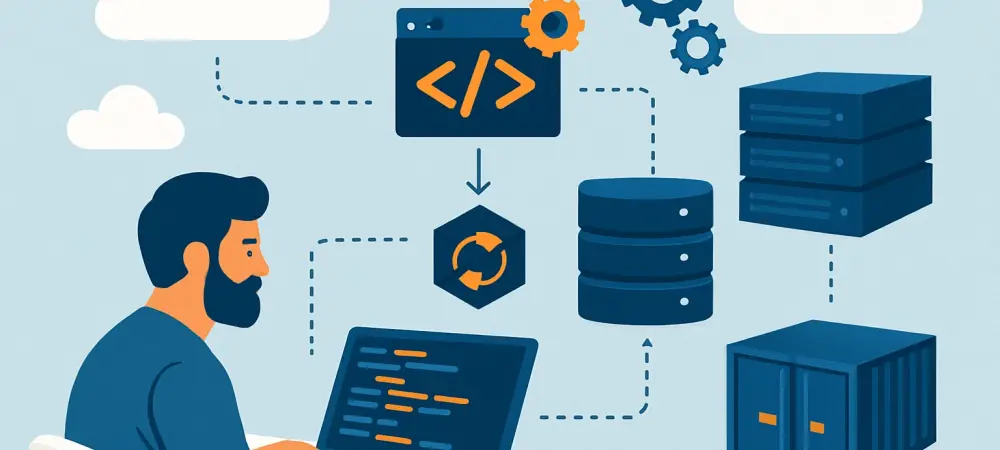
Imagine a scenario where a global enterprise needs to deploy hundreds of servers across multiple cloud platforms in mere hours to support a sudden surge in demand during a product launch, a task that would be a logistical nightmare if done manually. Manual configuration of each server would be riddled with errors and delays, but this is where Infrastructure as Code (IaC) steps in as a transformative solution, automating the entire process through code and ensuring precision at scale. In today’s fast-paced digital landscape, IaC has become a cornerstone of modern IT operations, enabling organizations to manage complex infrastructures with efficiency and agility. This review delves into the intricacies of IaC, exploring its core features, real-world impact, and the challenges it faces in an ever-evolving tech ecosystem.
Defining the Core of IaC
At its essence, Infrastructure as Code represents a paradigm shift in how computing resources are managed, moving away from manual setups to automated, code-driven processes. It involves defining infrastructure through declarative configuration files, often in formats like JSON or YAML, which specify the desired state of servers, networks, and other components. This approach eliminates the painstaking task of individually configuring systems, replacing it with a repeatable, error-resistant method that aligns seamlessly with cloud computing demands. The significance of IaC extends beyond mere automation; it integrates infrastructure management into the software development lifecycle. By treating infrastructure as code, teams can version control configurations, test changes in isolated environments, and deploy updates with the same rigor applied to application code. This synergy is particularly vital in DevOps practices, where collaboration between development and operations teams is paramount for rapid delivery cycles.
In the broader IT landscape, IaC stands as a response to the scalability challenges posed by web-scale applications and cloud environments. As organizations migrate to platforms like AWS, Azure, and Google Cloud, the ability to programmatically provision resources ensures consistency across diverse systems. This foundational shift sets the stage for understanding how IaC operates and why it has become indispensable.
Breaking Down the Mechanics of IaC
The Role of Declarative Configuration Files
Central to IaC is the use of declarative configuration files that act as blueprints for infrastructure. These files outline what the system should look like—such as the number of virtual machines, network settings, or storage allocations—without detailing the step-by-step process to achieve it. Tools then interpret these specifications to bring the infrastructure into the desired state, ensuring uniformity across environments. This declarative approach minimizes human error by removing the need for manual tweaks. When a configuration file is updated, the changes can be applied systematically to hundreds or thousands of systems, maintaining consistency whether in a test lab or production setting. Moreover, version control systems like Git can track these files, allowing teams to roll back to previous states if issues arise, enhancing reliability.
The scalability offered by such files is a key advantage in dynamic environments. As demand fluctuates, infrastructure can be adjusted through code modifications rather than time-consuming manual interventions. This capability not only saves time but also empowers organizations to respond swiftly to market needs, reinforcing the strategic value of IaC.
Tools and Their Ecosystem
The IaC landscape is populated by a diverse array of tools, broadly categorized into orchestration platforms and configuration management solutions. Orchestration tools like Terraform and AWS CloudFormation focus on provisioning infrastructure, enabling the creation of entire cloud environments from scratch through code. These platforms excel in defining resources across multiple providers, supporting complex, multi-cloud setups.
Configuration management tools, such as Ansible and Chef, target the setup and maintenance of existing systems. They ensure that servers and applications are configured correctly by applying predefined policies, often complementing orchestration tools in hybrid environments. The choice between these categories depends on specific use cases, with many organizations leveraging both for comprehensive control.
Performance and usability vary across these tools, influenced by factors like community support, learning curves, and integration capabilities. For instance, Terraform’s provider-agnostic design makes it a popular choice for multi-cloud strategies, while Ansible’s simplicity in scripting appeals to teams prioritizing ease of adoption. Navigating this ecosystem requires a clear understanding of organizational needs and technical constraints, ensuring the right tools are selected for optimal outcomes.
Tracing the Evolution and Emerging Trends
The journey of IaC began with rudimentary scripting in the early days of IT, evolving into a formalized practice as cloud computing gained traction over the past decade. The need for scalable, repeatable processes became evident as manual server tuning proved inadequate for the demands of virtualized environments. This transition marked a turning point, with pioneers shaping IaC into a structured discipline that underpins modern infrastructure management.
Current trends highlight a diversification of tools and approaches, reflecting the growing complexity of IT landscapes. The emergence of alternatives like OpenTofu, spurred by shifts in licensing models of established tools, signals a push toward greater flexibility and accessibility. Additionally, multi-cloud strategies are driving the need for interoperable solutions that can manage resources across disparate platforms without sacrificing consistency.
Another notable development is the integration of generative AI in crafting configuration files, offering potential efficiency gains. However, this innovation comes with risks, as automated outputs may introduce errors or security vulnerabilities if not rigorously validated. As IaC continues to evolve, these trends suggest a trajectory toward more sophisticated automation and broader adoption across industries, reshaping how infrastructure is conceptualized and deployed.
Real-World Impact Across Industries
IaC finds application in a wide range of scenarios, from cloud service providers to on-premises data centers, demonstrating its versatility. Major platforms like AWS, Azure, and Google Cloud rely heavily on IaC to enable customers to spin up resources rapidly, supporting everything from web hosting to machine learning workloads. This capability is critical for businesses aiming to scale operations without the burden of manual oversight.
In the realm of DevOps, IaC fosters collaboration by automating infrastructure changes alongside application deployments. Teams can synchronize efforts through shared configuration files, ensuring that development, testing, and production environments remain aligned. A notable example is a leading e-commerce company that used Terraform to manage peak traffic during holiday sales, deploying additional servers automatically to handle spikes in user activity.
Beyond cloud-centric use cases, IaC also supports hybrid setups where legacy systems coexist with modern architectures. Financial institutions, for instance, often employ tools like Ansible to maintain compliance and security across mixed environments, balancing innovation with regulatory demands. These implementations underscore IaC’s role as a bridge between traditional IT and cutting-edge cloud solutions, driving operational efficiency across diverse sectors.
Navigating Challenges and Limitations
Despite its advantages, IaC adoption is not without hurdles, particularly in managing the complexity of multiple tools and environments. Organizations operating in multi-cloud setups often struggle with maintaining consistent policies across platforms, leading to potential misconfigurations. This challenge is compounded when different teams use disparate IaC tools, creating silos that undermine the goal of unified automation.
Governance issues also pose significant obstacles, as ensuring compliance and security in code-driven infrastructures requires robust oversight. Configuration drift—where the actual state of systems diverges from defined configurations—remains a persistent concern, necessitating advanced drift-detection mechanisms. Tools designed to identify and remediate such discrepancies are becoming essential components of IaC workflows.
The incorporation of generative AI into IaC processes introduces additional risks, as automated file generation may produce flawed or insecure configurations if not carefully monitored. Alongside these technical challenges, organizational learning curves can slow adoption, as staff must adapt to new paradigms and skill sets. Addressing these limitations through consolidated platforms and ongoing training is crucial for maximizing the benefits of IaC while minimizing potential pitfalls.
Looking Ahead at Future Possibilities
The horizon for IaC holds promise of enhanced capabilities tailored to increasingly complex IT environments. Improved tooling for hybrid and multi-cloud setups is anticipated, enabling seamless management of resources regardless of location or provider. Such advancements could streamline operations for enterprises juggling diverse infrastructures, reducing friction in deployment processes. Automation is expected to deepen further, with smarter systems potentially predicting infrastructure needs based on workload patterns. Integration with emerging technologies, like edge computing and serverless architectures, may also redefine how IaC is applied, expanding its scope beyond traditional cloud boundaries. These developments point to a future where IaC becomes even more ingrained in IT operations, setting new benchmarks for efficiency.
Long-term, the influence of IaC on industry standards is likely to grow, shaping practices in software development and cloud management. As tools mature and challenges like configuration drift are addressed, IaC could drive a shift toward fully automated, self-healing infrastructures. This evolution suggests a transformative impact, positioning IaC as a foundational element in the next generation of technology solutions.
Reflecting on the Journey of IaC
Looking back, the exploration of Infrastructure as Code revealed its profound impact on IT management, delivering unmatched automation and scalability that redefined operational norms. Its ability to integrate with DevOps practices and support rapid deployment cycles stood out as a critical strength, though complexities in multi-cloud environments and governance issues presented notable challenges. The evolution of tools and the cautious integration of AI marked significant milestones in its development. For organizations moving forward, the next steps involve investing in comprehensive training to bridge skill gaps and adopting drift-detection tools to maintain configuration integrity. Exploring consolidated platforms that unify disparate IaC tools offers a path to simplify management across hybrid setups. Additionally, establishing rigorous validation processes for AI-generated configurations emerges as a priority to safeguard against potential errors.
As the technology landscape continues to shift, staying ahead means anticipating advancements in automation and interoperability. Engaging with community-driven initiatives and open-source alternatives like OpenTofu could provide valuable insights and flexibility. Ultimately, embracing IaC with a strategic focus on governance and innovation paves the way for sustained efficiency and resilience in infrastructure management.