

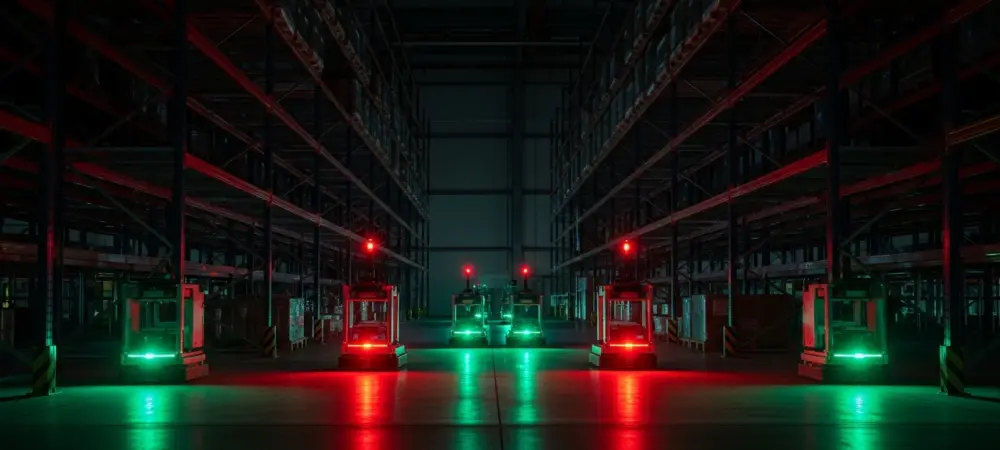
The rapid metamorphosis of the global manufacturing floor has reached a point where the distinction between a machine and an intelligent colleague has nearly vanished into the hum of high-speed data processing. While the concept of programmable automation has existed for decades, the current landscape is defined by a shift from rigid, repetitive mechanical manipulators to truly autonomous systems capable of real-time environmental perception. This evolution is not merely about replacing human muscle with hydraulic force; it is about the sophisticated integration of hardware and software that allows a robotic unit to act as an edge-computing node. As industry leaders grapple with a persistent global labor shortage and the escalating demands for hyper-efficiency, industrial robotics has emerged as the structural backbone of the “Industry 4.0” movement, transforming the factory from a static assembly line into a dynamic, self-optimizing ecosystem.
Introduction to Industrial Robotics and Automation
Modern industrial robotics is built upon the core principle of programmable automation, where mechanical structures are no longer limited to a single fixed motion. Instead, these systems utilize multi-axis manipulators that can be reconfigured through software to perform a diverse array of complex tasks. This transition from simple automation to intelligent operations is driven by the robot’s ability to interpret sensory input, allowing it to adjust its grip, speed, or trajectory based on the specific object it encounters. Such adaptability is essential for maintaining throughput in environments where product cycles are shrinking and customization is becoming the standard rather than the exception.
The synergy between high-performance hardware and sophisticated control algorithms allows these machines to interact with their physical surroundings with a level of delicacy once thought impossible. By integrating vision systems and haptic feedback, robots can now navigate cluttered warehouse floors or handle fragile electronic components without constant human oversight. This autonomy is the primary driver behind the current industrial revolution, as it provides the scalability needed to meet global consumer demands while significantly reducing the margin for error inherent in manual labor.
Core Technologies and Key Performance Features
High-Performance Hardware and Edge Computing
At the heart of every modern robotic system lies a suite of high-end hardware, including advanced sensors, precision actuators, and specialized processing units like Nvidia’s Jetson modules. These components function as the robot’s nervous system and brain, allowing it to ingest and process terabytes of spatial data locally rather than relying on distant cloud servers. This transition to edge computing is critical because it minimizes latency; in a fast-moving factory environment, a delay of even a few milliseconds in processing a safety sensor’s signal could result in equipment damage or injury. By handling complex calculations at the “edge,” robots can maintain high-speed operations while ensuring a level of situational awareness that was technically unfeasible just a few years ago.
Furthermore, the mechanical precision of current actuators allows for sub-millimeter accuracy, which is a fundamental requirement for high-stakes industries like semiconductor fabrication or aerospace engineering. When these mechanical capabilities are paired with real-time data processing, the result is a machine that can perform high-velocity tasks with perfect repeatability. This combination of “brawn” and “brains” ensures that the hardware does not become a bottleneck for the software, allowing for a seamless flow of information from the environment to the motor controllers.
AI Integration and Machine Learning Models
Artificial intelligence has fundamentally rewritten the rules of robotic development by moving away from hard-coded instructions toward machine learning models that prioritize perception and decision-making. Through the use of physical AI, robots are now trained in simulated environments—digital twins—where they can experience millions of iterations of a task in a fraction of the time it would take in the real world. This process allows systems to learn how to recover from mistakes or navigate unpredictable obstacles autonomously. Generative AI has also entered the fray, accelerating the robot development lifecycle by assisting engineers in writing code and optimizing mechanical designs through evolutionary algorithms. The significance of these AI models lies in their ability to handle “unstructured” data, meaning the robot no longer needs every part to be in a perfect, predefined position to succeed. A robot equipped with modern computer vision can identify a randomly oriented part in a bin, determine the best angle for a grip, and execute the pick-and-place maneuver without human intervention. This shift from “knowing” a sequence to “understanding” a task is what separates the current generation of industrial robots from the inflexible machines of the previous century.
Robotic Process Automation and Virtual Bots
While physical manipulators handle the heavy lifting on the factory floor, non-physical robotics—specifically Robotic Process Automation (RPA)—manages the digital connective tissue of the modern enterprise. These software-based bots and agentic automation tools are designed to streamline administrative, logistical, and data-heavy workflows that would otherwise consume thousands of human hours. By automating tasks like inventory reconciliation, order processing, and supply chain tracking, RPA ensures that the physical robots are always supplied with the necessary materials and instructions to continue their work without interruption. The true power of this technology is realized when AI agents are combined with physical robots to create a cohesive end-to-end automation ecosystem. In this scenario, a software bot might detect a surge in demand for a specific product, automatically trigger an order for raw materials, and then update the programming of the robots on the assembly line to prioritize that specific item. This level of synchronization eliminates silos between the front office and the production floor, creating a streamlined operation where information flows as efficiently as the physical goods.
Emerging Trends and Sector Innovations
The robotics sector is currently witnessing a pivot toward general-purpose utility, most notably through the rise of humanoid robots designed for mass production. Unlike traditional robotic arms that are bolted to a floor, these humanoid forms are engineered to operate in environments originally designed for people, utilizing the same tools and navigating the same walkways. This versatility makes them an attractive option for multi-purpose use cases, as a single robot could theoretically be reassigned from a packaging role to a light assembly task with only a software update. This trend signals a shift away from specialized machinery toward “agentic automation,” where robots act as flexible agents capable of collaborating with humans on varied and complex tasks.
Another profound development is the maturation of “lights-out manufacturing,” or dark factories, which represent the pinnacle of autonomous operation. These facilities are designed to run entirely without human presence, removing the need for ambient lighting, climate control for comfort, or safety walkways for pedestrians. By optimizing the environment solely for machines, companies can achieve significant energy savings and operational density. As these dark factories become more prevalent, the human role shifts entirely from direct labor to high-level strategic oversight and system maintenance.
Real-World Applications Across Global Industries
The deployment of robotics has moved far beyond the automotive assembly line, finding critical applications in sensitive fields like healthcare. Robotic-assisted surgery systems, such as the da Vinci platform, have redefined the standard of care by allowing surgeons to perform minimally invasive procedures with a degree of precision that exceeds human hand-eye coordination. These systems filter out tremors and provide high-definition, three-dimensional views of the surgical site, leading to faster patient recovery times and fewer complications. This application demonstrates that robotics is not just about speed and volume; it is about enhancing human capability in high-stakes, high-precision environments.
In the primary sectors of agriculture and mining, the transformation is equally dramatic. Autonomous tractors and sprayers use GPS and computer vision to manage crops with surgical precision, reducing chemical waste and optimizing yields without the need for a driver in the cab. Similarly, in the mining industry, heavy machinery can now operate in hazardous underground environments or remote open-pit sites, controlled by operators thousands of miles away or acting entirely on their own. Meanwhile, the logistics and e-commerce sectors have become the largest proving grounds for autonomous mobile robots (AMRs), which manage the chaotic flow of warehouse fulfillment by navigating through busy aisles to sort and transport inventory with relentless efficiency.
Technical Challenges and Market Limitations
Despite the impressive technological strides, the industrial robotics market faces significant barriers to universal adoption, most notably the massive capital expenditure (CAPEX) required for implementation. For small and medium-sized enterprises, the upfront costs of purchasing hardware, integrating software, and reconfiguring facilities can be prohibitive, especially when the return on investment may take several years to materialize. Furthermore, the research and development costs associated with tailoring a robotic system to a specific, non-standard task remain high, creating a “gap” between off-the-shelf solutions and the specialized needs of many manufacturers.
Technological hurdles also persist in the realm of robot dexterity and energy efficiency. While a robot can lift a car chassis with ease, mimicking the fine motor skills of a human hand to pick up a single needle or handle soft, irregular objects like textiles remains a significant challenge. Additionally, the power consumption required to run high-end GPUs and heavy-duty actuators can be substantial, necessitating innovations in battery technology or power management. Beyond the technical, regulatory and ethical concerns regarding labor displacement continue to spark debate, highlighting the need for standardized safety protocols and a clear framework for human-robot collaboration that protects the workforce while embracing progress.
Future Outlook and Market Projections
The trajectory of the robotics sector suggests an era of explosive growth, with market valuations expected to reach hundreds of billions of dollars within the next decade. This growth is fueled by the realization that automation is no longer an optional luxury but a competitive necessity in a globalized economy. As general-purpose robotics continue to mature, we are likely to see the emergence of a “robot-first” economy, where the baseline for industrial productivity is set by autonomous systems. This shift will likely lead to a significant increase in global output, as machines operate 24/7 without the productivity fluctuations associated with a human workforce.
Geopolitically, the influence of international markets—particularly in Asia—is reshaping the robotics landscape. Countries like China are scaling their robotics infrastructure at an unprecedented rate, aiming to dominate the manufacturing of both the robots themselves and the goods they produce. This international competition is driving a cycle of rapid innovation, as firms in North America and Europe feel the pressure to accelerate their own automation programs. In the long term, the breakthroughs in AI and mechanical design seen today will likely lead to robots that are not only more capable but also more affordable, eventually democratizing access to high-end automation across all sectors of the economy.
Comprehensive Summary of the Robotics Landscape
The transition from basic, repetitive automation to AI-powered autonomous systems has fundamentally altered the industrial landscape, positioning robotics as the central pillar of modern manufacturing. This review has examined how the integration of edge computing, machine learning, and high-performance hardware has created a new class of industrial assets that are capable of learning, perceiving, and making real-time decisions. The versatility of these systems, ranging from virtual RPA bots to humanoid assemblers and surgical assistants, proves that the technology has matured beyond its niche origins and is now a ubiquitous force across healthcare, agriculture, logistics, and heavy industry.
As the market continues to expand, the initial challenges of high cost and technical complexity were gradually mitigated by the arrival of more sophisticated AI training models and standardized hardware platforms. The shift toward agentic automation and dark factories indicated that the focus of the industry had moved from simply replacing human tasks to entirely rethinking how value was created. Ultimately, the current state of industrial robotics reflects a successful synthesis of physical engineering and digital intelligence, establishing a foundation for a future where labor and efficiency are redefined by the capabilities of autonomous machines. This technological progression has ensured that the industrial sector remains resilient, scalable, and capable of meeting the complex demands of a modern global society.