

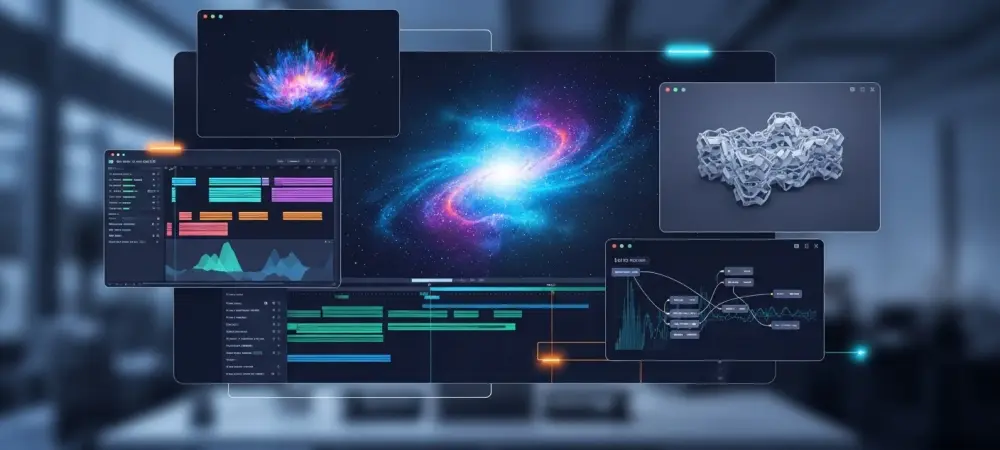
The digital economy currently operates at a velocity where a single day of stagnant content can result in a measurable loss of market relevance for even the most established brands. The Imagvio AI Multimedia Suite entered this high-stakes environment not merely as another editing tool but as a comprehensive ecosystem designed to synchronize the fragmented stages of digital creation. By integrating advanced generative models into a singular, fluid interface, the platform addressed the critical need for speed and quality that traditional software suites often fail to provide due to their steep learning curves.
Defining the New Standard in AI-Integrated Workflows
The platform was built on the core principle of semantic production, where the intent of the creator takes precedence over the mechanical manipulation of pixels or frames. Unlike legacy systems that require years of technical training to master layering, masking, and keyframing, this suite utilized a unified neural engine to interpret complex creative directives. This shift moved the production bottleneck away from technical execution and placed it squarely on the quality of the initial concept, allowing teams to iterate through dozens of variations in the time it previously took to finalize a single draft.
This technological evolution emerged at a time when the broader landscape shifted toward an “always-on” marketing model. In an era where social media algorithms favor high-frequency, high-quality uploads, the suite functioned as a force multiplier for small teams. It provided the necessary infrastructure to maintain a consistent digital presence without the prohibitive costs of a full-scale production house, effectively setting a new benchmark for what constitutes an efficient creative workflow.
Technical Capabilities and Creative Tools
Advanced Image Generation and Refinement
The text-to-image engine within the suite represented a departure from basic generative tools by offering deep-level refinement capabilities. Instead of just creating an isolated visual, the software allowed for sophisticated object replacement and background removal through simple descriptive commands. For instance, a user could modify the lighting of a specific product or swap a seasonal background without affecting the core subject. This level of granular control meant that the AI acted as a precision instrument rather than a random generator.
Furthermore, the integration of high-resolution upscaling and texture refinement ensured that generated assets met the rigorous standards of professional print and digital displays. By automating the more tedious aspects of retouching, the engine freed creators to focus on composition and brand alignment. The ability to maintain stylistic consistency across a series of images became a defining feature, ensuring that every asset produced felt like part of a coherent visual narrative rather than a disjointed collection of AI outputs.
Dynamic Video Synthesis and Character Consistency
Video production has long been the most resource-intensive segment of the creative industry, but the suite tackled this through automated animation and scene-to-scene persistence. One of the most significant technical achievements was the ability to keep a character’s physical traits identical across different environments and camera angles. This solved a major pain point in AI video generation, where subjects often morphed or changed features between cuts, making professional storytelling nearly impossible without significant manual correction.
The synthesis engine also excelled at generating realistic motion and fluid transitions, which reduced the need for complex rigging or external motion graphics software. By interpreting the narrative flow of a script, the AI suggested camera movements and pacing that aligned with the intended emotional tone of the piece. This capability allowed filmmakers and advertisers to prototype complex scenes in minutes, significantly shortening the pre-production and visualization phases of large-scale projects.
Shifting Trends in the Creative Economy
The creative economy recently witnessed a profound transition from technical proficiency to creative vision as the primary currency of the market. Professionals who once spent decades mastering the nuances of specific software found themselves pivoting toward prompt-based editing, where the ability to articulate a vision became more valuable than the dexterity to execute it manually. This trend favored thinkers and strategists who understood the nuances of branding and storytelling over those who focused solely on the mechanical aspects of media creation.
Moreover, the industry moved toward a consolidation of tools to reduce “production friction.” In previous years, a creator might have used four different applications to produce a single social media campaign. The growing trend of unified AI interfaces, exemplified by this suite, eliminated the need for constant file exporting and format conversions. This streamlined approach not only saved time but also minimized the loss of data and quality that often occurred when moving projects between disparate pieces of software.
Real-World Applications Across Diverse Sectors
In the e-commerce sector, the deployment of this technology allowed retailers to generate thousands of lifestyle photos for their catalogs without ever booking a physical studio. By using the AI to place products in various virtual settings, brands reacted to market trends in real-time, launching themed campaigns within hours of a cultural shift. This agility proved to be a significant competitive advantage for businesses looking to capture fleeting consumer interest in a crowded digital marketplace.
Beyond commercial interests, the technology found a unique foothold in the educational and freelance sectors. Educators utilized the suite to create complex visual aids that simplified abstract concepts for students, while freelancers leveraged the platform to scale their operations. A solo creator could now manage multiple high-tier clients by using AI to handle the bulk of the production labor, effectively allowing them to compete with larger agencies without increasing their overhead or hiring additional staff.
Navigating Limitations and Implementation Hurdles
Despite the rapid advancements, the technology faced persistent challenges in achieving perfect rendering realism, particularly in high-complexity scenes involving intricate human anatomy or specific lighting physics. While the AI produced stunning visuals, there remained a “uncanny valley” effect that required human oversight to correct. These technical limitations meant that for top-tier cinematic work, the suite still functioned best as a powerful assistant rather than a total replacement for human artisans.
Additionally, the learning curve of prompt engineering presented a market obstacle for those accustomed to traditional point-and-click interfaces. Mastering the specific vocabulary and structure required to get the best results from the AI took time, leading to frustration for some early adopters. There were also ongoing concerns regarding algorithmic bias and the ethical sourcing of training data, which necessitated continuous development efforts to ensure the generated media remained inclusive and legally compliant within a shifting regulatory framework.
The Future Trajectory of AI-Powered Production
Looking ahead, the evolution of this technology pointed toward even more intelligent edit suggestions, where the AI proactively identified areas for improvement in a composition or edit. The relationship between the user and the software was expected to become a more seamless collaboration, with the system learning individual brand styles and preferences over time. This predictive capability promised to further reduce the cognitive load on creators, making the production process feel more like a conversation than a technical task. The long-term impact on the global labor market suggested that AI tools would become a permanent, non-negotiable fixture in the content ecosystem. While some traditional roles evolved or diminished, new opportunities emerged for “AI Directors” who managed these complex systems to produce vast quantities of high-quality media. As the technology matured, the focus shifted from the novelty of AI generation to the strategic application of these tools in solving complex communication problems for global audiences.
Comprehensive Assessment and Conclusion
The evaluation of the Imagvio AI Multimedia Suite revealed a platform that successfully democratized professional-grade media creation. It functioned as a bridge between high-level creative intent and technical execution, allowing a diverse range of users to produce work that was once the exclusive domain of large studios. The suite proved that the integration of image and video tools into a single AI-driven interface was not just a convenience but a necessity for surviving the modern content cycle.
The analysis indicated that the platform’s ability to maintain character consistency and provide granular image control set it apart from more generalized competitors. While hurdles in perfect realism and prompt mastery remained, the ongoing development efforts suggested a trajectory toward even greater precision. Ultimately, the suite established itself as a transformative force that fundamentally altered the digital landscape by making sophisticated storytelling accessible, efficient, and remarkably cost-effective for everyone involved in the creative process.