

A New Era of Automation: Hyundai’s Atlas Steps into the Spotlight
The long-promised future of humanoid robots working alongside people has officially moved from the realm of speculative fiction to a concrete manufacturing roadmap. The world of robotics has been supercharged by a landmark announcement as Hyundai-owned Boston Dynamics unveiled its new, commercially focused Atlas humanoid robot. Debuting at the prestigious CES tech showcase, the life-sized robot didn’t just walk on stage; it strode into a new era of industrial automation. This move signals a significant acceleration in the race to deploy viable humanoid robots in real-world settings, placing Hyundai in direct competition with ambitious rivals like Tesla. This analysis will explore the technological leap represented by Atlas, dissect the strategic partnerships driving its intelligence, and analyze its place within the intensifying competition to redefine the future of manufacturing.
From Acrobatic Demos to Assembly Lines: The Evolution of Humanoid Robotics
For years, Boston Dynamics has captivated the public with viral videos of its robots performing incredible acrobatic feats. However, these impressive demonstrations often lacked a clear path to commercial application. The journey from a research-and-development powerhouse to a commercially viable enterprise has been complex, marked by shifts in ownership from Google to SoftBank, and finally to Hyundai. This acquisition by a global manufacturing giant was a pivotal moment, providing Boston Dynamics with a clear directive: translate its cutting-edge mobility into practical, industrial value. Understanding this evolution is crucial, as the new Atlas is not merely an updated prototype; it represents the culmination of decades of research now aimed squarely at solving real-world manufacturing challenges.
Dissecting the Debut: Technology, Strategy, and a Glimpse of the Future
Beyond the Prototype: Atlas’s Path to Autonomous Manufacturing
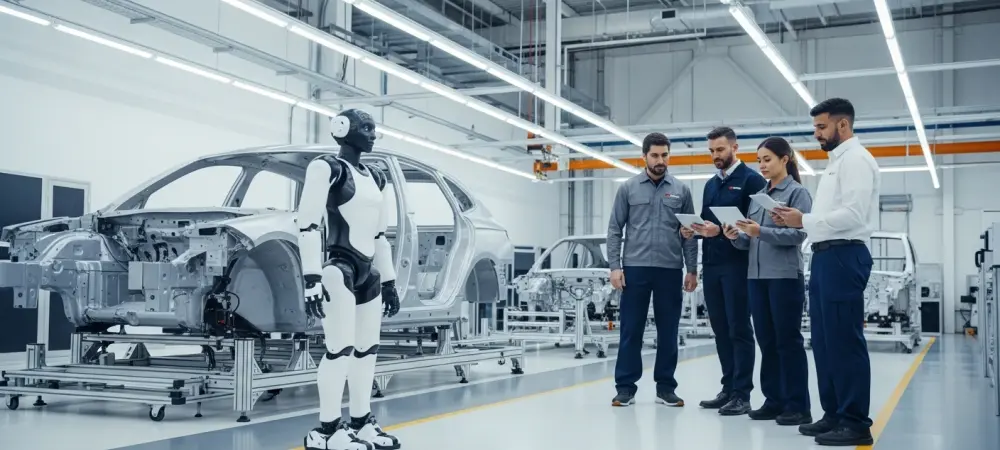
The CES demonstration was a masterclass in controlled potential. As Atlas walked smoothly on stage, waved, and swiveled its head with fluid, human-like motion, it showcased a new level of mechanical sophistication. While an engineer piloted the robot for this initial reveal, Boston Dynamics’ leadership confirmed the ultimate goal is full autonomy. The most critical takeaway, however, was the concrete commercial timeline. A production version of Atlas is already being manufactured and is slated for deployment by 2028 at Hyundai’s new electric vehicle facility in Georgia. This specific, time-bound plan to have Atlas assist in car assembly transforms it from a futuristic concept into a near-term business reality, tackling the immense challenge of integrating a humanoid robot into the dynamic and demanding environment of a factory floor.
The Strategic Alliance: Forging Intelligence with Google DeepMind
A robot’s body is only as effective as the brain that controls it, and Hyundai has made a powerful move to secure a best-in-class intellect for Atlas. The company announced a new partnership with Google’s DeepMind, which will supply its advanced AI technology for Boston Dynamics’ robots. This collaboration rekindles a past relationship, as Google once owned the robotics firm, highlighting the central role AI now plays in making humanoid forms practical. This strategic alliance provides Boston Dynamics with access to world-leading AI research, accelerating its ability to teach Atlas complex tasks and adapt to unpredictable environments. It also presents a compelling counter-strategy to competitors like Tesla, which is developing its AI for the Optimus robot entirely in-house.
The Competitive Frontier: A High-Stakes Race for Robotic Supremacy
The debut of Atlas officially heats up the competition in the nascent humanoid robotics market, with the primary battle lines drawn between Hyundai/Boston Dynamics and Tesla’s Optimus program. While the vision of a general-purpose robot in every home remains distant, the immediate race is for industrial dominance. According to industry analysis from leading consulting firms, the current focus is on identifying specific, high-value use cases where the technology is mature enough to be applicable. The consensus is that the true breakthrough is not just in the hardware, but in the convergence of software, AI, advanced chipsets, and communication technologies. This synergy is creating tangible applications today, solidifying the trend toward specialized, industrial-use humanoid robots designed for environments built by and for humans.
The Convergence of Technologies: Projecting the Future of Humanoid Labor
The recent advancements in humanoid robotics are not happening in a vacuum; they are fueled by a powerful convergence of multiple technologies. Increasingly sophisticated AI, powerful and efficient processors, high-fidelity sensors, and seamless connectivity are all maturing simultaneously, creating the perfect ecosystem for intelligent robots to thrive. As these technologies continue to advance, we can expect the capabilities of robots like Atlas to grow exponentially. This will inevitably impact the manufacturing landscape, shifting human roles away from repetitive manual labor and toward robot supervision, maintenance, and process optimization. In the near future, regulatory frameworks and safety standards will need to evolve rapidly to govern this new era of human-robot collaboration on the factory floor.
Strategic Imperatives in an Automated World: Key Takeaways and Actions
The unveiling of Hyundai’s manufacturing-ready Atlas robot offers several critical takeaways. First, it confirms that the transition of humanoid robots from research projects to commercial tools is actively underway. Second, it underscores that strategic partnerships, particularly in the realm of AI, are essential for competitive advantage. Finally, it reinforces that the immediate future of robotics lies in specialized industrial applications, not general-purpose assistants. For businesses, now is the time to begin evaluating workflows and identifying tasks where humanoid robots could solve labor shortages or boost productivity. For professionals in the tech sector, this signals a growing demand for skills in robotics integration, AI programming, and data analytics.
The Final Weld: Synthesizing the Impact of Hyundai’s Robotic Leap
Hyundai’s debut of an Atlas robot with a clear manufacturing mission had been a watershed moment for industrial automation. It had recast the narrative from a speculative future to a tangible, strategic business initiative. By setting a firm deployment date and partnering with an AI leader like Google DeepMind, Hyundai had thrown down the gauntlet, transforming the competitive landscape and accelerating the timeline for advanced robotics in the workplace. This move had emphasized that the long-term significance of humanoid robots would be measured by their utility and integration into the global economy. The question for industry leaders was no longer if human-like robots would join the workforce, but how quickly they could adapt to the profound changes they would bring.