

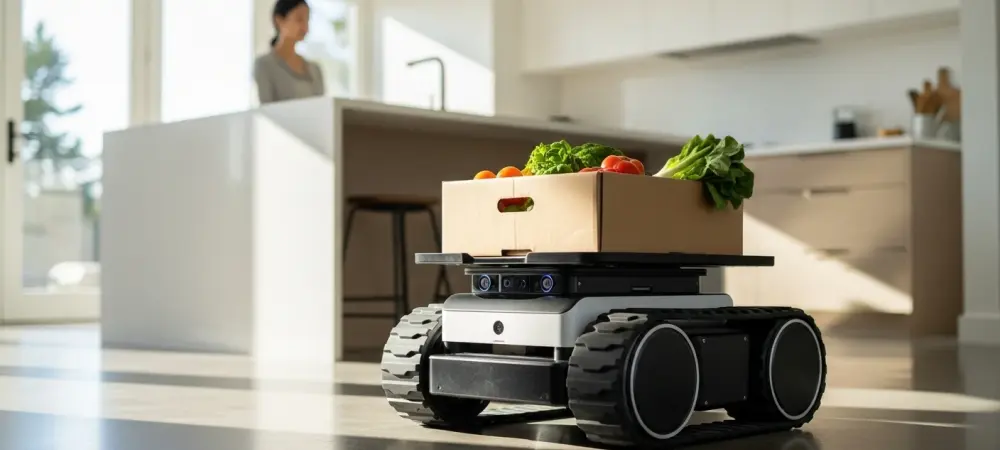
The long-held vision of a personal robot seamlessly integrated into daily home life has remained just out of reach for decades, with many promising concepts failing to transition from novelty to necessity. A new robotics and artificial intelligence startup, Zeroth, is now making a calculated entry into the challenging U.S. market, aiming to bridge this gap with a strategy deeply rooted in the latest technological advancements. By leveraging breakthroughs in autonomous navigation, computer vision, and the sophisticated conversational power of generative AI, the company is attempting to create a genuine foothold for practical robotics in domestic environments. Zeroth’s approach is not to offer a single, all-encompassing solution but to introduce two specialized models: the W1, a robust service robot for physical tasks, and the M1, a compact companion robot for interaction. This dual launch signals a mature strategy to address the varied and complex demands of the modern household, potentially turning a long-standing technological dream into a tangible reality for consumers.
A New Generation of Robotic Assistants
Zeroth’s initial offerings cater to two distinct but equally important aspects of home life: physical assistance and intelligent companionship. The W1 model is engineered as a powerful service robot, focusing on transportation and utility. Priced at $5,599, this 44-pound machine is built for versatility, featuring a dual-tread mobility system that allows it to confidently navigate varied surfaces, from indoor floors to outdoor grass and gravel. Its primary strength lies in its ability to carry substantial loads of up to 110 pounds, making it a practical tool for tasks like moving groceries, laundry, or other household items. To navigate autonomously, the W1 employs a sophisticated sensor suite, including lidar, cameras, and proximity sensors, which it uses to map its surroundings in real-time and intelligently avoid obstacles. Its core functions include the ability to follow a designated user, transport goods between points, and even capture moments with an integrated 13-megapixel camera. Preorders for both models are set to open in the first quarter. In stark contrast to the W1’s utilitarian design, the M1 is a compact, 15-inch tall humanoid robot conceived for interaction and companionship. With a starting price of $2,899, the M1 runs on Google’s Gemini AI, which enables it to engage in short, context-aware conversations, deliver timely reminders, and serve as a vigilant presence in the home. One of its most critical features is the ability to recognize potential emergencies, such as detecting when a person has fallen, and alert them. Designed for placement on a desk or the floor, the M1 is engineered for resilience; it can right itself if it is toppled and has a two-hour active battery life. When its power runs low, it automatically navigates back to its charging dock, ensuring it is always ready to interact. This focus on AI-driven engagement and safety monitoring positions the M1 not as a tool but as an interactive member of the household, designed to provide both information and a sense of security through its intelligent and responsive presence.
Bridging the Gap Between Concept and Reality
The strategic launch of the W1 and M1 models represented a significant shift in the pursuit of domestic robotics. Rather than presenting a single, compromised device, Zeroth acknowledged the multifaceted nature of home assistance by creating two highly specialized machines. The W1 directly addressed the market’s need for physical utility, offering a tangible solution to everyday labor that previous robots had struggled to perform reliably. In parallel, the M1 targeted the growing demand for intelligent companionship and ambient computing, leveraging the recent explosion in generative AI to create a more natural and intuitive human-robot interface. This deliberate segmentation demonstrated a nuanced understanding of consumer needs, recognizing that the desire for a helpful machine could mean either a strong workhorse or a smart companion. This approach ultimately set a new benchmark, suggesting that the path to successfully integrating robots into the home was not through a single jack-of-all-trades but through a family of dedicated devices that work together to enhance daily life.