

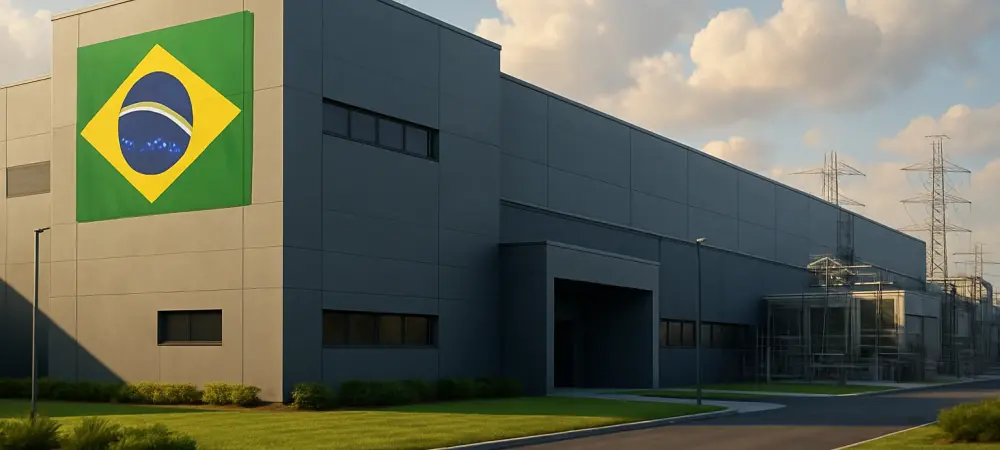
As we dive into the evolving landscape of telecommunications and data center infrastructure in Brazil, I’m thrilled to sit down with Dominic Jainy, an IT professional with deep expertise in cutting-edge technologies like artificial intelligence, machine learning, and blockchain. Today, we’re focusing on an exciting development in Dominic’s sphere of influence: a major investment by TIP Brasil in a state-of-the-art data center in Campinas, São Paulo. With a staggering $94.6 million commitment, this project promises to reshape digital infrastructure in the region. Our conversation will explore the strategic vision behind this initiative, the technical upgrades planned, the specific needs it aims to address in Brazil’s growing digital economy, and the phased rollout of this ambitious endeavor.
Can you share the vision behind TIP Brasil’s $94.6 million investment in a data center in Campinas, São Paulo?
Absolutely, Maison. This investment is a game-changer for us. Campinas was chosen for its strategic location—close to major business hubs yet outside the saturated São Paulo metro area, offering both connectivity and room for growth. It’s a key part of our broader strategy to expand digital infrastructure across Brazil, focusing on underserved regions while meeting the rising demand for secure, high-performance data solutions. We’re not just building a facility; we’re laying the groundwork for a scalable ecosystem that supports the country’s digital transformation.
What factors made Campinas the perfect spot for this data center project?
Campinas stands out for several reasons. It’s a growing tech and innovation hub with excellent access to fiber optic networks, which is critical for low-latency services. The region also has a stable power supply and a skilled workforce, both essential for operating a facility of this scale. Plus, being inland offers a layer of protection from natural disasters compared to coastal areas, which is a big consideration for data security and uptime reliability.
What are the primary objectives for this data center when it launches in November 2025?
Our main goal is to address the exploding demand for secure and reliable digital infrastructure in Brazil. When we open in November 2025, we’ll have capacity for up to 2,000 racks, and we’re focusing on delivering top-tier colocation and cloud computing services. Beyond that, it’s about creating a hub that supports a range of clients—from internet service providers to government entities—while ensuring compliance with local data protection laws. This facility will be a cornerstone for innovation and connectivity in the region.
Can you elaborate on the types of services you’ll prioritize for clients at this facility?
Certainly. Colocation will be a core offering, providing clients with secure, scalable space for their servers with robust power and cooling systems. On top of that, we’re heavily investing in cloud computing solutions to support businesses transitioning to hybrid or fully cloud-based environments. These services are tailored to meet the needs of diverse sectors, ensuring they have the flexibility and performance required to stay competitive in a fast-moving digital landscape.
What major upgrades and renovations are planned to bring this data center up to modern standards?
We’re undertaking a complete overhaul to ensure this facility meets the highest industry standards. This includes replacing the raised flooring with fire-resistant materials to enhance safety, as well as modernizing the UPS systems for uninterrupted power and upgrading the air conditioning for optimal cooling efficiency. Our aim is to create an environment that’s not only reliable but also future-proof, capable of handling increased demand over the next decade.
How are you ensuring the data center achieves Tier III certification with these changes?
Achieving Tier III certification is all about redundancy and uptime. We’re designing the infrastructure with multiple power and cooling systems so that maintenance can happen without any downtime. This means dual power feeds, backup systems, and rigorous testing to ensure no single point of failure. It’s a complex process, but it’s critical for guaranteeing the reliability that our clients expect from a facility of this caliber.
How does this data center address the growing need for secure digital infrastructure in Brazil?
Brazil’s digital economy is booming, and with that comes a pressing need for infrastructure that can keep pace. Our data center is built to provide high-performance solutions with a strong emphasis on security. By keeping data within national borders, we help clients comply with regulations like the General Data Protection Act, which is a huge priority for businesses and government alike. It’s about offering peace of mind alongside cutting-edge technology.
Who do you anticipate will be the key clients for this facility, and how will you cater to their needs?
We’re expecting a wide range of clients, including internet service providers looking for reliable colocation, security-focused organizations needing robust data protection, and government entities requiring compliant storage solutions. Our approach is to customize services based on their specific requirements—whether that’s enhanced security protocols, scalable rack space, or tailored cloud offerings. We want to be a one-stop solution for their digital needs.
Can you break down the phased approach to rolling out this project, starting with the first stage in November 2025?
Sure, we’ve planned this rollout in stages to ensure a smooth launch and scalability. The first stage, set for November 2025, will bring the initial infrastructure online, focusing on core operations with a portion of the rack capacity ready for clients. This phase is about establishing a strong foundation—getting the power, cooling, and security systems fully operational. It’s a critical step to build trust and reliability from day one.
What additional capabilities will the second phase in early 2026 bring to the table?
The second phase, kicking off between January and February 2026, will expand the facility by an additional 2,500 square meters. This expansion will allow us to increase rack capacity significantly and introduce more advanced services. It’s also when we’ll start exploring self-generation options to boost our power capacity to meet growing demand. This phase is about scaling up while maintaining the high standards we set in the first stage.
What’s your forecast for the future of data center infrastructure in Brazil over the next decade?
I’m incredibly optimistic about the trajectory. Brazil is on the cusp of a digital revolution, with increasing adoption of cloud services, IoT, and AI-driven applications driving demand for data centers. Over the next decade, I expect to see a shift toward more localized, edge-based facilities to reduce latency, alongside a stronger focus on sustainability with renewable energy integration. It’s an exciting time, and projects like ours in Campinas will play a pivotal role in shaping that future.