

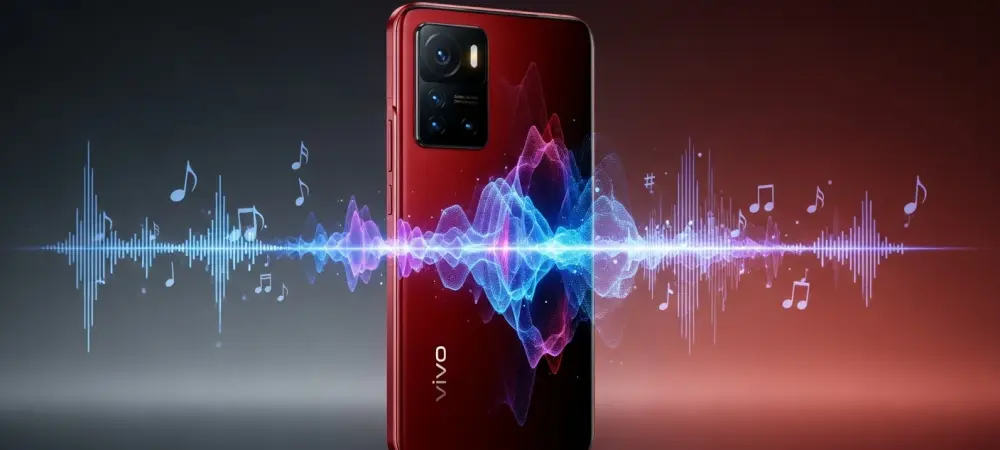
The pursuit of the perfect smartphone has often prioritized visual brilliance while leaving the auditory experience as a secondary consideration. Modern users now demand more than just a sharp screen; they require an immersive soundscape that matches the high-fidelity capabilities of professional equipment. This exploration focuses on how the Vivo X300 Ultra seeks to bridge the gap between mobile utility and acoustic excellence, providing a comprehensive look at the engineering shifts that define this new hardware.
Key Questions Regarding Audio Innovation
How Does the Four-Microphone System Enhance Recording?
Capturing clear audio in chaotic environments has traditionally been a struggle for mobile devices. To combat this, the inclusion of a sophisticated four-microphone array represents a major shift toward professional-grade voice isolation. By leveraging spatial recording technology, the device can pinpoint specific sound sources while suppressing background noise.
Furthermore, the integration of AI-driven reduction tools allows for a cleaner output during video capture. Users gain the ability to adjust gain and directionality through a refined interface, ensuring that the final audio product remains crisp even in windy or crowded settings. This level of granular control empowers creators to treat their smartphone as a reliable field recorder.
What Physical Engineering Changes Improve Speaker Quality?
Internal space is the most precious commodity in a modern flagship, often leading to compromised speaker enclosures. To solve this, a patented design reconfigures the internal layout by moving the speaker enclosure to the bracket. This mechanical adjustment allows the cavity size to grow to 0.8cc, a substantial increase that directly impacts the resonance and depth of the sound produced.
Moreover, this expanded physical volume is paired with a significant boost in amplification. The result is a deeper bass response at the 300Hz range and an extended high-frequency reach. By bypassing the usual constraints imposed by large camera modules, the hardware delivers a richer, more balanced audio profile that maintains clarity at higher volumes.
Summary of Technical Advancements
The transition toward professional hardware integration marks a pivotal moment for the industry. By combining mechanical innovation with intelligent software, the device achieves a level of acoustic fidelity that was previously reserved for dedicated audio gear. These updates ensure that both consumption and creation are handled with equal precision, setting a high bar for future competitors.
Final Reflections on Mobile Sound
The evolution of mobile audio technology demonstrated that hardware limitations could be overcome with creative engineering. As users integrated these high-fidelity tools into their daily workflows, the distinction between mobile and professional results became increasingly blurred. This shift encouraged a broader perspective on how handheld devices could serve as complete multimedia powerhouses for the next generation of digital creators.