

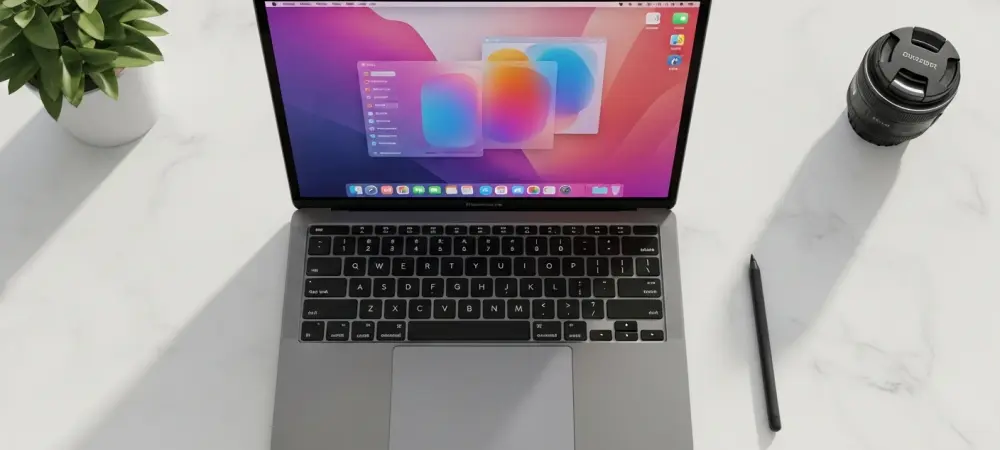
The transition toward a fully unified hardware and software ecosystem has reached its most critical juncture with the unveiling of the newest operating system update. For over two decades, the Mac has navigated various architectural shifts, yet the arrival of macOS 27, internally known as Golden Gate, represents the most aggressive departure from legacy support in the company’s history. By terminating support for all Intel-based hardware, the platform has effectively shed decades of technical debt that previously forced compromises in kernel design and energy management. This strategic isolation allows the software to communicate directly with the proprietary M-series architecture, unlocking performance tiers that were mathematically impossible under the constraints of universal binary requirements. The name itself suggests a bridge to a new era where the boundary between local silicon and intelligent software becomes invisible, providing a stable foundation for the next decade of professional needs.
Transforming the Visual Identity and Performance
Pure Performance: Removing the Legacy Architecture
The complete removal of the Rosetta 2 translation layer marks a significant turning point for system efficiency, as the operating system no longer carries the heavy baggage of x86 instruction sets. Developers are now focused exclusively on optimizing code for ARM-based architectures, which has resulted in a leaner kernel that prioritizes low-latency operations and streamlined memory management. By focusing solely on Apple Silicon, the system manages background tasks with far greater precision, ensuring that performance-heavy applications do not cannibalize resources needed for basic UI responsiveness. This transition also allowed for the redesign of the internal file system protocols, which now leverage the high-speed NVMe controllers found in modern M-series chips to achieve data transfer rates that feel instantaneous. The reduction in code complexity translates to a more stable environment where system crashes and memory leaks are significantly minimized, offering a level of reliability that professionals require.
The architectural shift allows the operating system to distribute workloads between efficiency and performance cores with a level of granularity that was previously unattainable. In earlier versions of the software, the scheduler had to account for broad compatibility, but now it is tuned specifically for the asymmetrical core counts of the latest M-series processors. This means that lightweight tasks like background indexing and email syncing are handled almost entirely by efficiency cores, leaving the high-performance cores in a low-power state until they are absolutely necessary. The thermal management system also benefits from this deep integration, as the software can predict heat spikes based on active threads and adjust clock speeds before fans or heat sinks are overwhelmed. Users will notice that even under heavy loads, such as rendering 8K video or running complex simulations, the machine remains surprisingly cool and quiet. This synergy between hardware and software ensures that the battery life remains consistent.
Liquid Glass: Reimagining the Interface
The introduction of the Liquid Glass design language represents a bold step forward in desktop aesthetics, moving beyond the static translucency of previous years. Users now have access to a sophisticated set of customization tools, including an opacity slider that allows for the fine-tuning of background blur and window transparency. This feature is not merely cosmetic; it enhances legibility by allowing users to create the perfect contrast between their active workspace and the desktop wallpaper. The geometry of the interface has also been meticulously updated, with window corners and button radii now mirroring the exact curvature of modern MacBook displays. These refinements create a sense of physical continuity between the software and the hardware it inhabits. Every icon has been reimagined with high-fidelity textures that react dynamically to ambient light, providing a tactile feel that makes the digital environment feel more grounded and responsive. This visual overhaul complements the high-resolution displays.
System performance has reached a state of near-instantaneous response because the core search and indexing functions have been completely rebuilt for on-device machine learning. Spotlight and Mission Control no longer suffer from the slight delays associated with legacy database structures, as the new indexing engine uses the Neural Engine to categorize files and metadata in real-time. This allows for a more intuitive search experience where the system anticipates user needs based on historical habits and current project contexts. For instance, searching for a specific document now brings up related images and calendar events that were active at the same time the file was created. This intelligent ranking system reduces the friction of daily navigation, allowing users to jump between tasks without the cognitive load of hunting through folders. Mail search also benefits from this speed, offering deep-content analysis that can surface specific phrases or attachments within thousands of emails in a fraction of a second.
Revolutionizing Intelligence and Professional Tools
Siri Evolution: The Screen-Aware Assistant
Siri has transitioned from a basic voice assistant into a sophisticated productivity partner that possesses a deep understanding of on-screen content through visual intelligence. This capability allows the assistant to observe the current active window and offer context-aware suggestions, such as automatically extracting dates from a digital flyer to create a calendar event. Rather than existing as a temporary overlay, Siri now functions as a persistent application that maintains long-term conversational context, enabling users to ask follow-up questions about complex projects over several days. This evolution is particularly useful for professional workflows where users need to summarize long documents or generate creative briefs based on multiple open sources. The assistant can also perform multi-step actions across different applications, such as resizing a batch of images and then attaching them to a specific draft in Mail. This level of integration turns the assistant into a genuine force multiplier for productivity.
For the developer community, the latest updates to Xcode provide an unparalleled environment for creating modern software by integrating advanced AI models directly into the IDE. Technologies such as Gemini and ChatGPT are now natively supported, providing intelligent code completion and automated debugging suggestions that adapt to a developer’s specific coding style. This integration significantly lowers the barrier to entry for novice programmers while accelerating the output of seasoned engineers who can now automate repetitive boilerplate tasks. Furthermore, the introduction of the DeviceHub platform provides a centralized workspace for testing applications across various hardware configurations, including simulated touchscreens and ultra-wide monitor setups. This ensures that apps are perfectly optimized before they ever reach the App Store, reducing the time spent on post-release troubleshooting. The new tools also include a performance profiler that identifies exactly which blocks of code are utilizing the Neural Engine.
The Lasting Impact: Strategic Insights and Progress
The implementation of macOS 27 demonstrated that the future of desktop computing required a total commitment to specialized hardware, moving away from the era of generalized compatibility. By establishing this high-performance baseline, the update encouraged developers to prioritize local AI processing over cloud-based dependencies, which enhanced both user privacy and operational speed. This shift necessitated a re-evaluation of how professionals interacted with their workstations, leading to the adoption of more fluid, touch-enhanced workflows and intelligent automation. The successful rollout provided a blueprint for upcoming hardware iterations that will likely blur the lines between tablets and laptops even further. Moving forward, users benefited from staying updated on the latest M-series capabilities to fully leverage the predictive features integrated into the system. The platform successfully anticipated the needs of a more connected, AI-driven workforce, ensuring that the Mac remained the most capable tool for complex creative and technical endeavors.
The transition also underscored the importance of hardware-software synergy in maintaining a competitive edge within the high-end workstation market. As other platforms struggled with the fragmentation of various chip architectures, the Mac offered a singular, optimized environment that prioritized the user’s time and creative energy. The move to Golden Gate effectively eliminated the performance bottlenecks that had previously hindered the full potential of the M-series Neural Engines. In the years following this release, the emphasis on local, secure, and rapid processing became the standard by which all other desktop operating systems were measured. Those who integrated these new tools into their professional lives found that the learning curve was offset by the significant gains in daily throughput. Ultimately, the operating system did more than just manage files and windows; it acted as the essential bridge to a more intelligent and efficient era of computing that benefited a wide range of global industries.